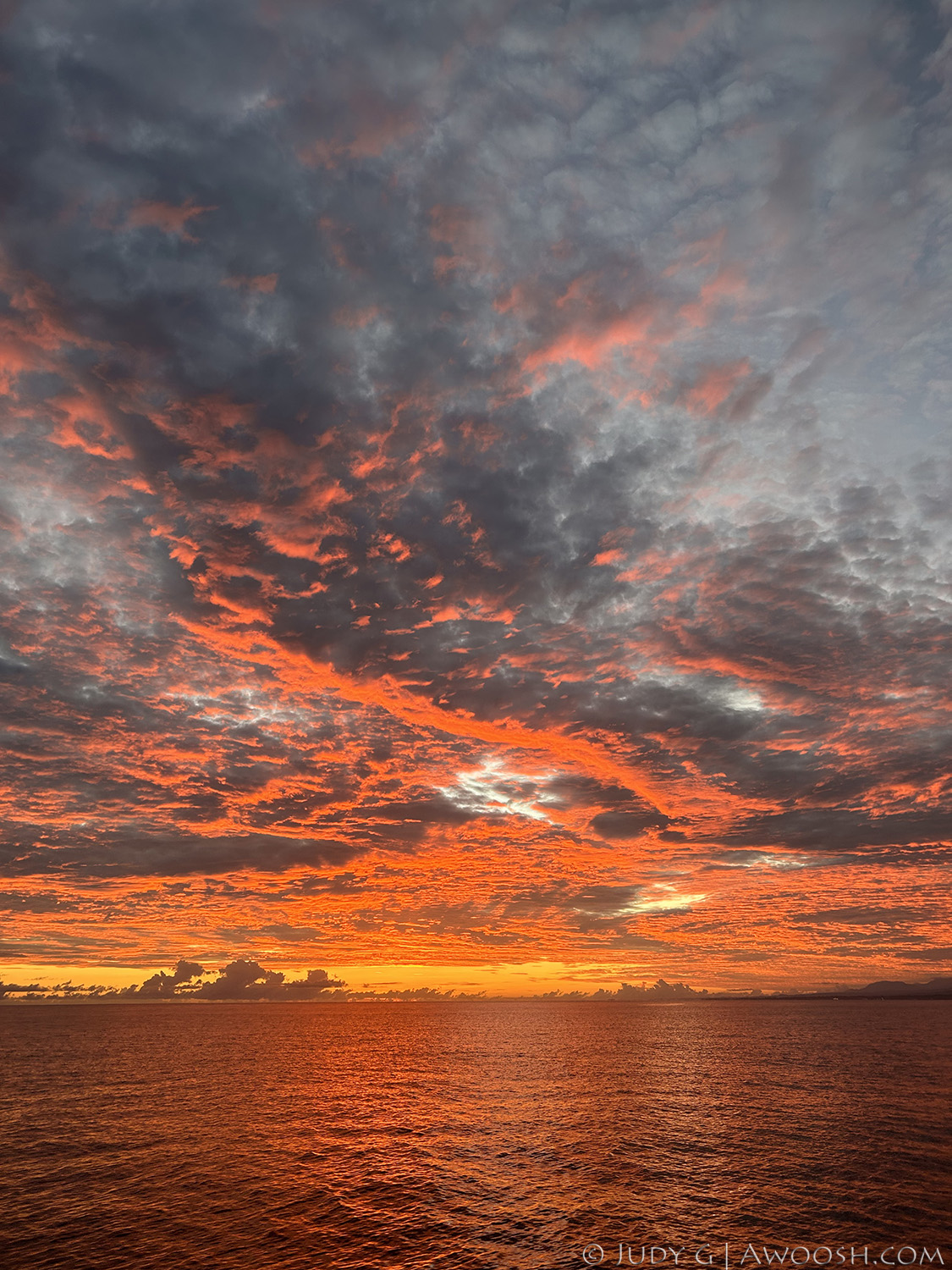
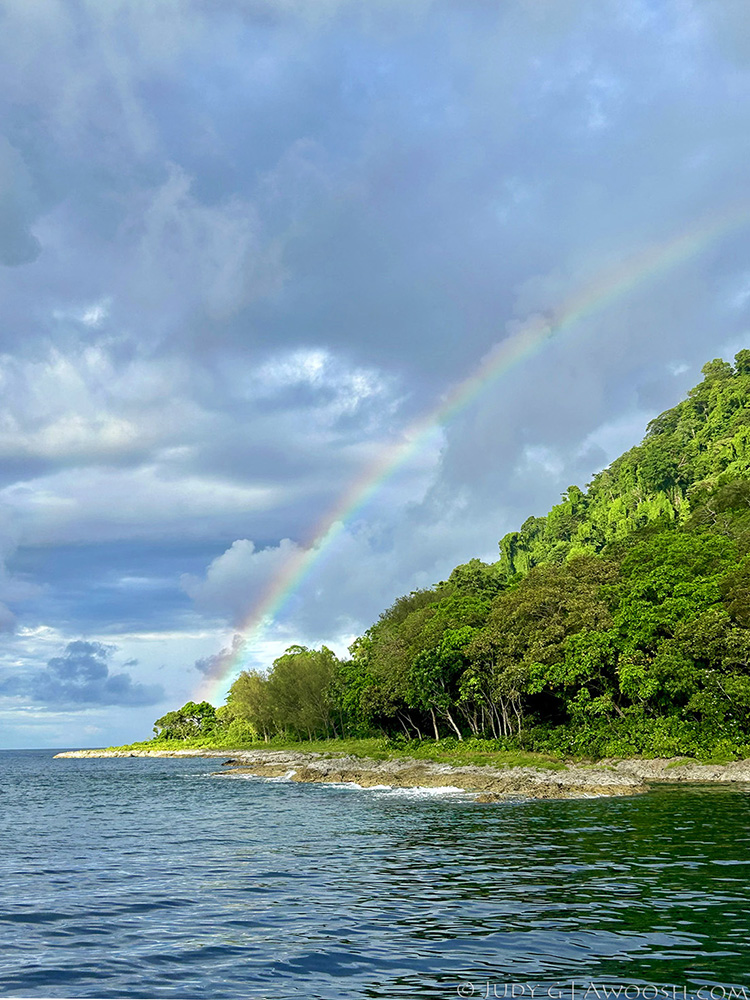
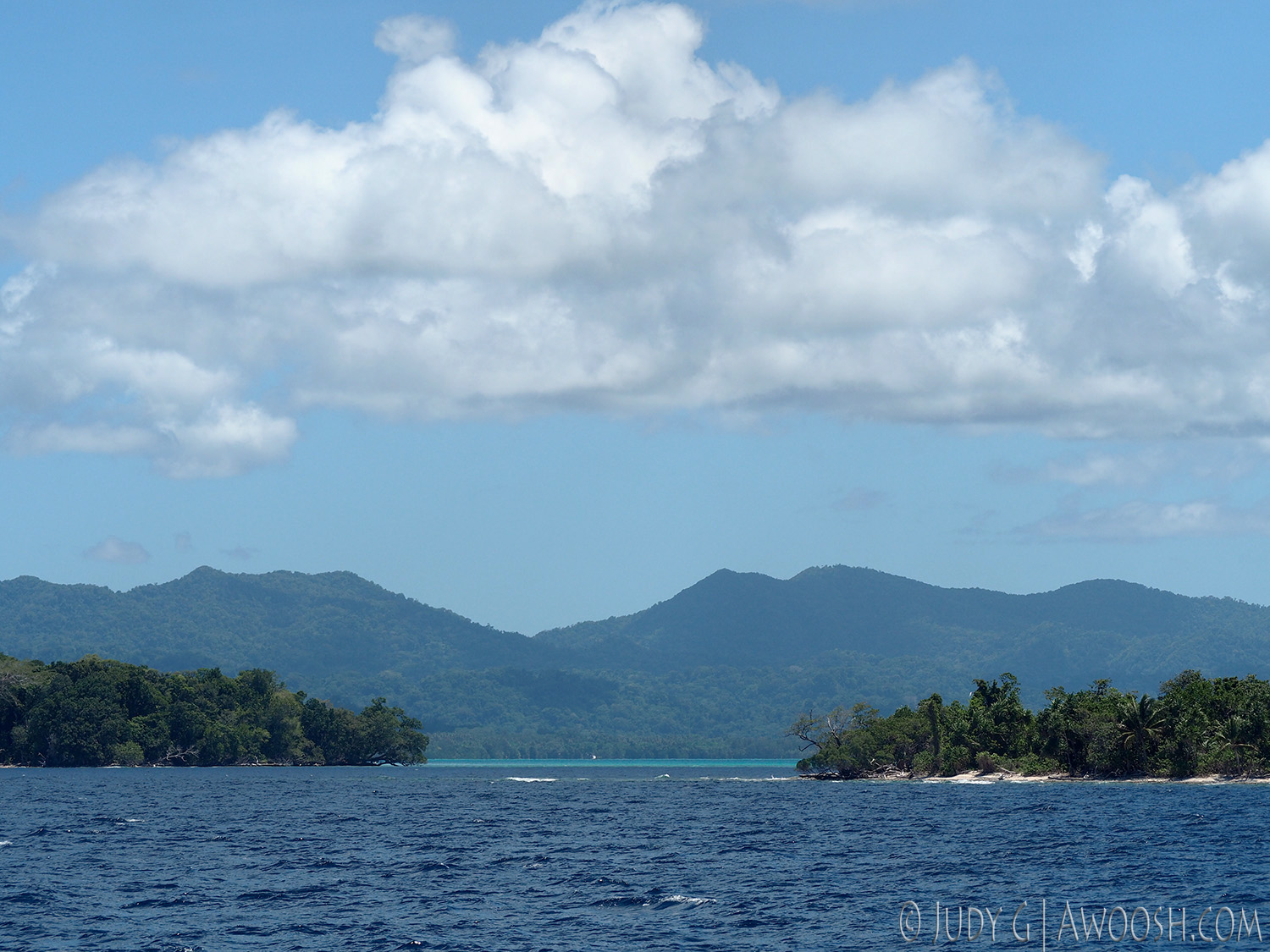
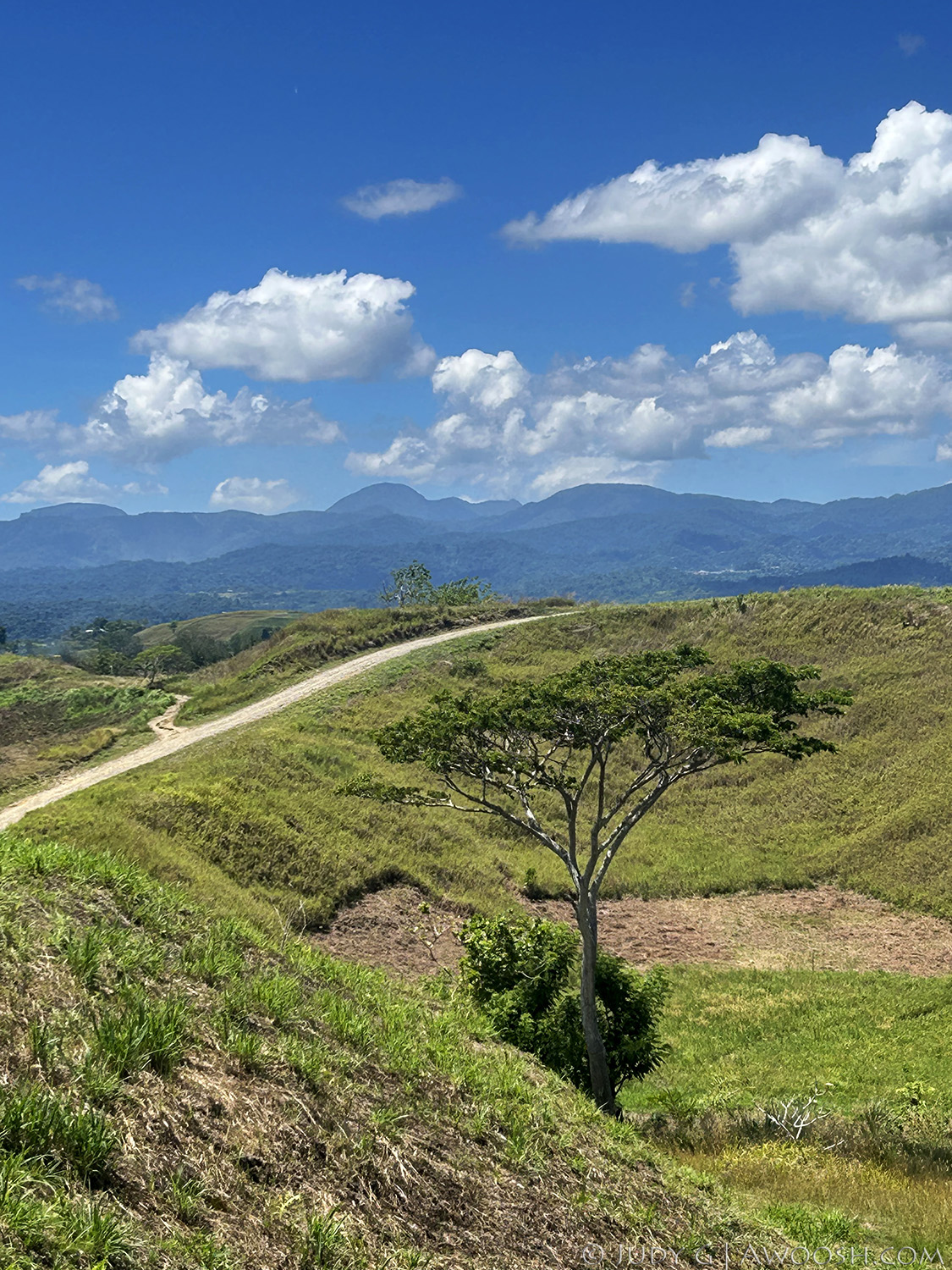
Let me tell you a bit about a land far far away, in the western reaches of the tropical Pacific, closer to Papua New Guinea than to any other landmass. It’s an equatorial archipelago nation comprised of over 1000 islands. The smaller islands are postcard perfect tropical islets, populated by groves of coconut palms and fringed by impossibly white sandy beaches and/or mangroves, and dotted with occasional small villages. The larger islands are mountainous (volcanic in origin) — with dense, green slopes levelling out into wide, rolling, cultivated patches of land, crisscrossed by rivers running away from the mountains to the sea, and by rudimentary roads.
Originally thought to have been settled by migrant southeast Asians about 5,000 years ago, there is now some evidence that humans were existing in the islands as much as 25,000 years before that. After being ‘discovered’ by the Spanish in 1568, most of the islands were eventually claimed as colonies of Britain and Germany by the late part of the 19th century. Over the 19th century, missionaries also managed to successfully convert most of the population to Christianity, which is still the dominant religion in the islands. A few of them infamously met with violent endings when they were murdered by locals who resisted these intruders and their agenda.
If you are a student of World War II history, you’ll probably know the name Guadalcanal. It was an infamous battleground in the Allies’ do or die war with the Japanese, who occupied a long chain of Pacific Islands in their insatiable (and often inhumane) quest for resource gathering and establishment of strategic war bases. Guadalcanal is one of six major islands that make up the Solomon Islands, and it was the site of one of some of the bloodiest and hard fought ground battles of the war in the Pacific. Honiara, the capital and location of the international airport, is located on this island.
Like in so many island nations, the flat lands closer to the sea are patchwork quilts of small farms and big grow ops — most of which are coconut, palm oil and cacao groves in the case of the Solomons. There are gashes in the sides of mountains and in river basins that mark where men and machines have scoured off the jungle and then butchered the ground below it, in their quests for precious metals and minerals. We were told by a cultural guide that this kind of industry is most often being undertaken by offshore interests, with little to no benefit to the local peoples, nor with any apparent concern for the consequences of their huge excavations to the downstream communities.
I’d known about the Solomon Islands for a long time — several dive buds had been there on their travels, and had great things to say about them, but they always seemed too fricking hard to get to, and so we had gone other places instead. That hard-to-get-to reputation/situation has protected the islands from over-tourism, at least so far. Add to that years of civil and political unrest after their declaration of independence from Britain in 1978, and the Solomon Islands were not an easy nor highly desirable (to us general avoiders of areas of conflict) place to travel.
We finally got there in September 2025 — and it really wasn’t that difficult from Vancouver. Fiji Airways runs two non-stops YVR to Nadi per week (Tuesday & Saturday at time of writing). The only bummer is that a schedule change after booking meant that if we wanted the non-stop (versus transiting through SFO or LAX – yikes!), then we had to kill a few days in Fiji on the way there. Oh darn ;^)
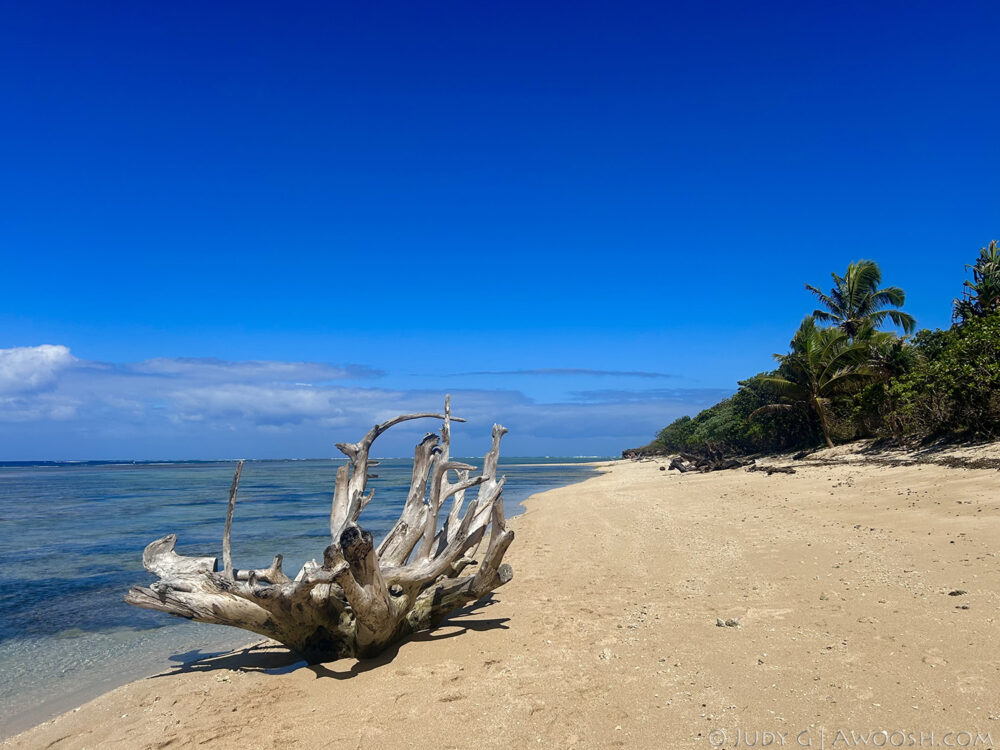
We spent the two extra nights recovering from the long haul at a beachy Fijian hotel about 90 minutes drive south of Nadi, and then we spent a night at the Gateway Hotel to be near the airport for the morning flight out to Solomons; it’s not at all fancy but it’s got (pretty basic) bar & food, and a big pool area, and it’s right across the road from Nadi International.
Solomon Airlines (the national airline of the Solomon Islands) runs two flights a week between Nadi and Honiara. You can also get there via Brisbane, on Solomon Airways and JetBlue — also only a couple of flights per week. And I think that’s pretty much it.
Our trusty group travel agent Kirsten Treais of Amazing Adventures booked us into The Heritage Hotel in Honiara for our one night stay before we got on the Bilikiki live aboard boat. It’s located within the city, on the waterfront (in a pretty quiet marine area) and it was a good place to meet up with the gang. The hotel has food & beverage and a nice spa on site, and there’s a Japanese restaurant one way and a great American-style coffeehouse the other way, both just outside the hotel boundaries.
Honestly, Honiara is not all that. Some of us had a guided driving tour through town on our way to see some World War II memorials and battle sites. More about that excursion at the end of this report.
Getting on the boat was easy from The Heritage Hotel. We were met by the crew in the lobby at the appointed hour, then our stuff was transported by van while we took the short walk over to where the tenders (aka tinnies) were waiting to ferry us out to the Bilikiki, which was moored nearby.
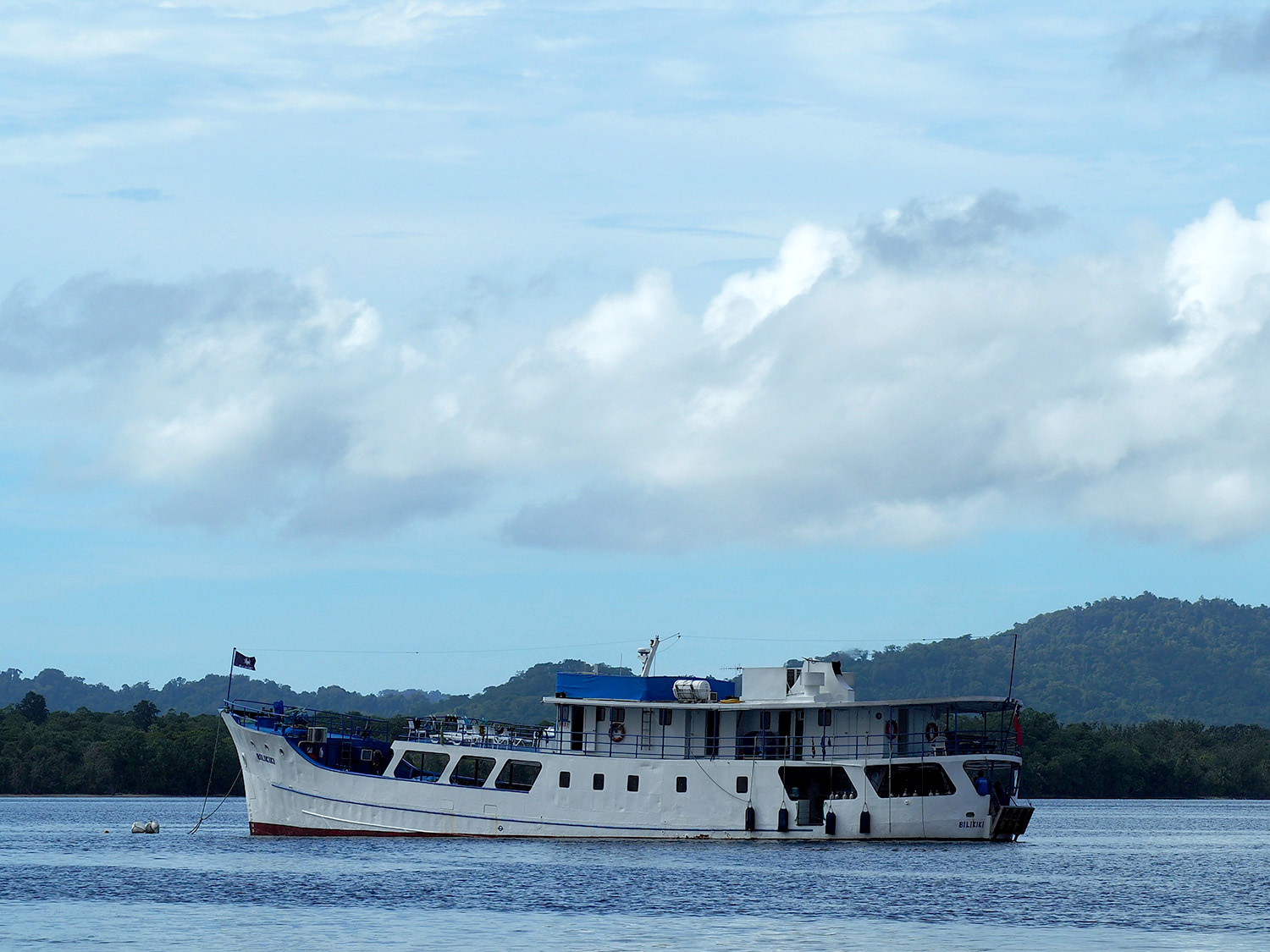
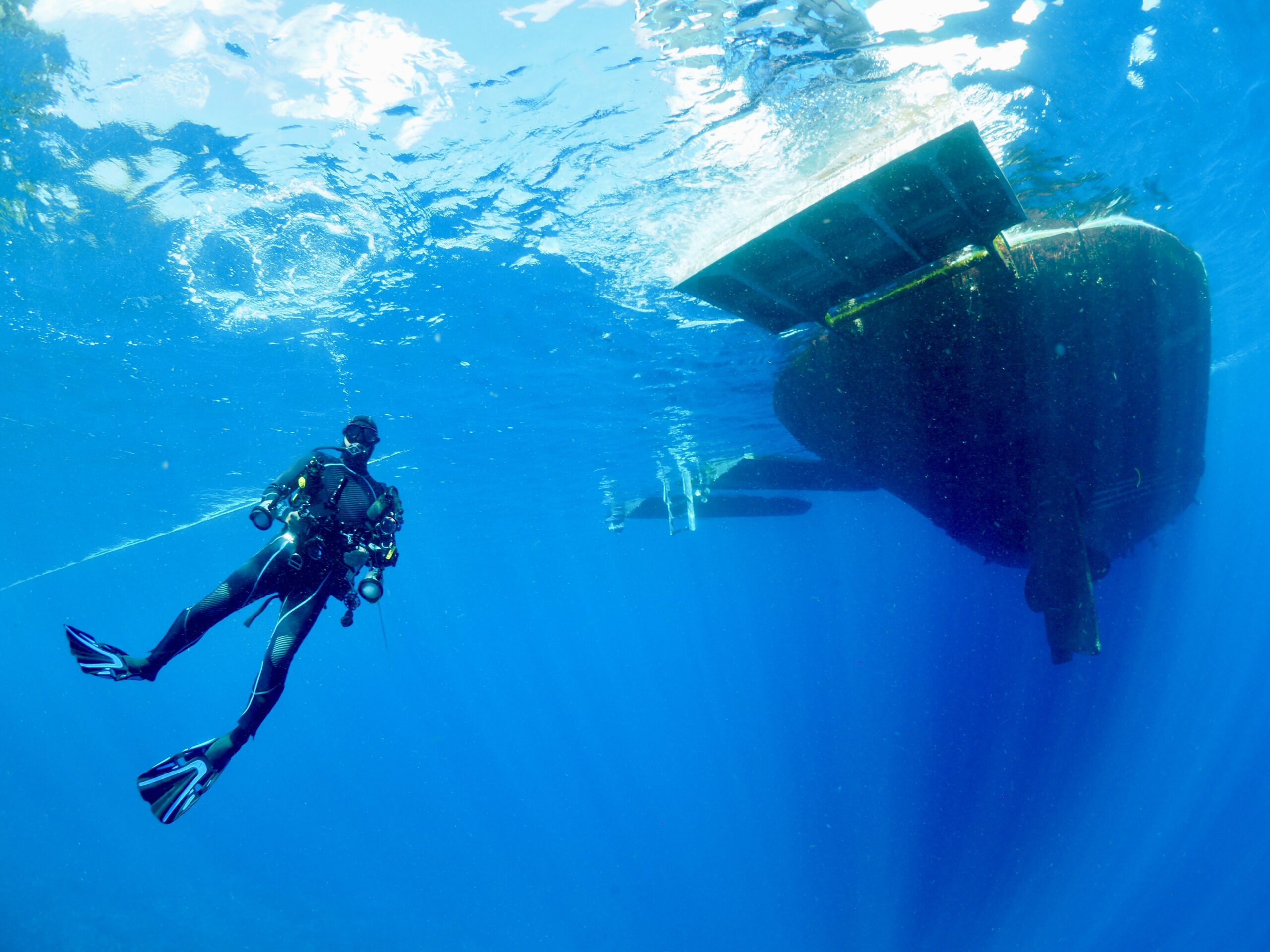
I’ll state right up front that the Bilikiki is not a fancy vessel, but it felt entirely seaworthy (having a steel hull), and it is pretty perfectly set up for divers.
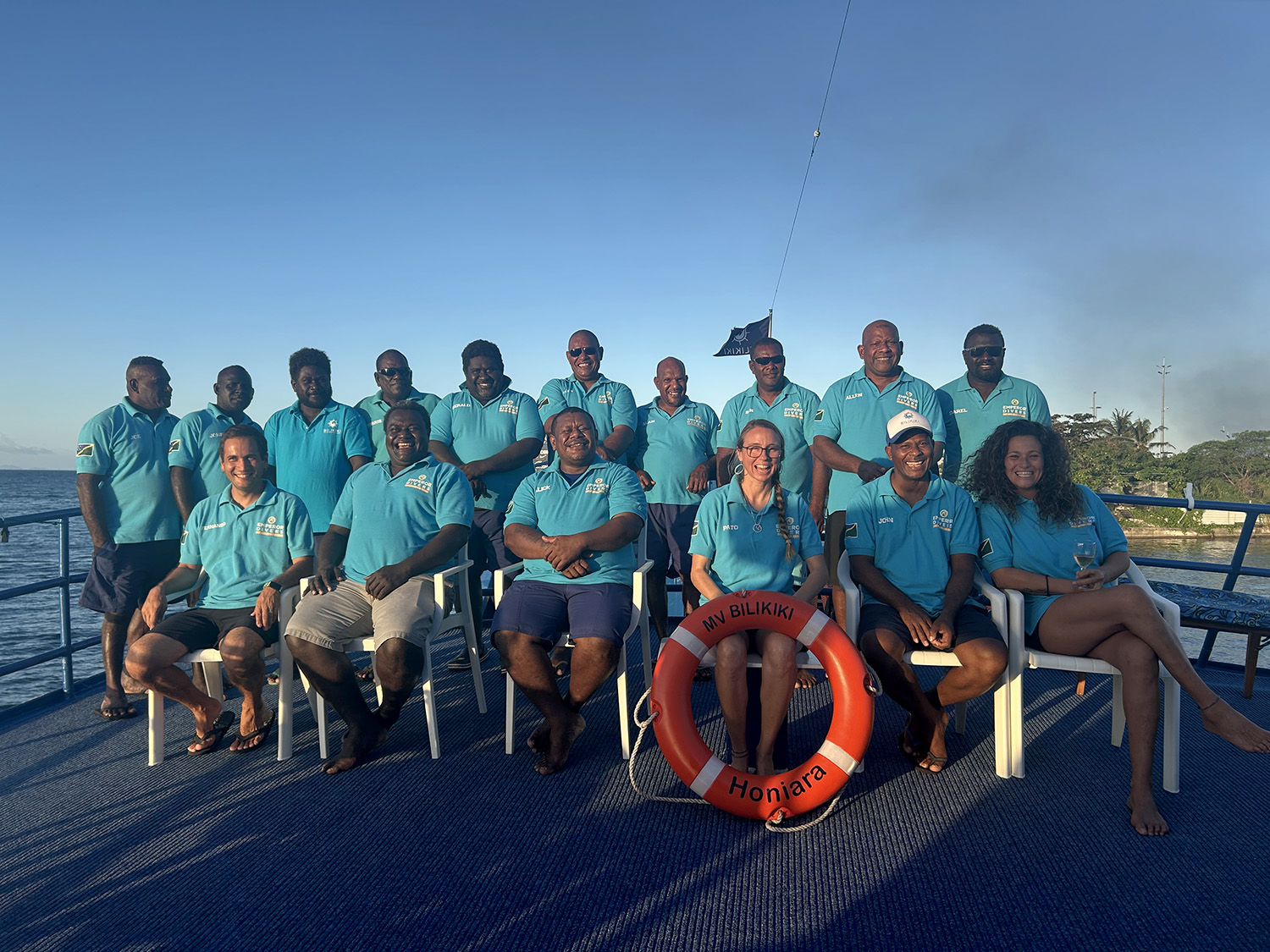
The most outstanding feature of the Bilkiki was the crew — thanks to the great leadership of Pato, a Spaniard, and her partner Fernando, originally from Brazil, our trip ran super smoothly. They’ve been on the Bilikiki for many years, and so are very knowledgeable about the many dive sites on offer, as well as local customs.
I have to give a shout out to Pato, who conducted the most comprehensive safety briefing that we have yet experienced. The Bilikiki clearly takes safety very seriously — our briefing was conducted first thing on the trip, and in addition to very clear communication about equipment and procedures, we all had the opportunity to practice using the secondary exit from the cabins in the belly of the boat — a vertical metal ladder up through a hatch out onto the foredeck. Muscle memory is important. We also appreciated the removable waterproof flashlights, fastened to the walls along the lower main corridor, outside the guest cabins. This is a great safety feature that all live aboard boats should have.
There is a good-sized camera room with ample power supply for charging batteries and personal devices (can we all just say no to any kind of charging in passenger cabins? — there are way too many live aboard fires happening worldwide, and it doesn’t seem a big reach to blame at least some of them on battery fires).
The Bilikiki is 125 feet long. She has 10 air conditioned passenger cabins, all of which are pretty basic, and all below decks. They are ensuite with sink, toilet and shower. Unfortunately there is no loo on the main lounge/dining/dive deck, so it’s a bit of a scoot down to the cabins for a potty break. The air conditioned lounge has indoor dining tables if inclement weather, plus there’s a large, covered, open air dining area. All of our meals were served buffet-style, and the food was varied and good. Up top there’s a generous sun deck with comfy loungers.
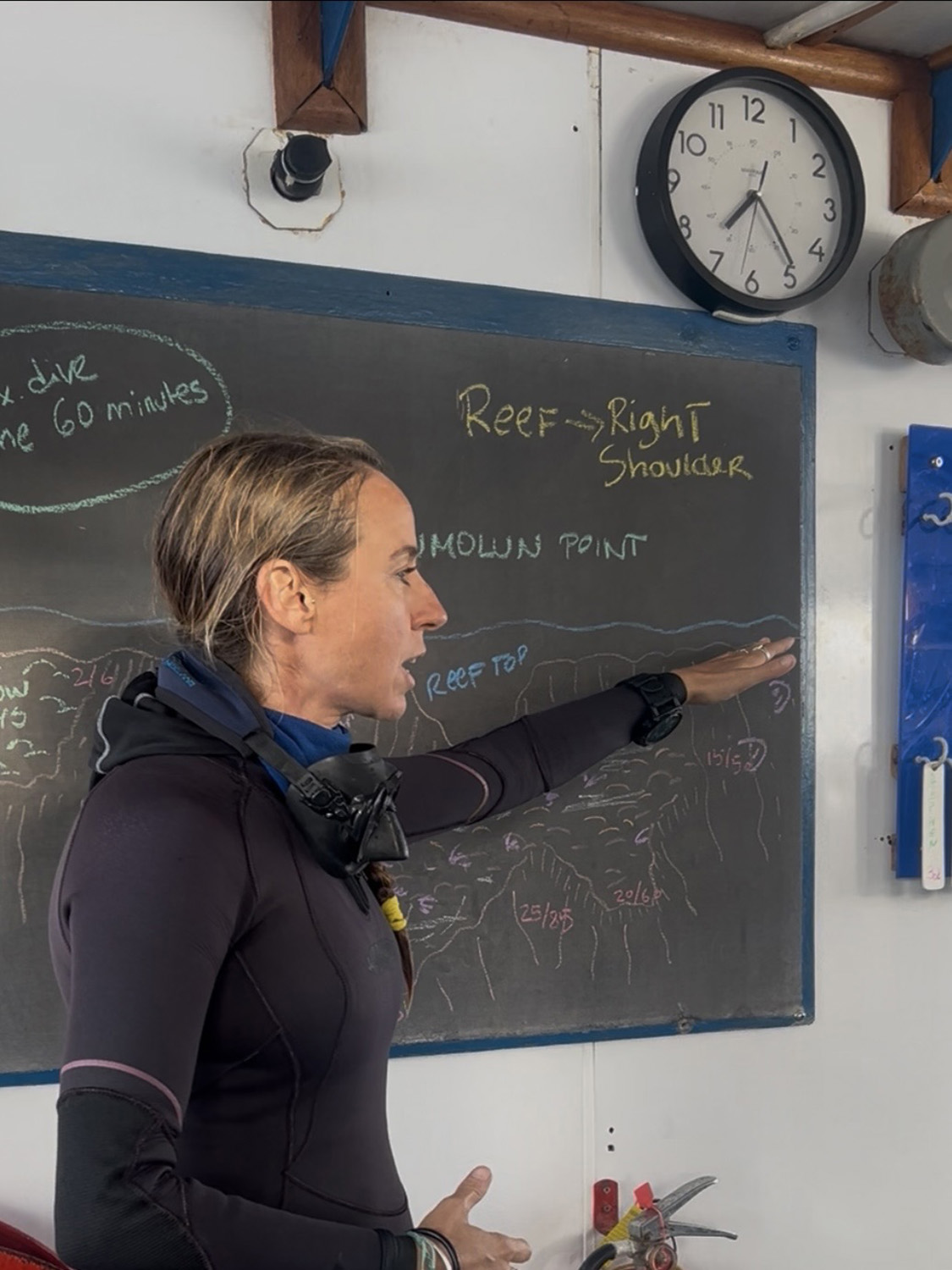
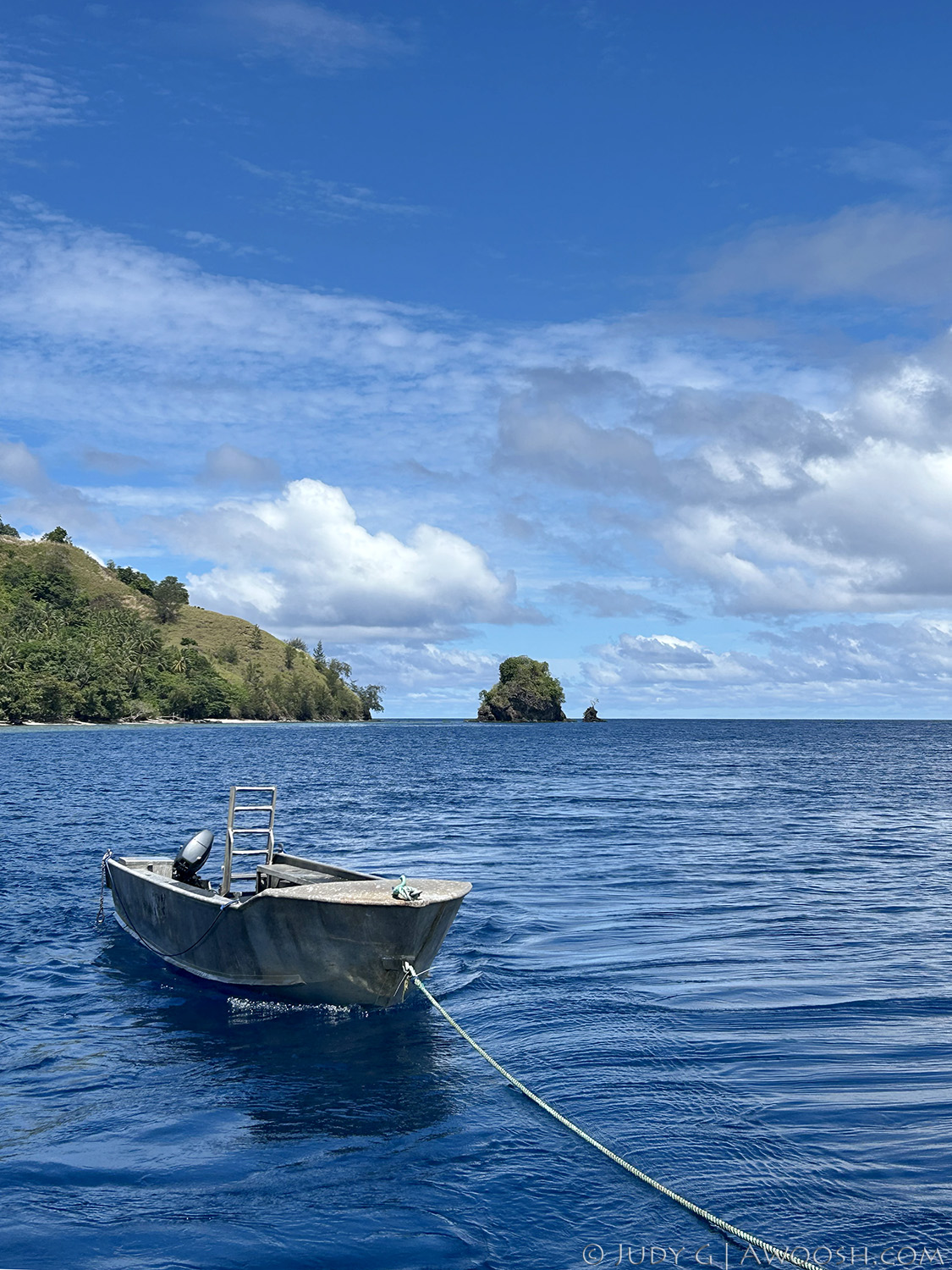
The dive deck is spacious, and logically laid out, with benches and storage bins below each diver’s spot, and an area to gather near the white board for dive briefings. The ship has two dive tenders (the aforementioned “tinnies”) for transporting divers between the mother ship and the dive sites.
We dove here, there, and everywhere — too many dive sites to list individually. A couple of them we dove twice, which took the agony out of deciding which lens to screw on before the dive. I personally did 30 dives in the 9 diving day trip, and there were more on offer that I sat out (the night dives). All of the gang (except one newer diver) dove Nitrox, which was consistently delivered at 32%, and the Bilikiki wisely includes it in their trip price at no added cost. Nitrox (air enriched with extra oxygen) is pretty much essential on these multiple dives per day, over multiple days of diving, trips.
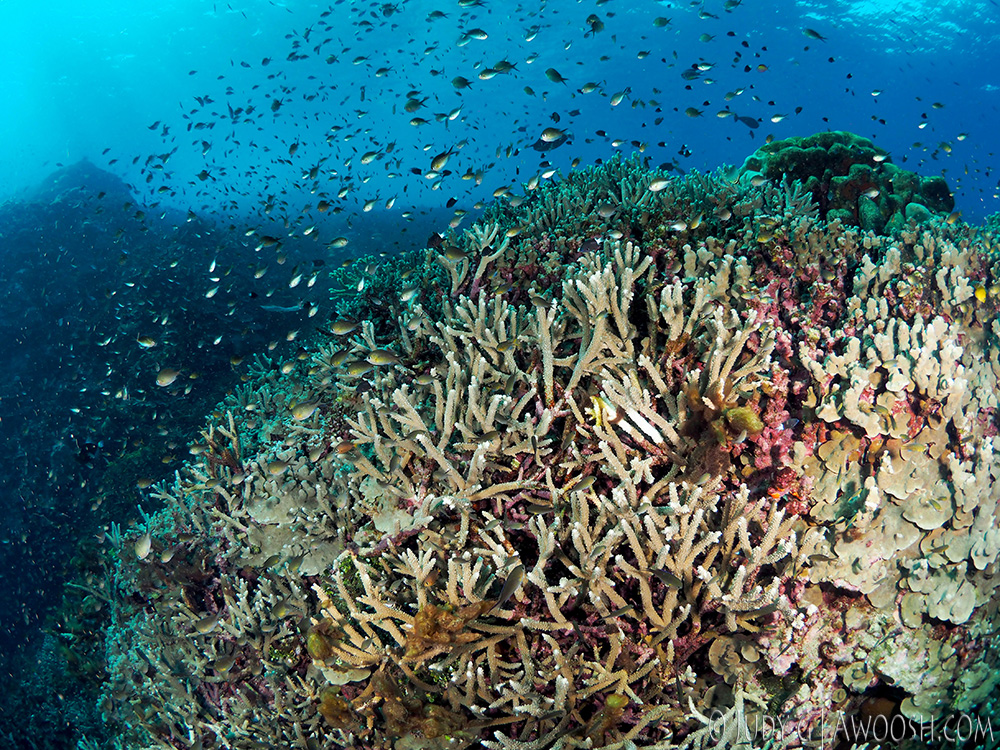
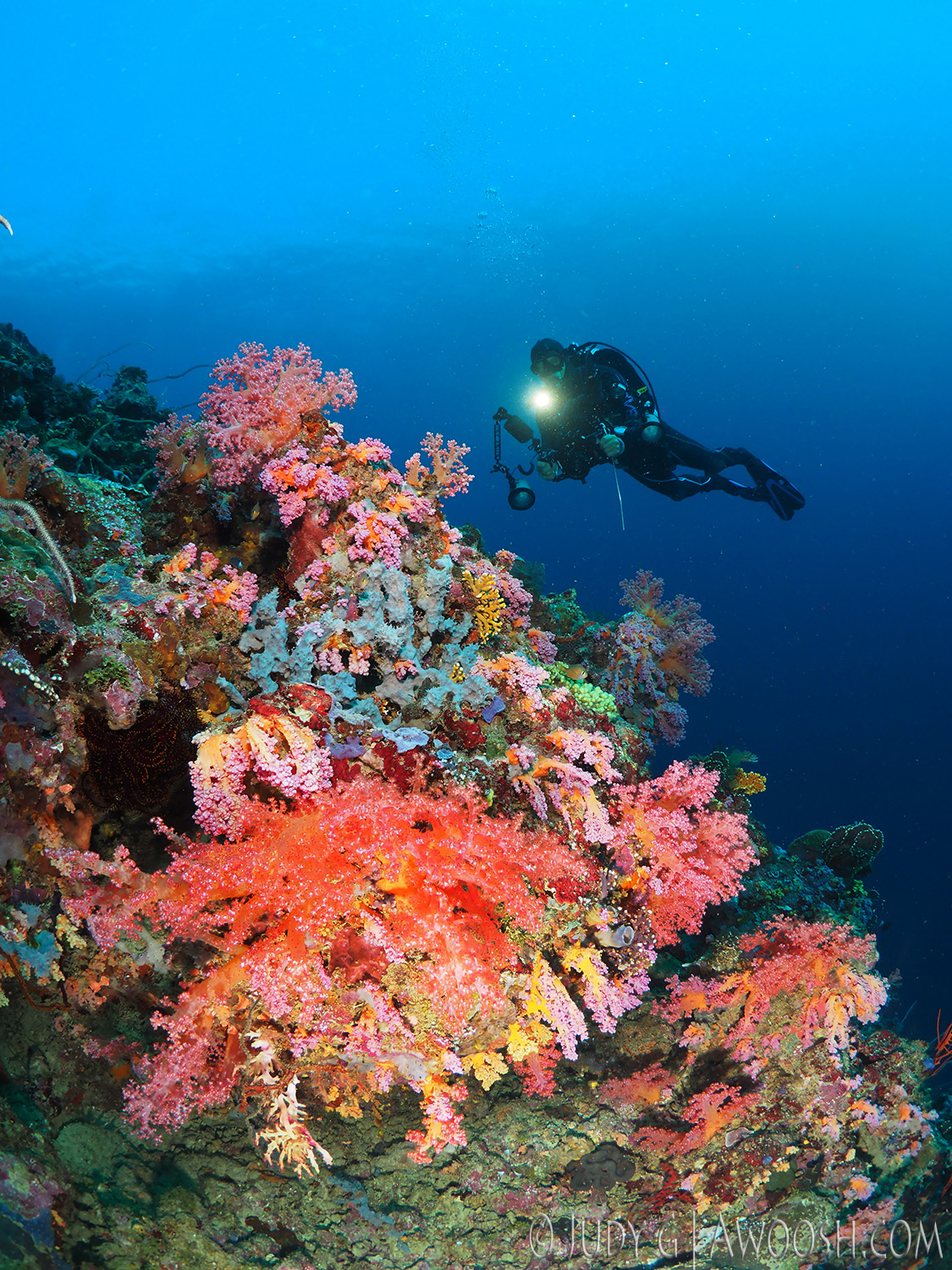
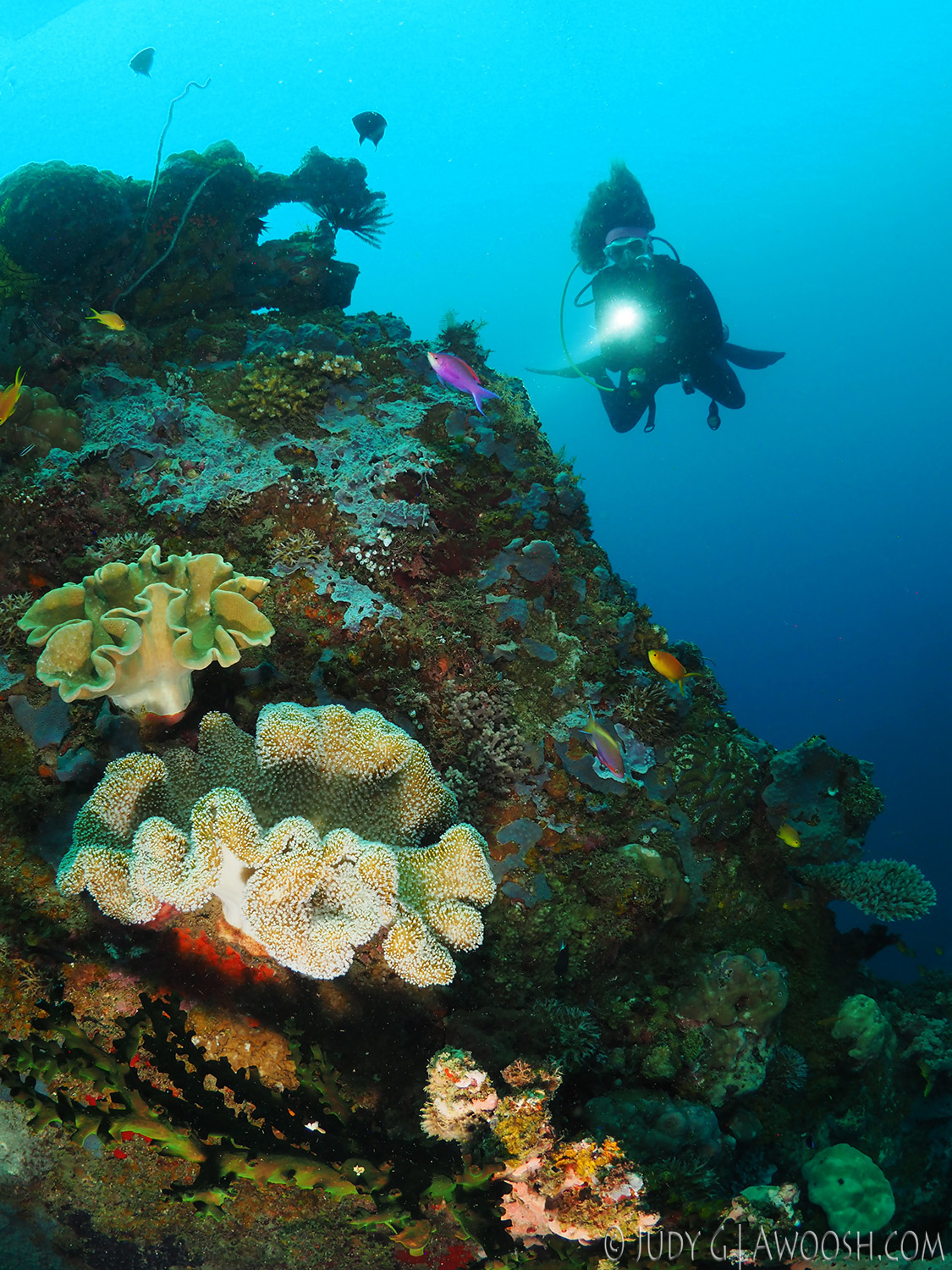
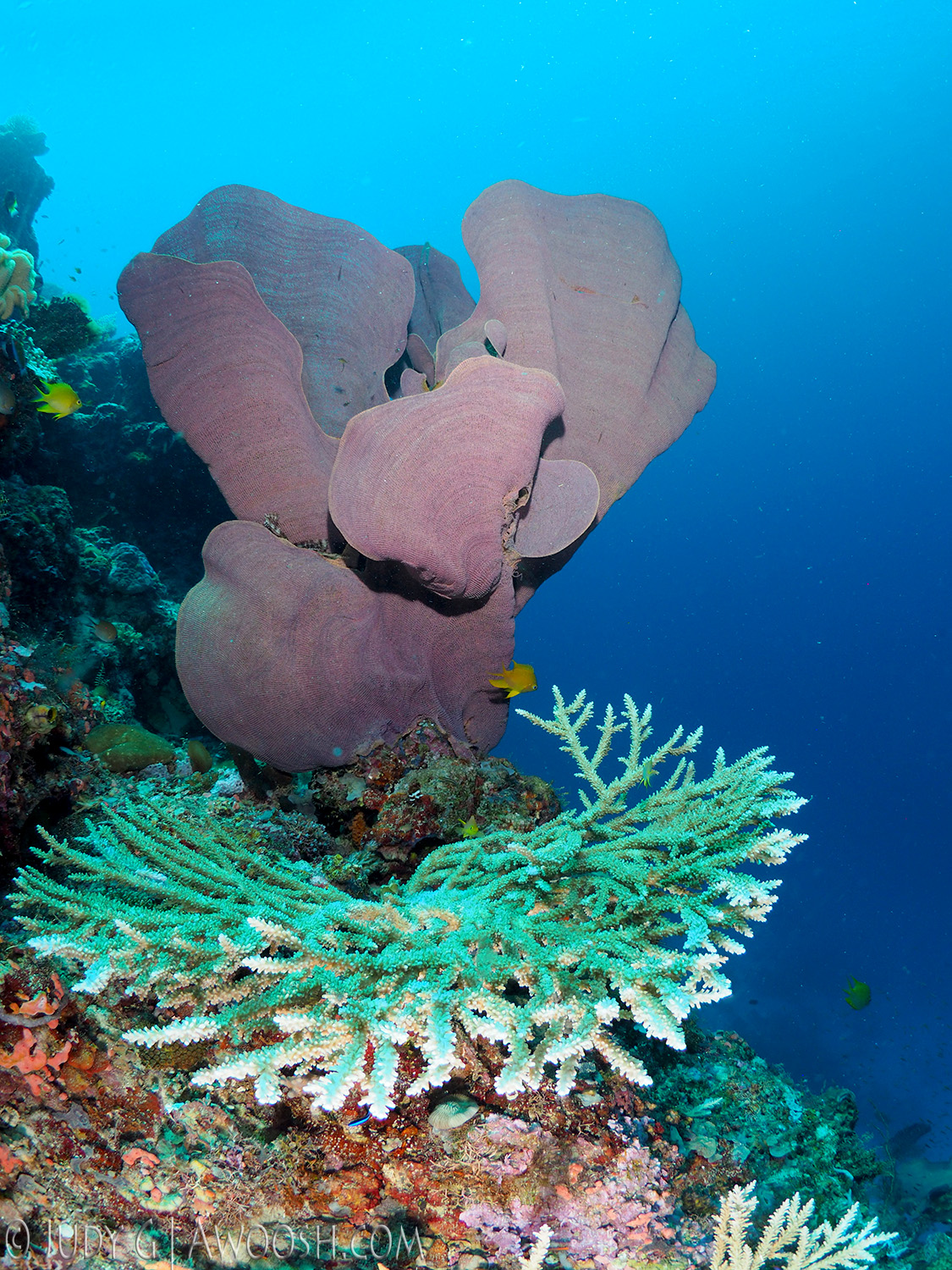
The conditions were generally pretty mellow on this adventure — except for one washing machine gong show of a dive mid-trip. Otherwise, there was minimal current, and lots of great diving with no need to go deep. It was heartwarming to see so many healthy coral gardens, and in some areas, they thrived right up to the surface.
Below are galleries of photos from our time diving in the Solomon Islands. You can click on any image to see a full screen version. All underwater images were shot with an Oly OMD E-M5II, housed in a Nauticam box, with Inon strobes. Most land shots were taken with an iPhone.
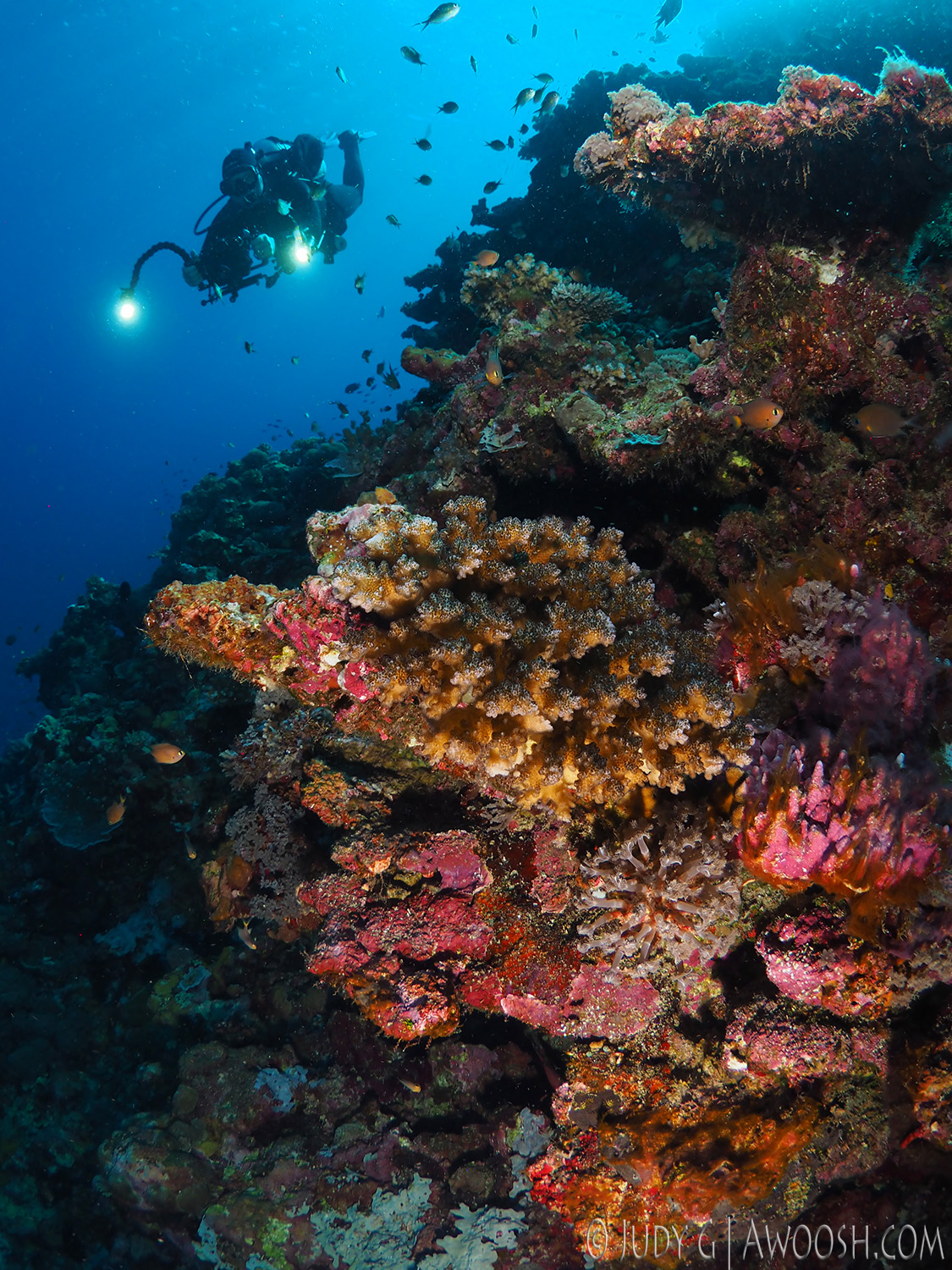
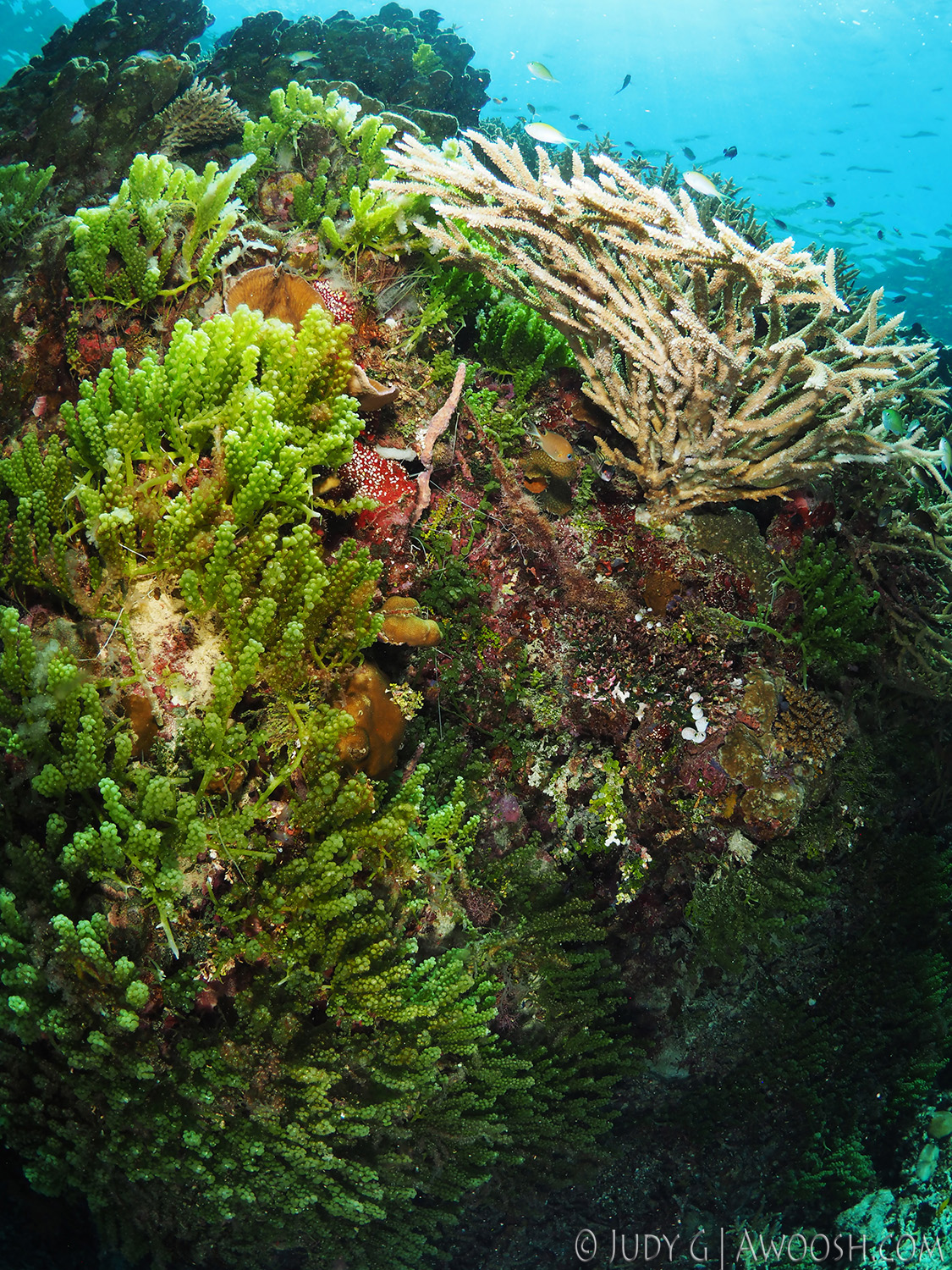
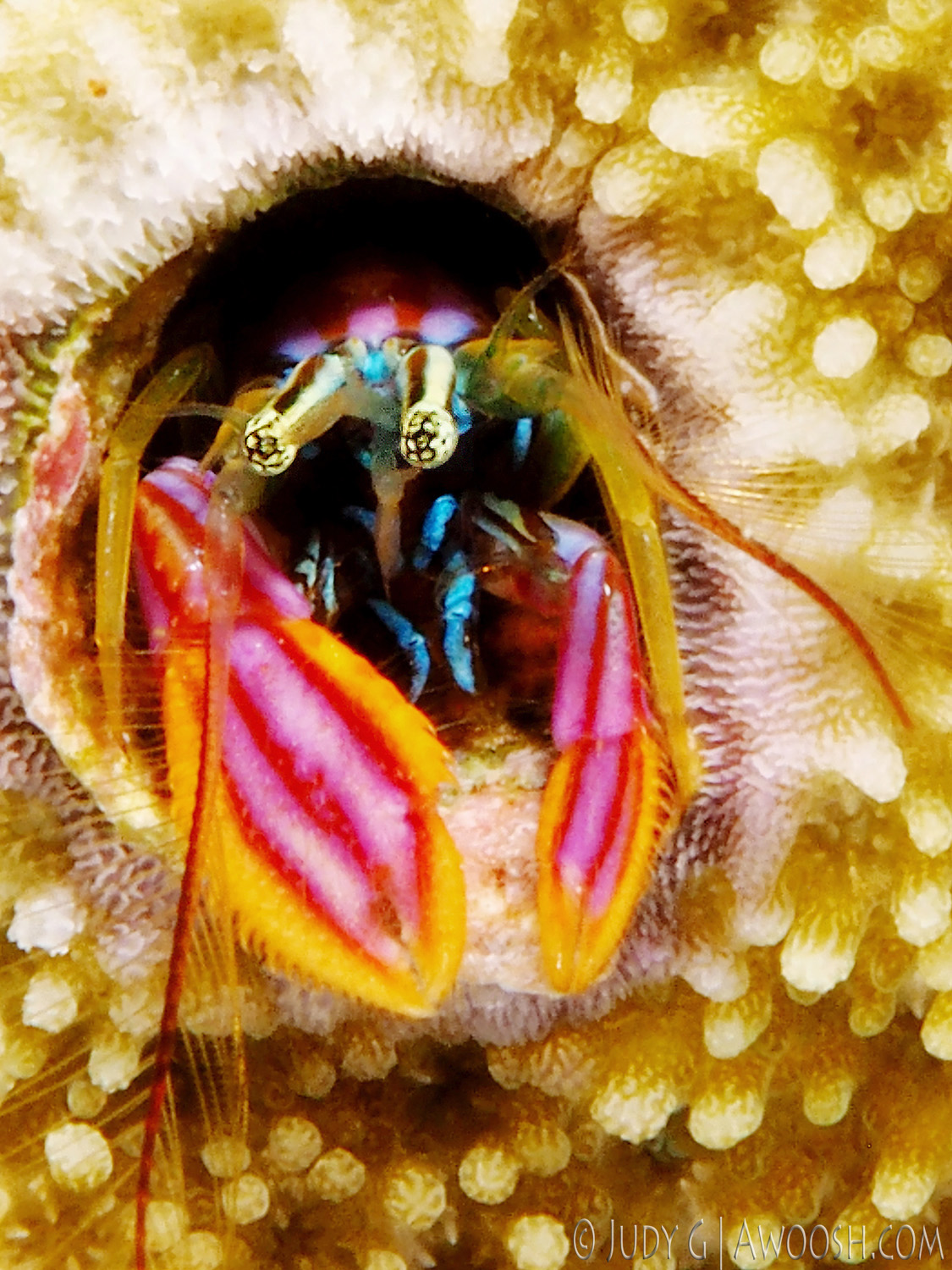
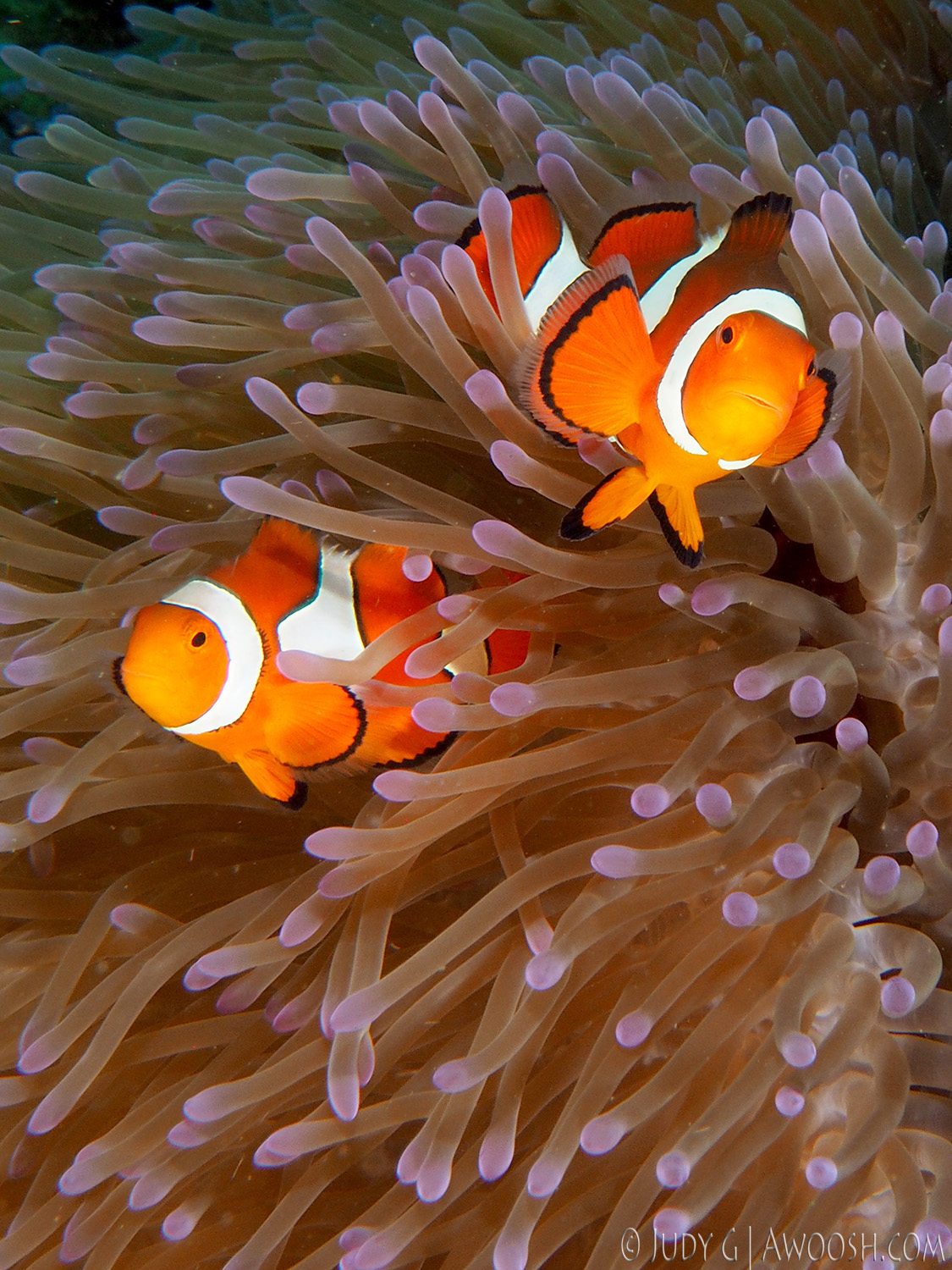
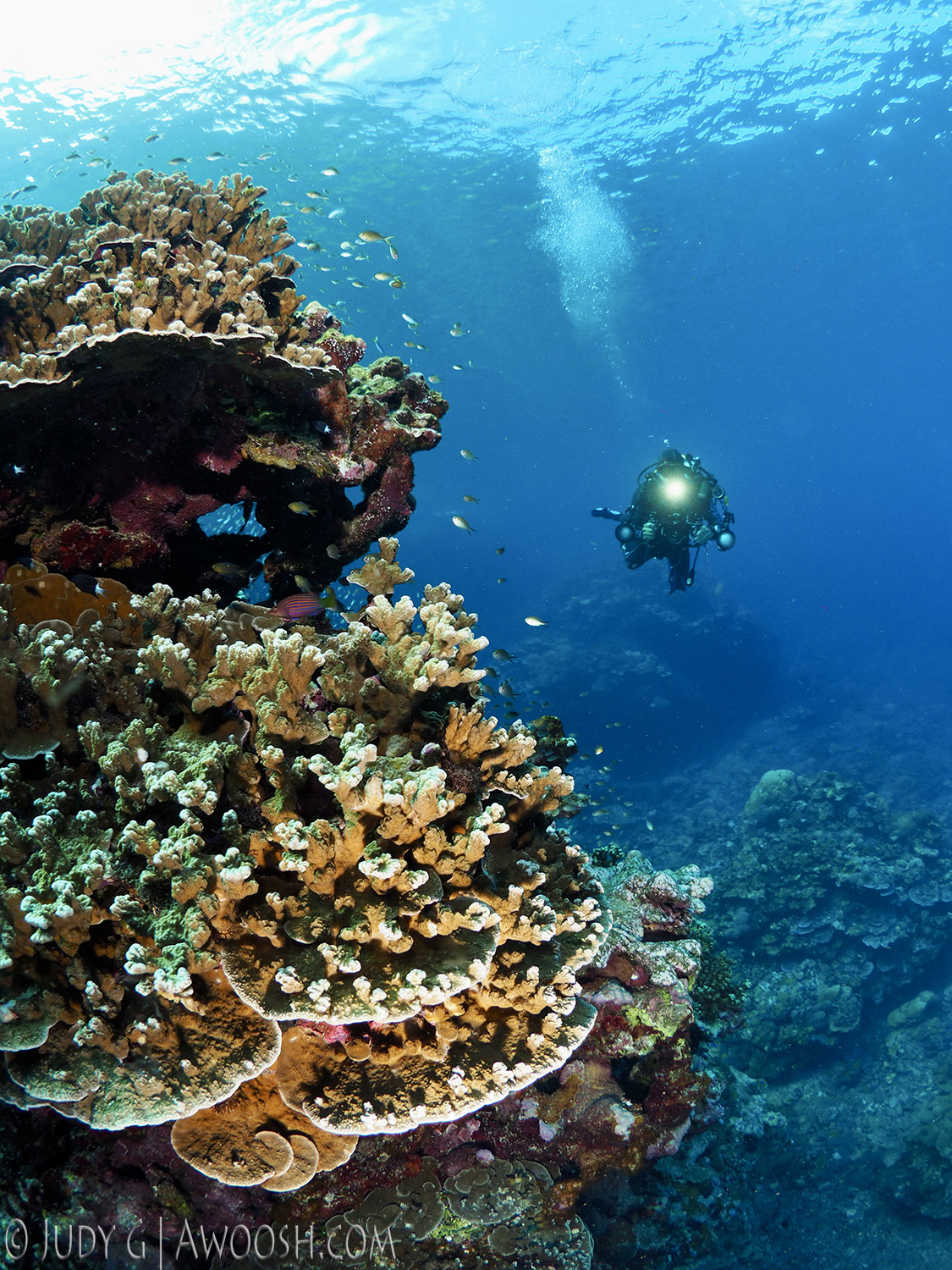
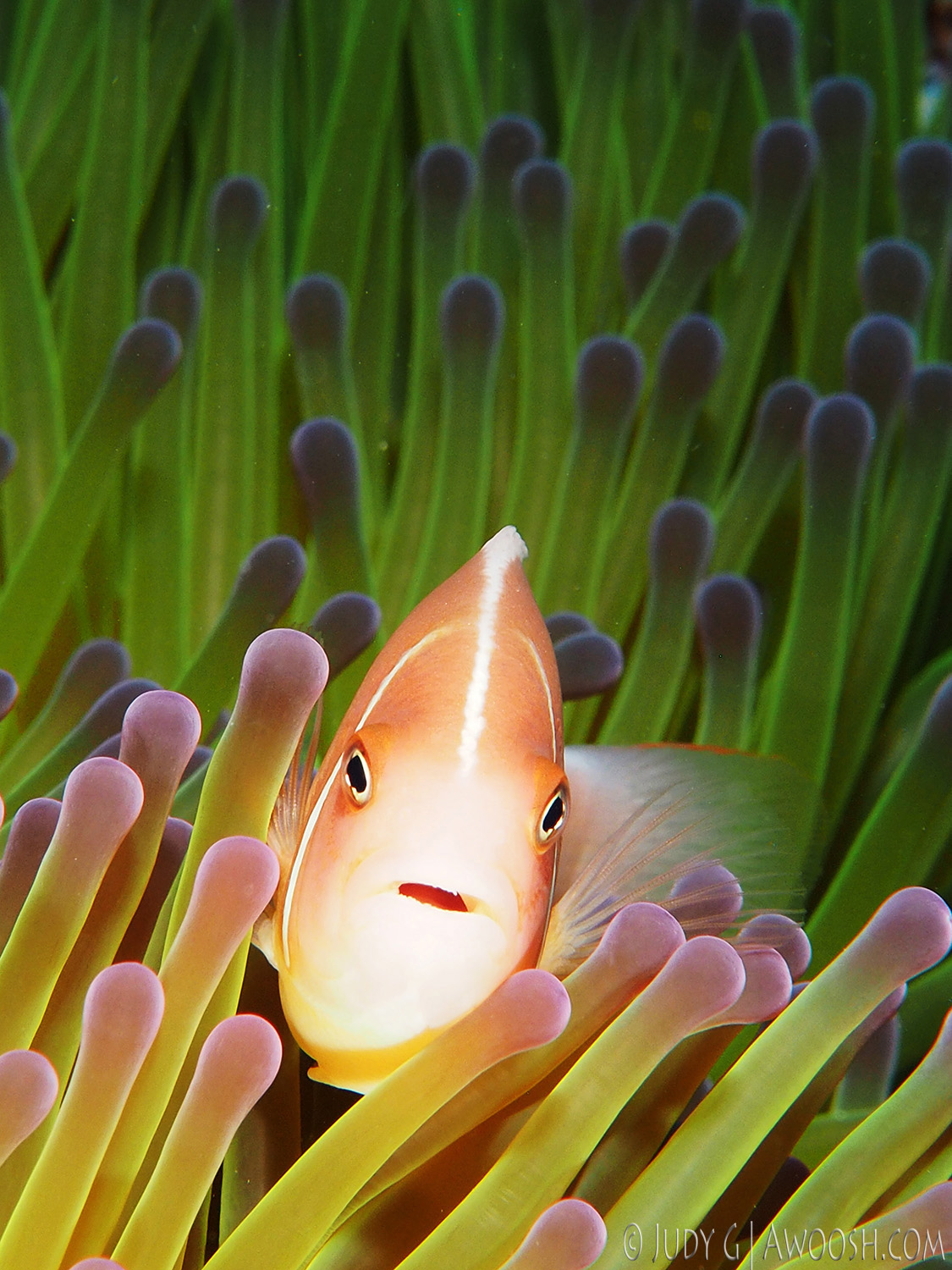
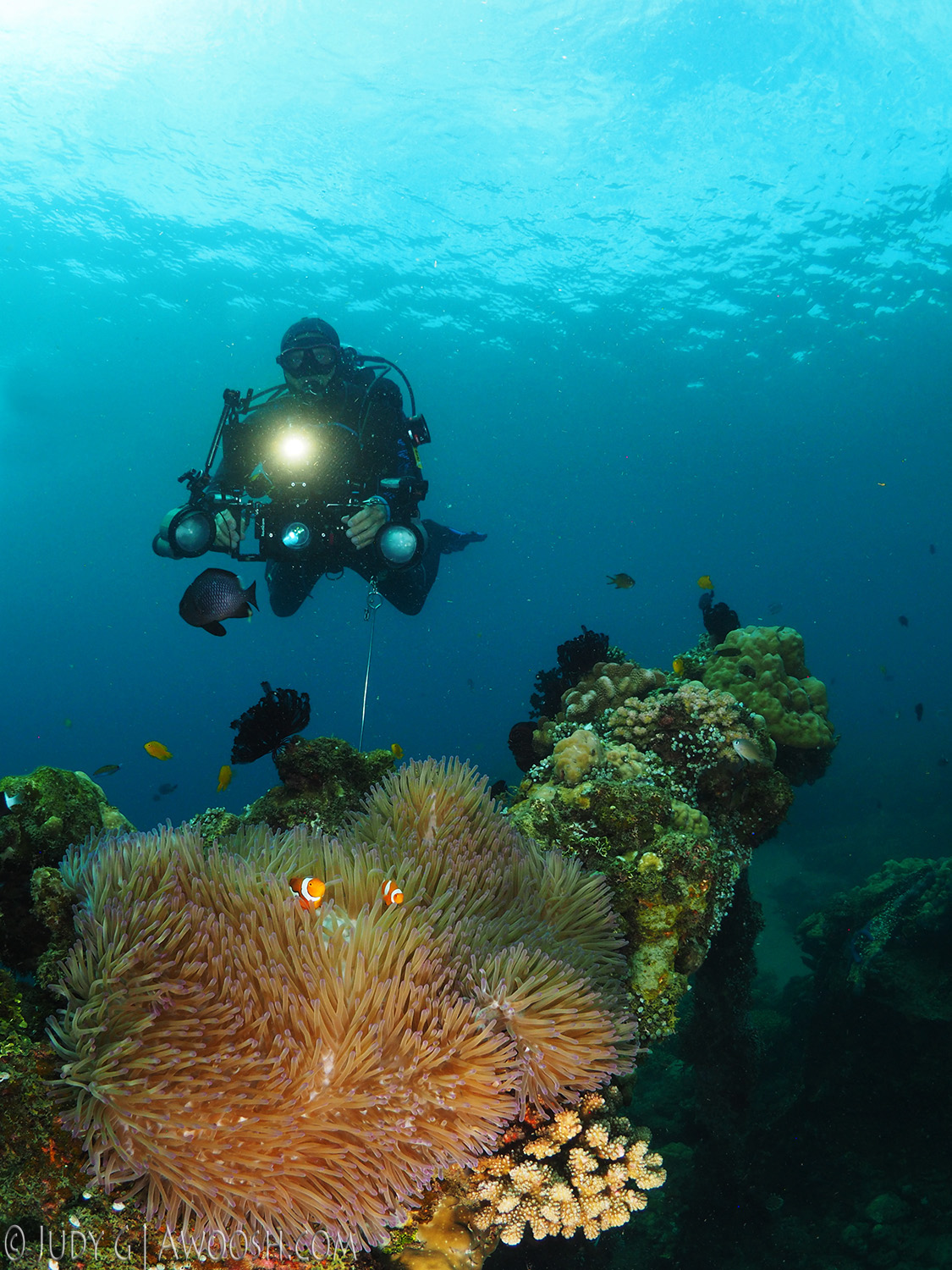
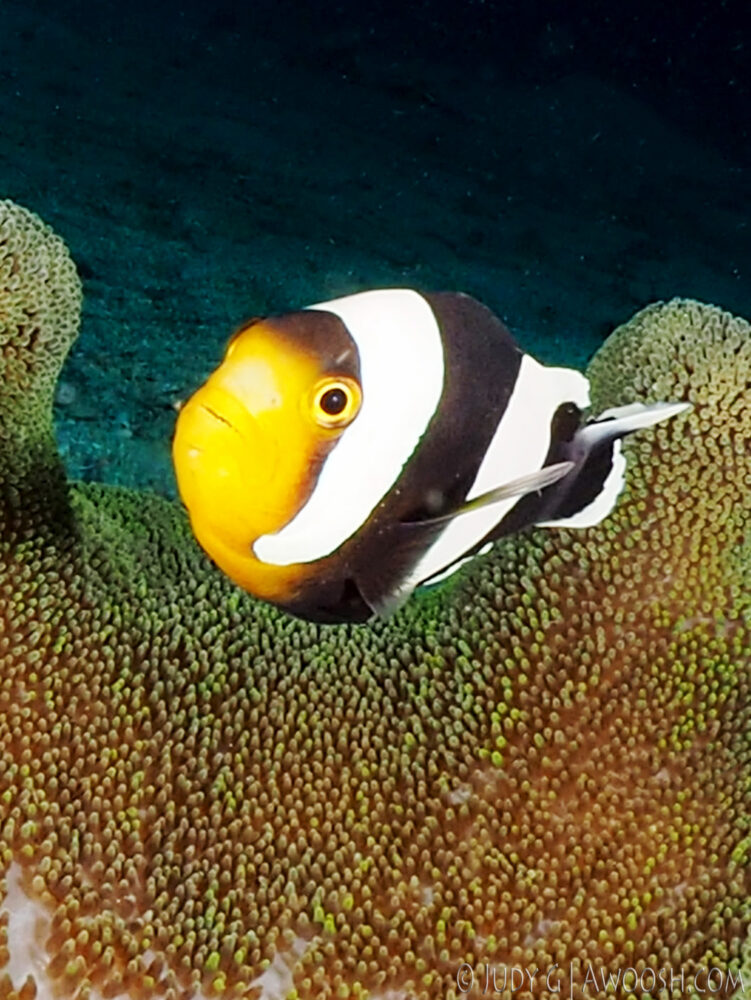
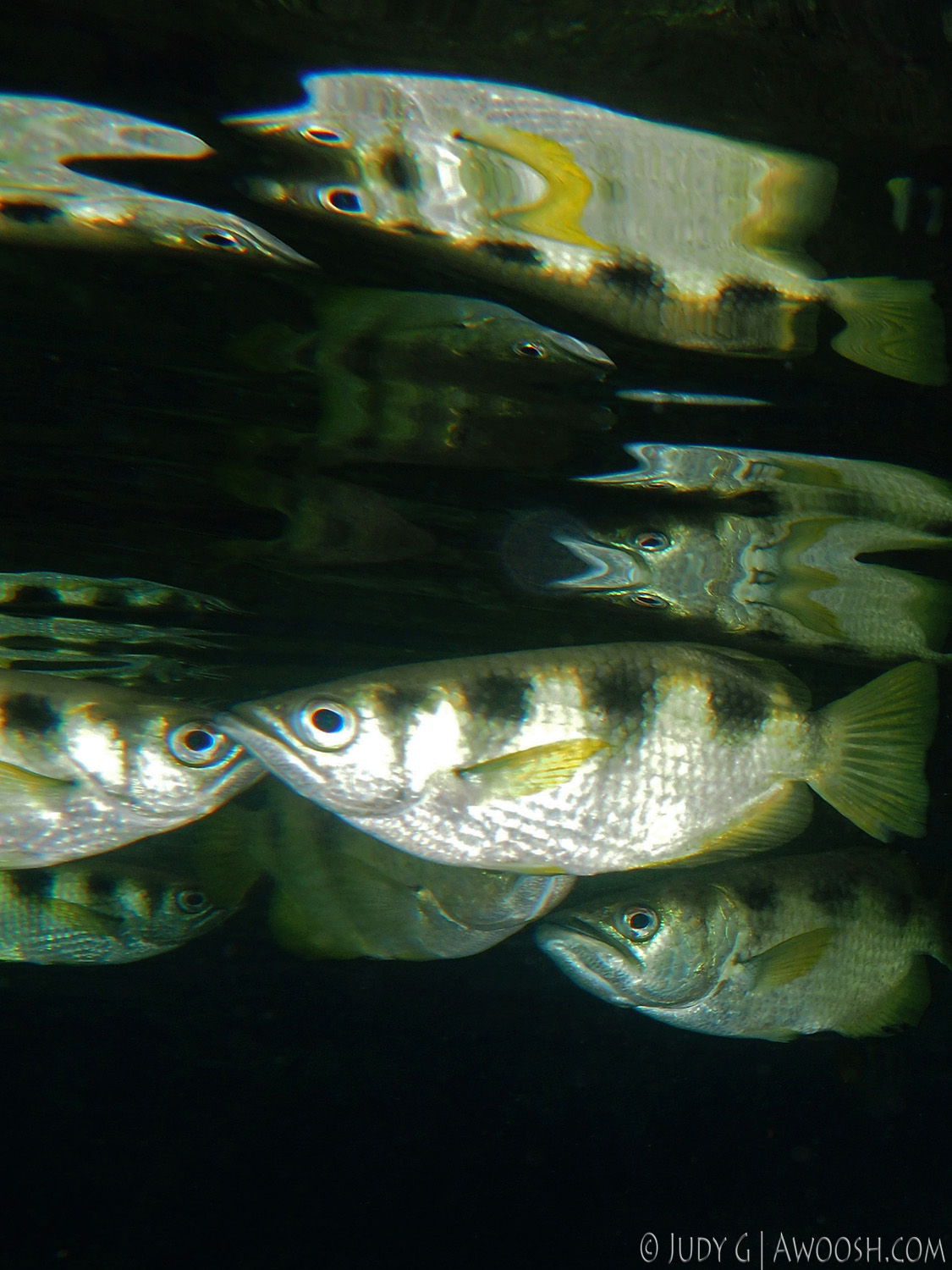
One of the things our group loved was that we were not put into set groups for the duration. Before each dive, divers would peg their name below one of the three tender trips to the dive sites. So happily, we were able to dive with all of the buds on this trip. Each group was accompanied by a dive guide, but there was no pressure to stay with them. As very experienced divers, we appreciated the opportunity to explore at our own pace and to surface when we were ready to end our dive.
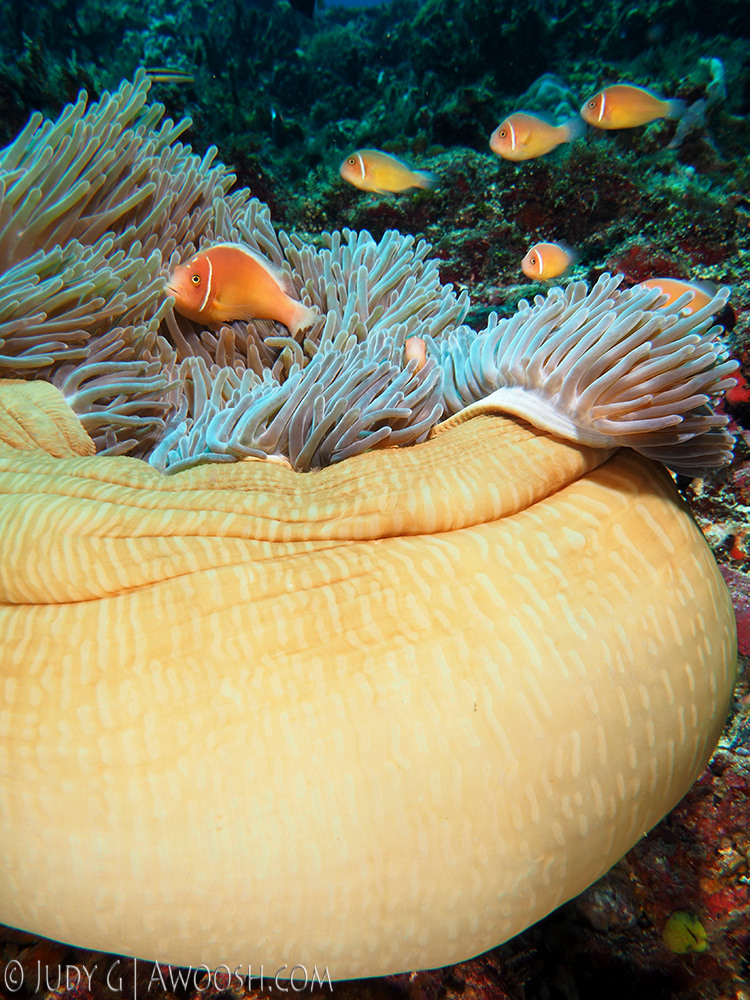
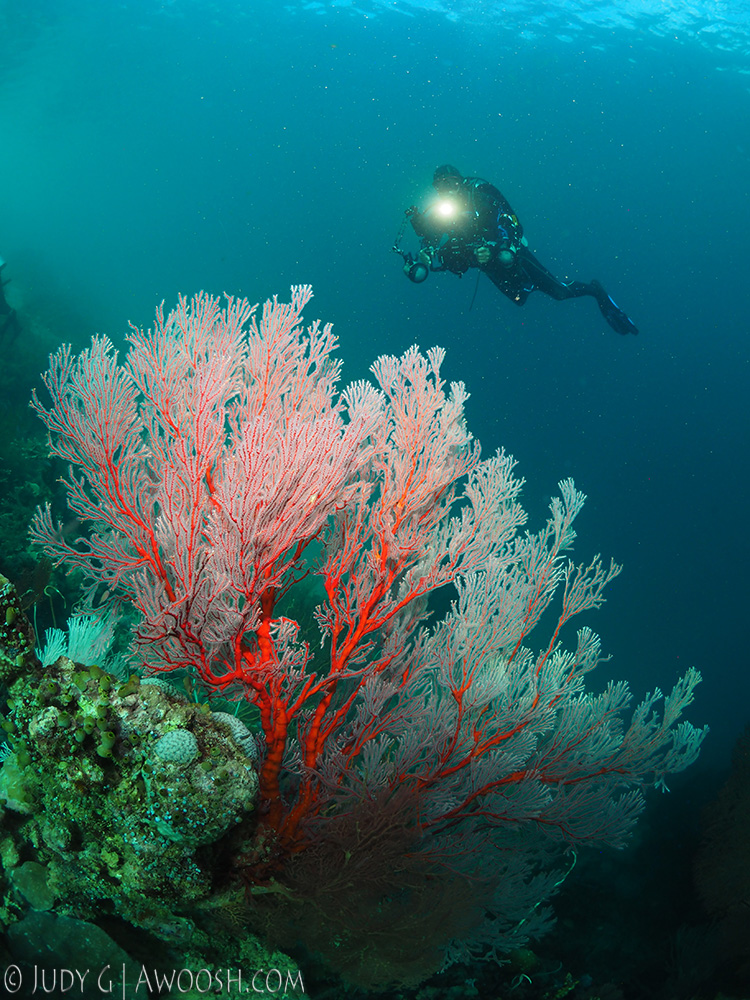
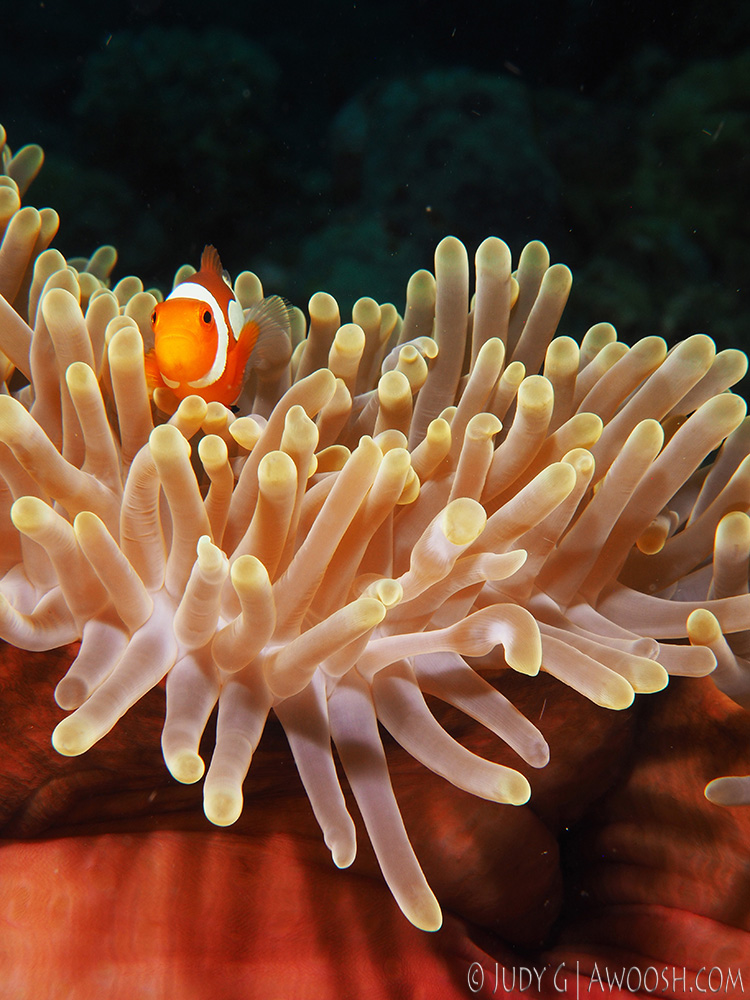
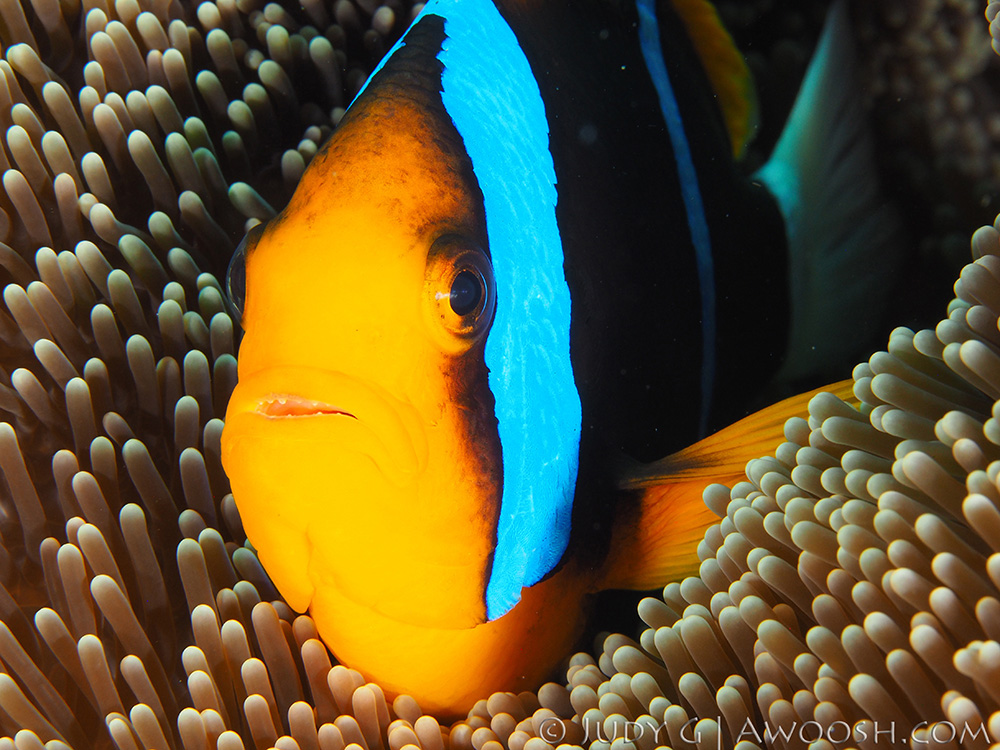
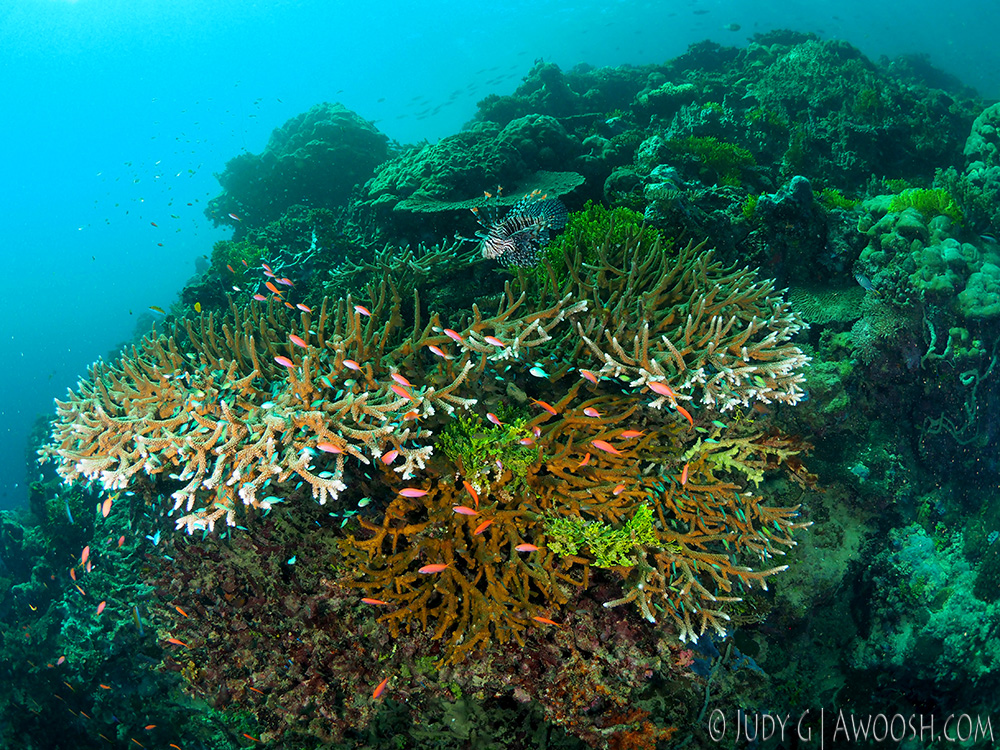
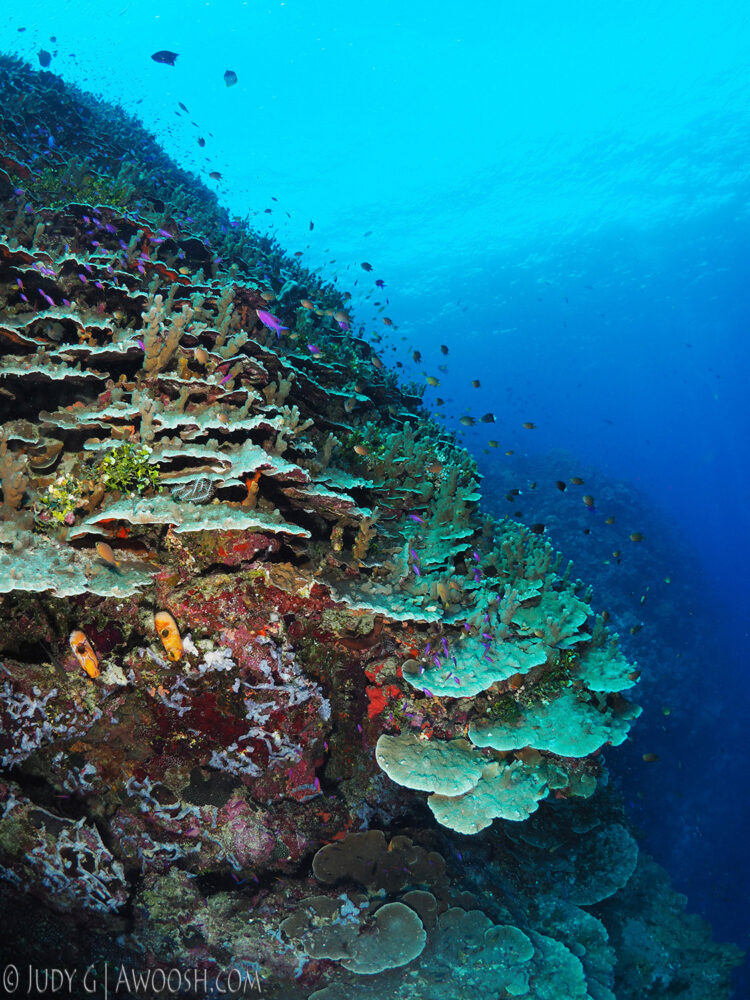
Dive times were generous whenever possible, and on two glorious days, the stern dive deck was open for use on the main vessel, when the boat was tethered stern & bow in fairly shallow water, and we were permitted to go for as long as we liked. Happily I was able to bag several (not deep and current-less) 2 hour plus dives. My idea of heaven…
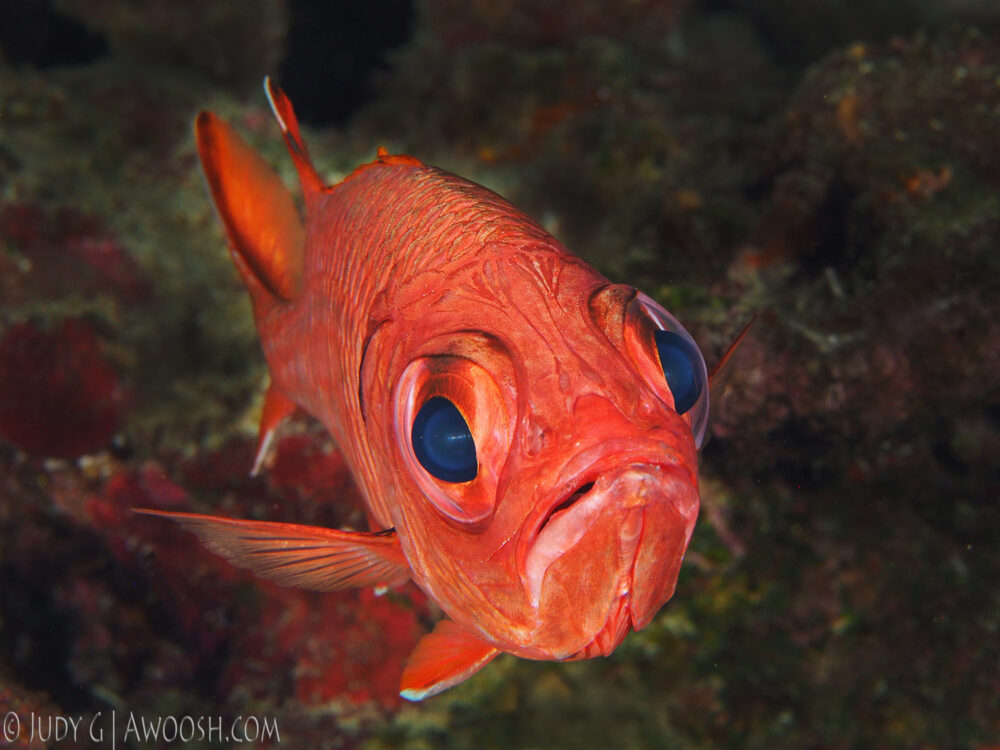
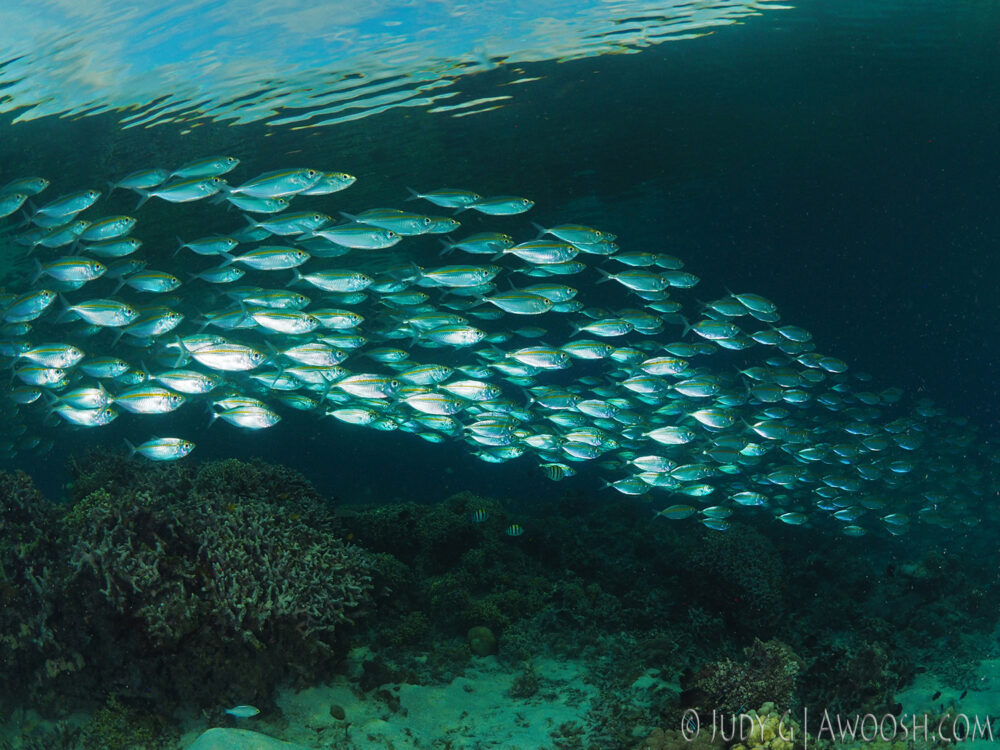
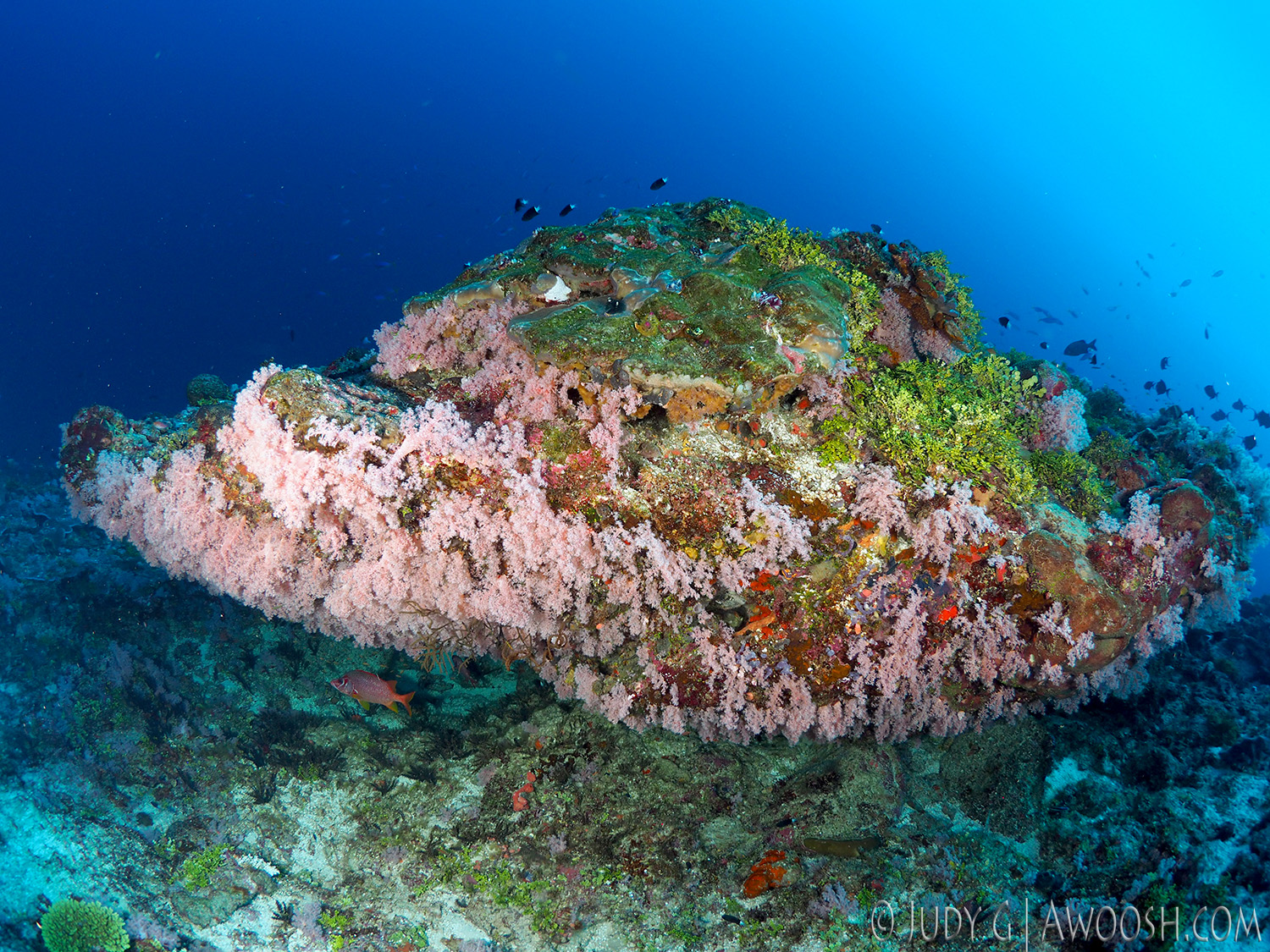
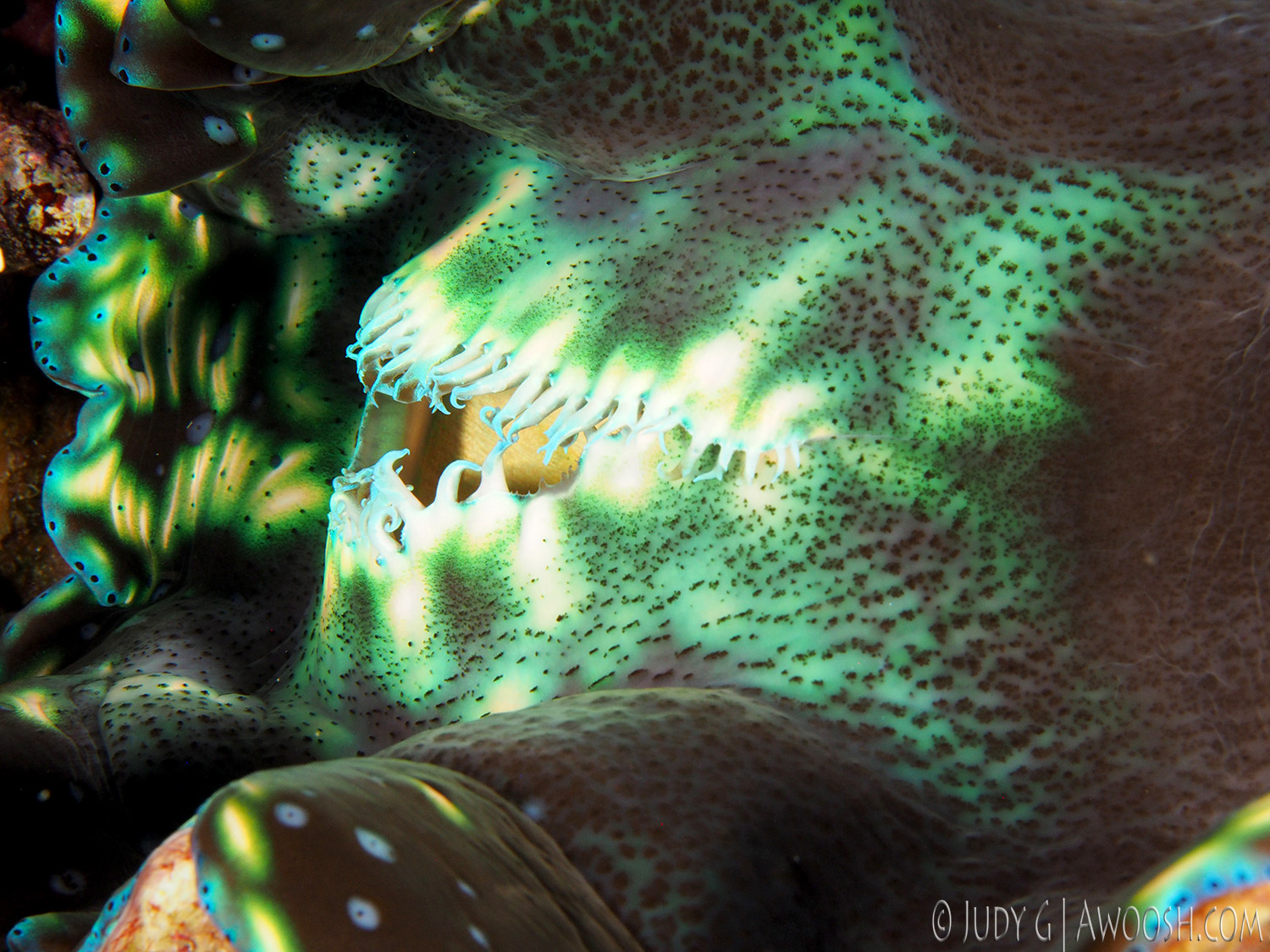
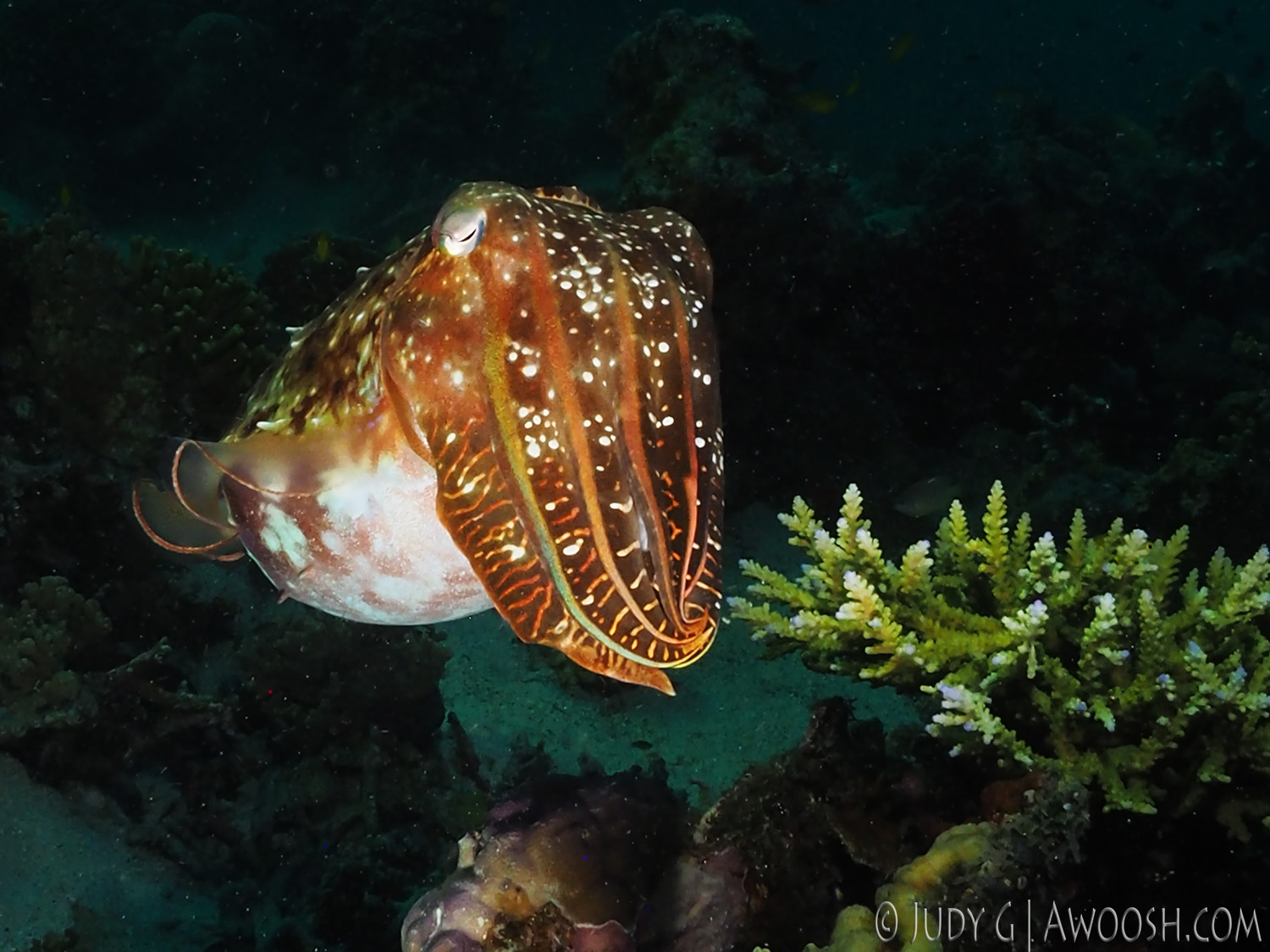
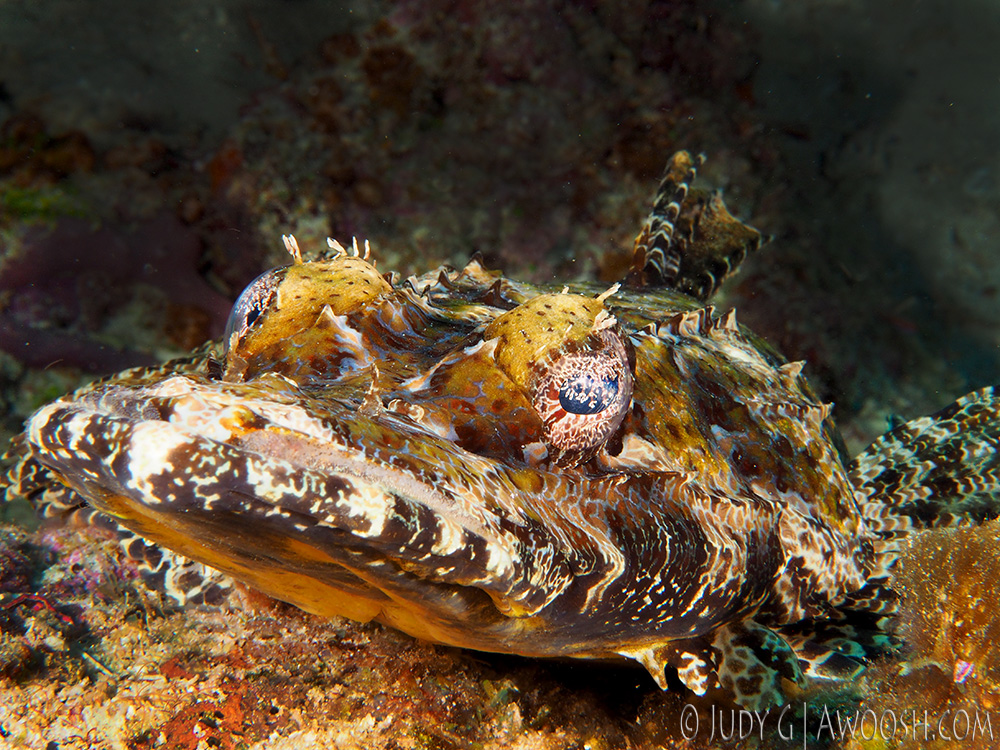
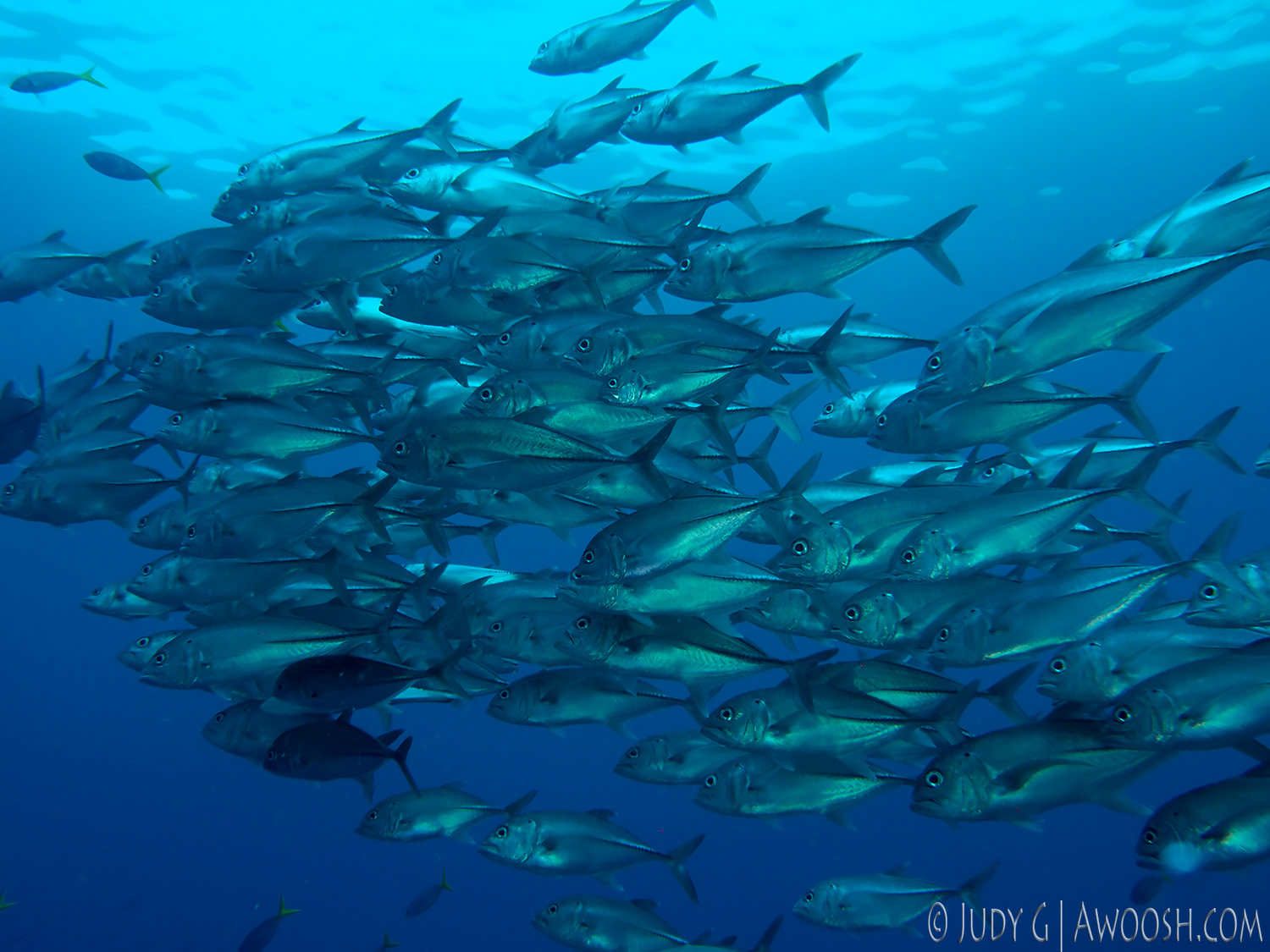
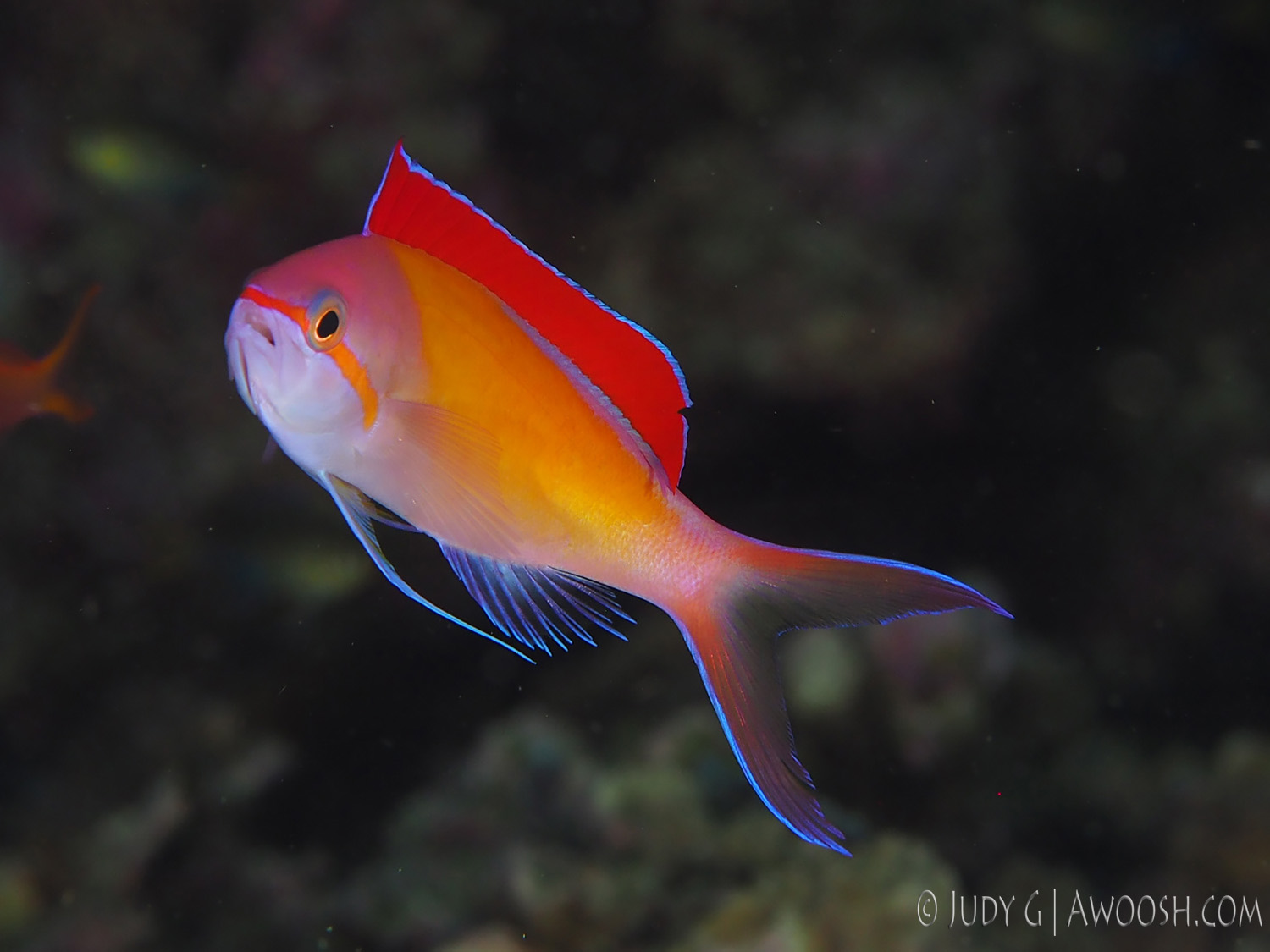
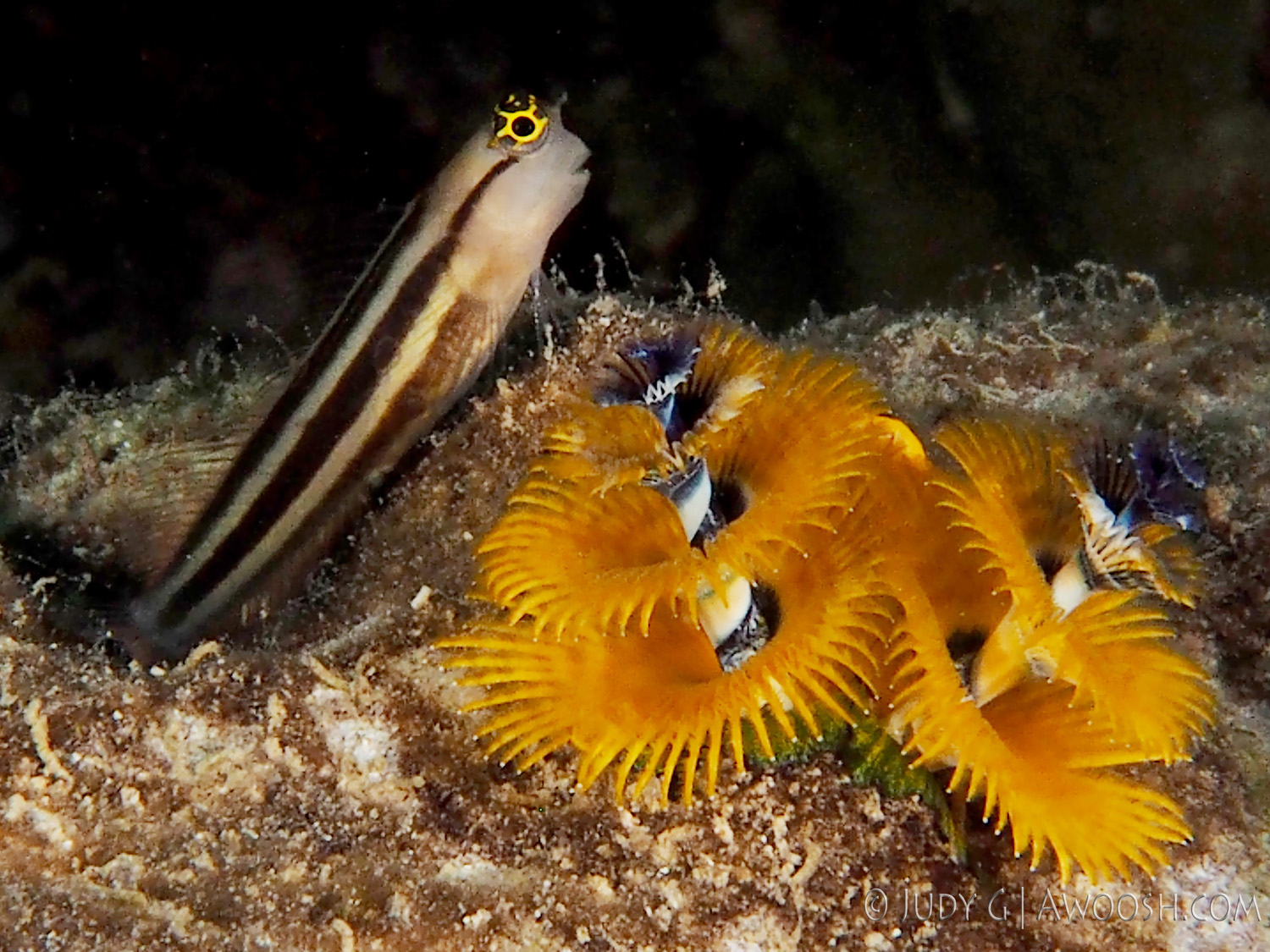
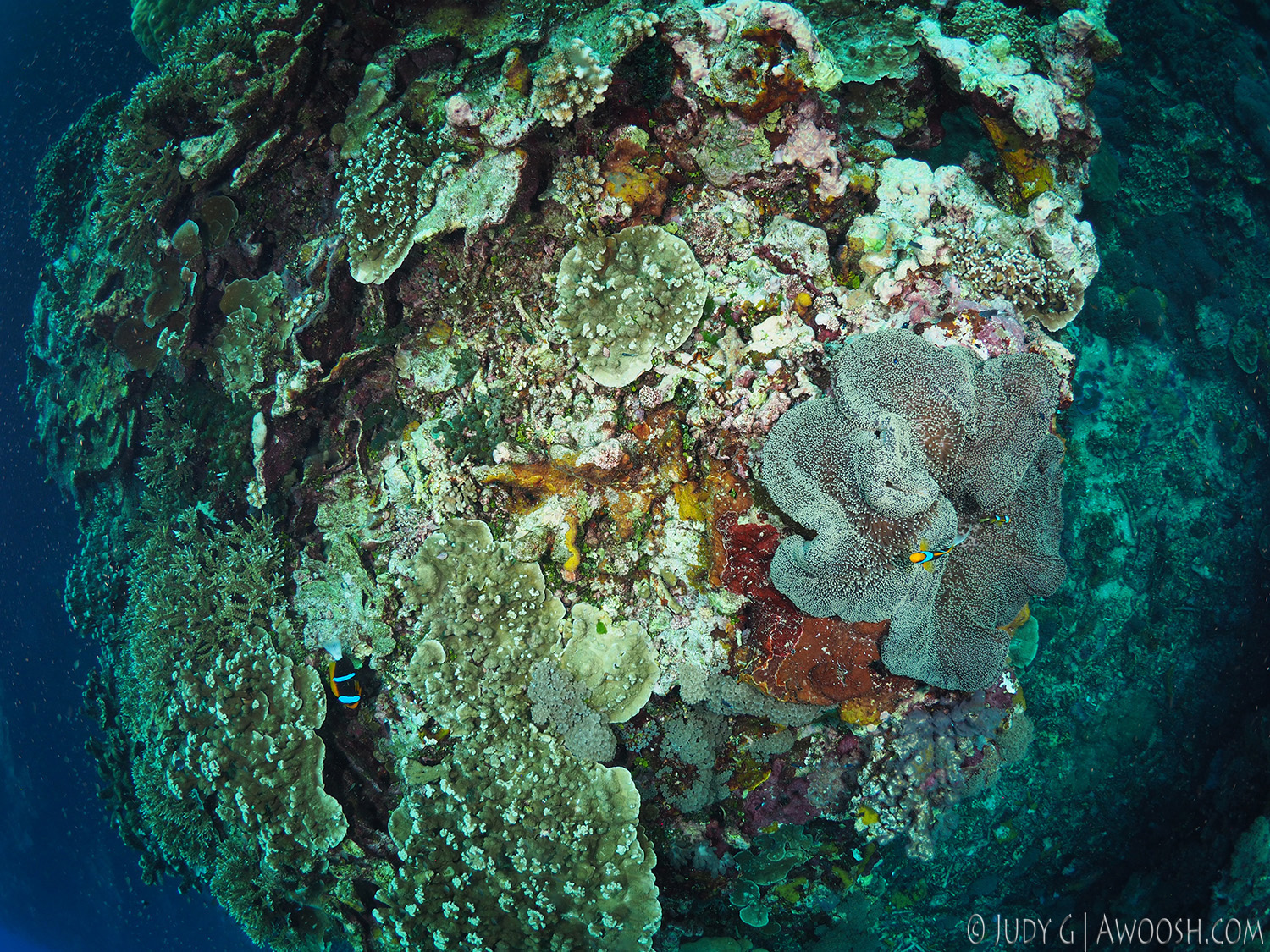
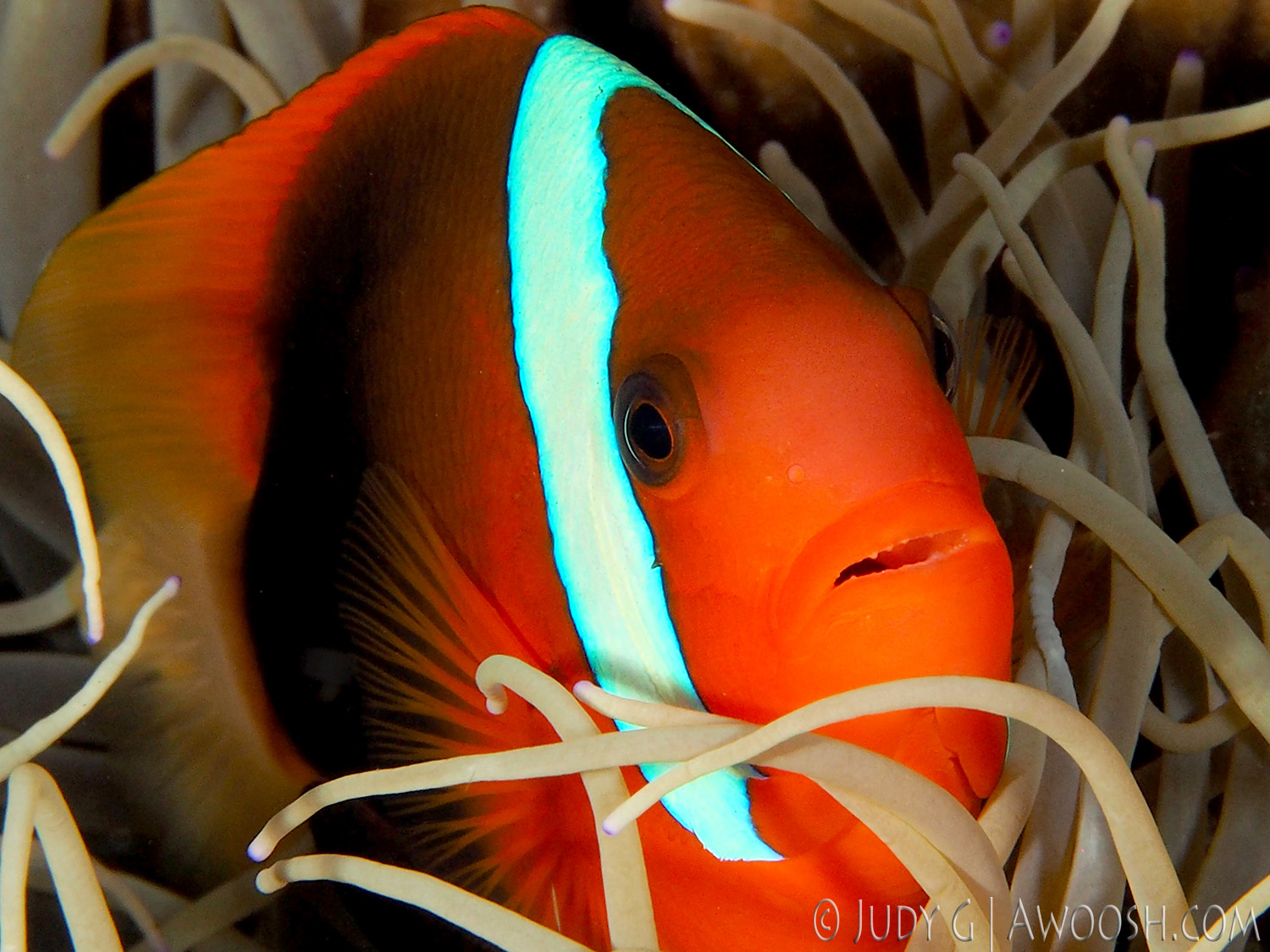
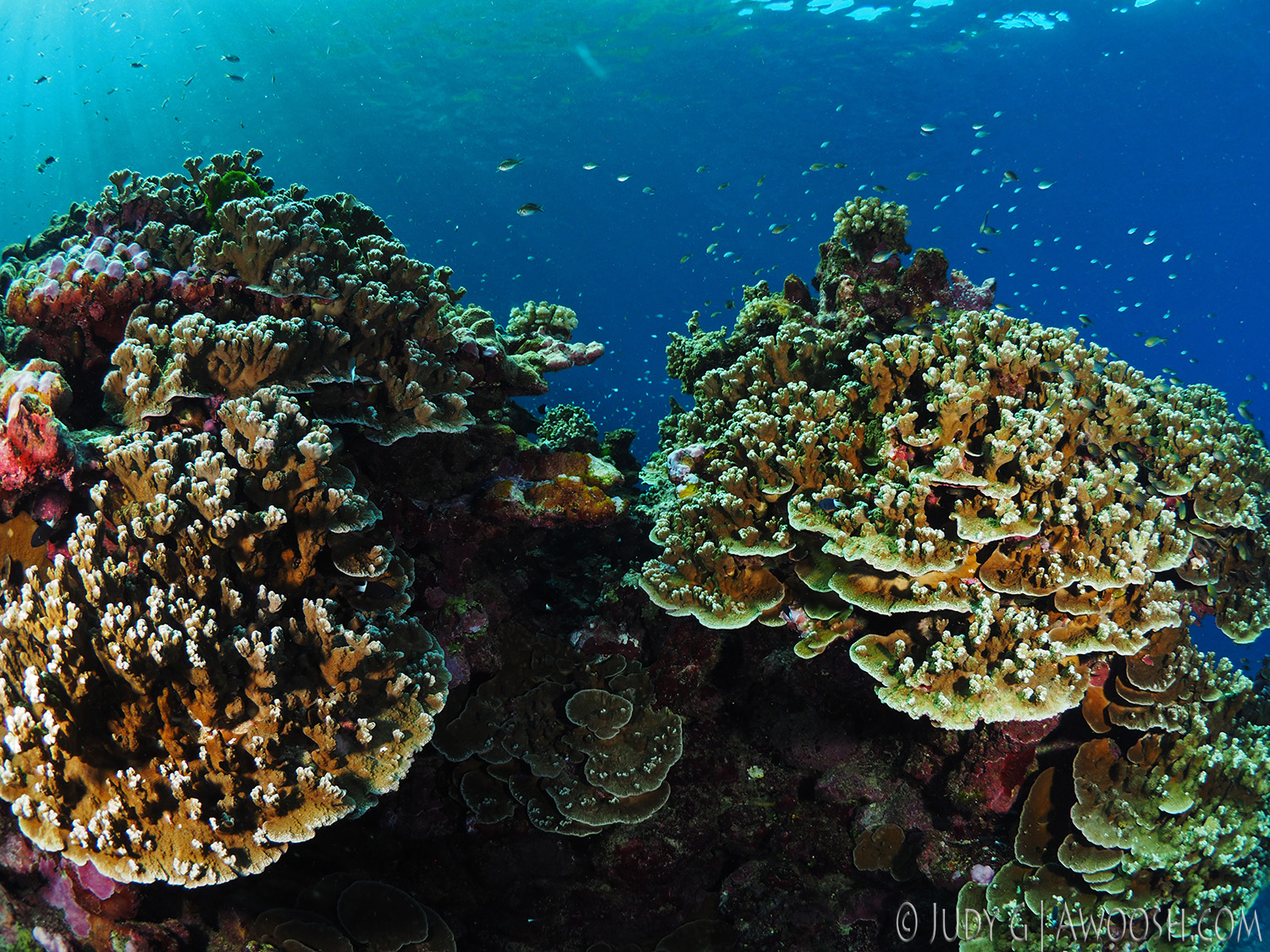
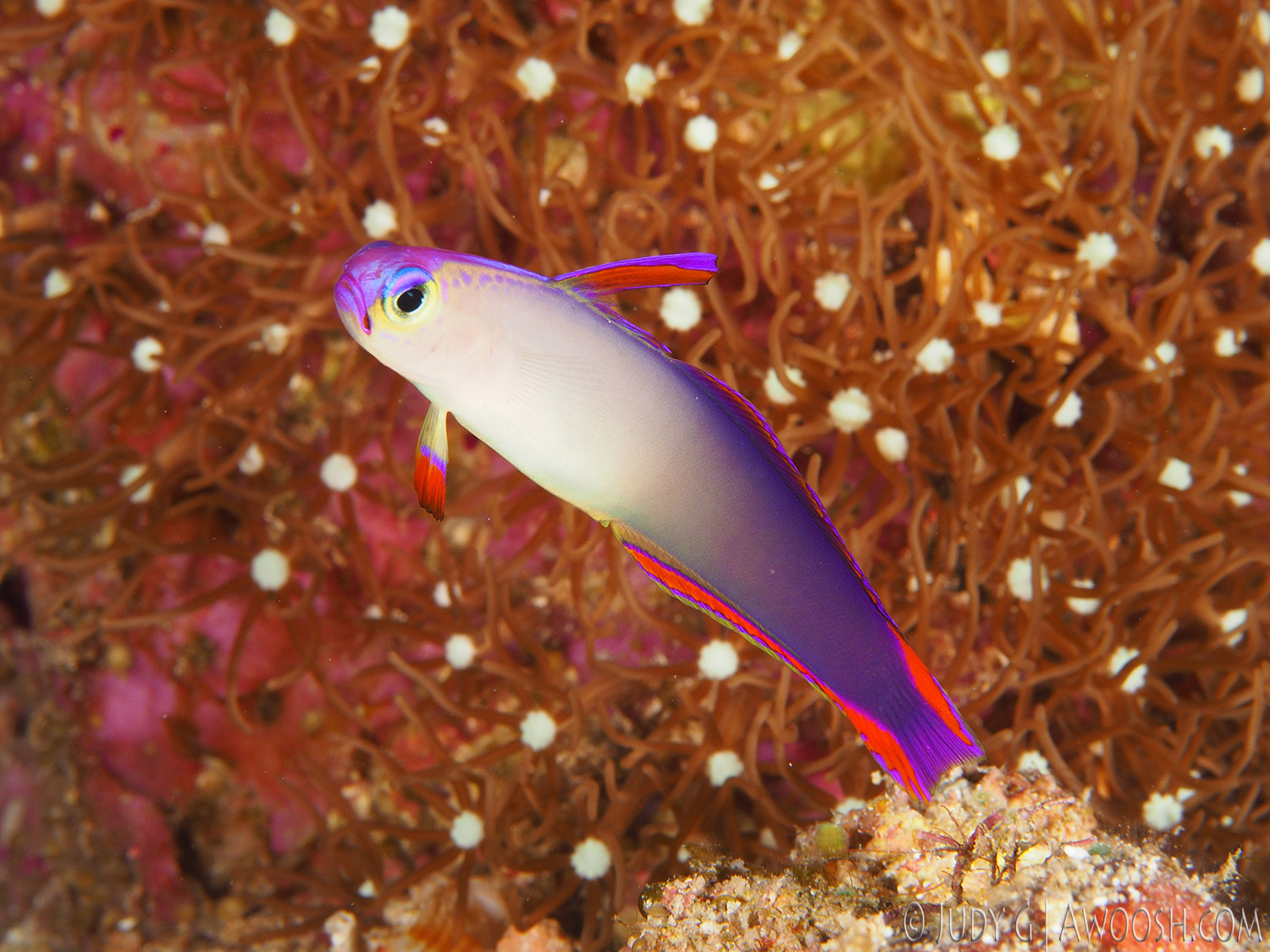
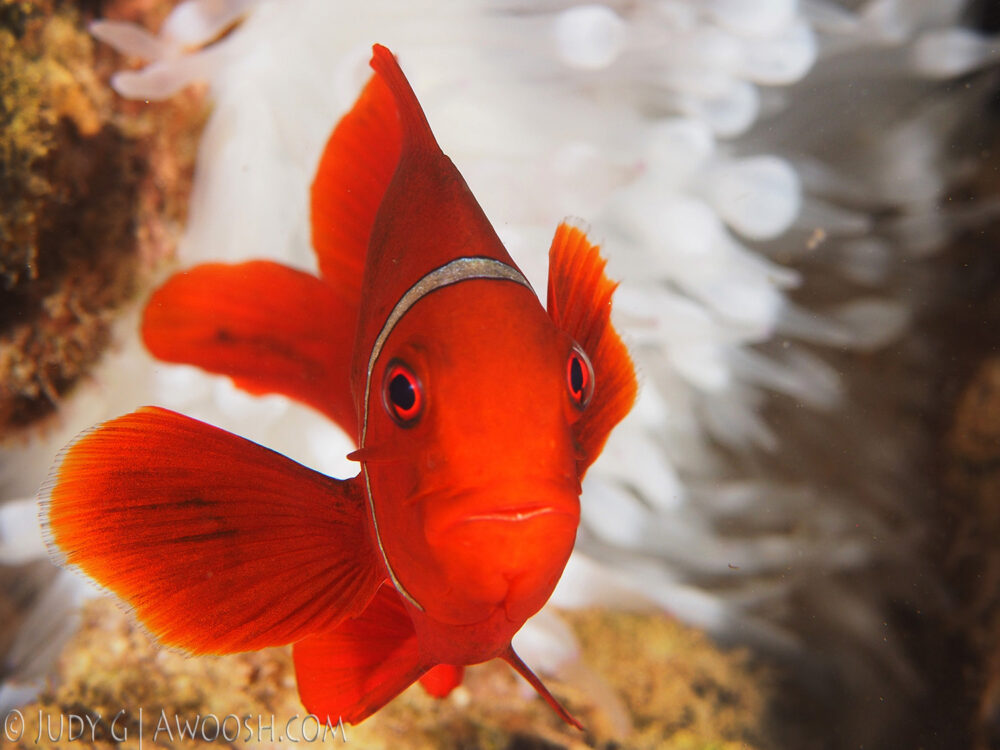
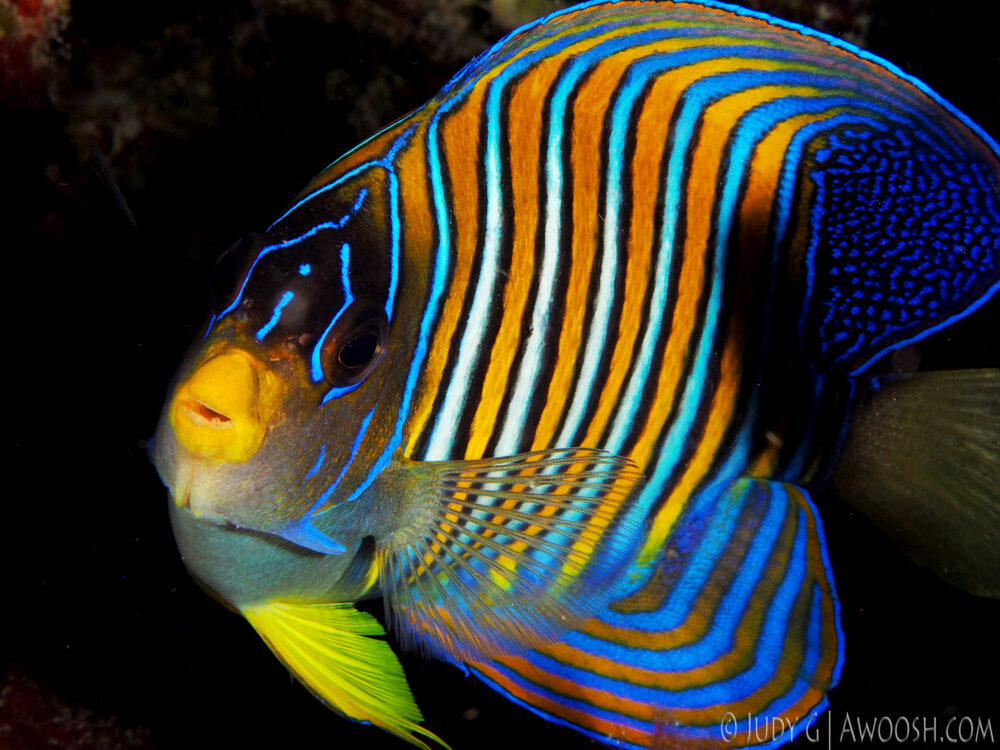
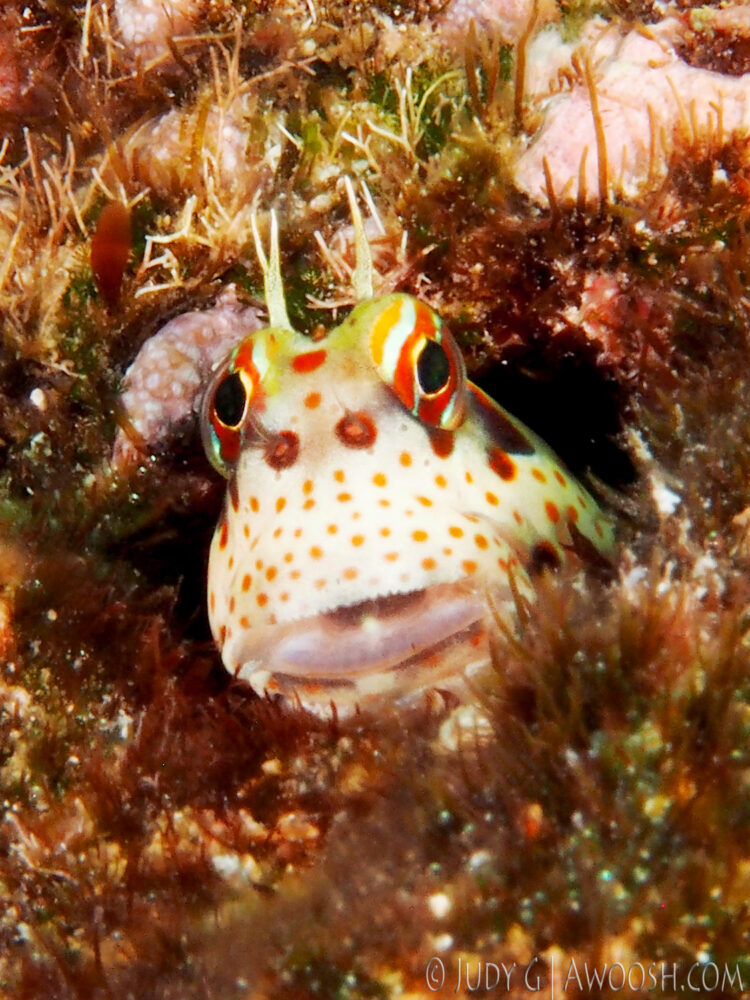
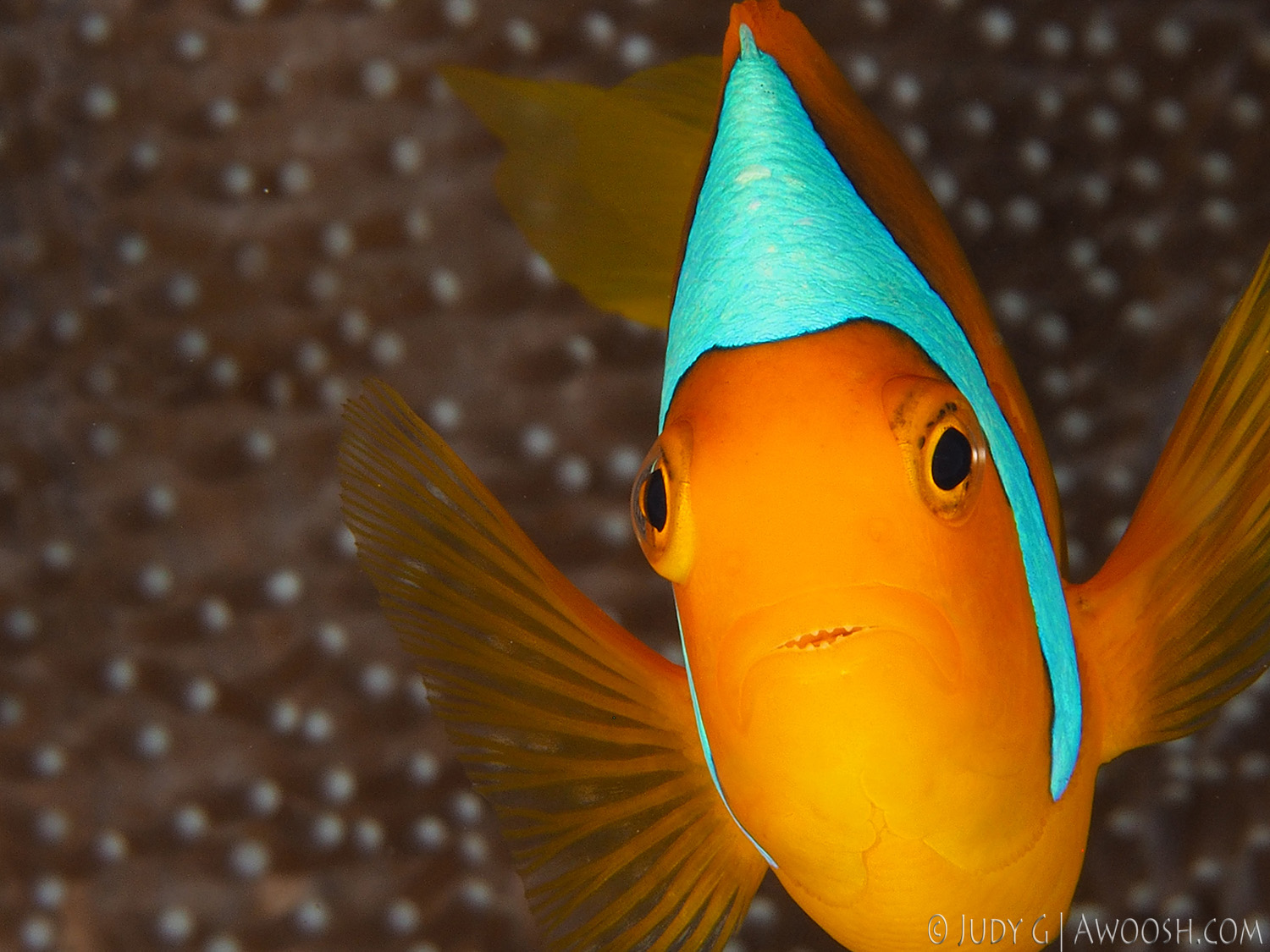
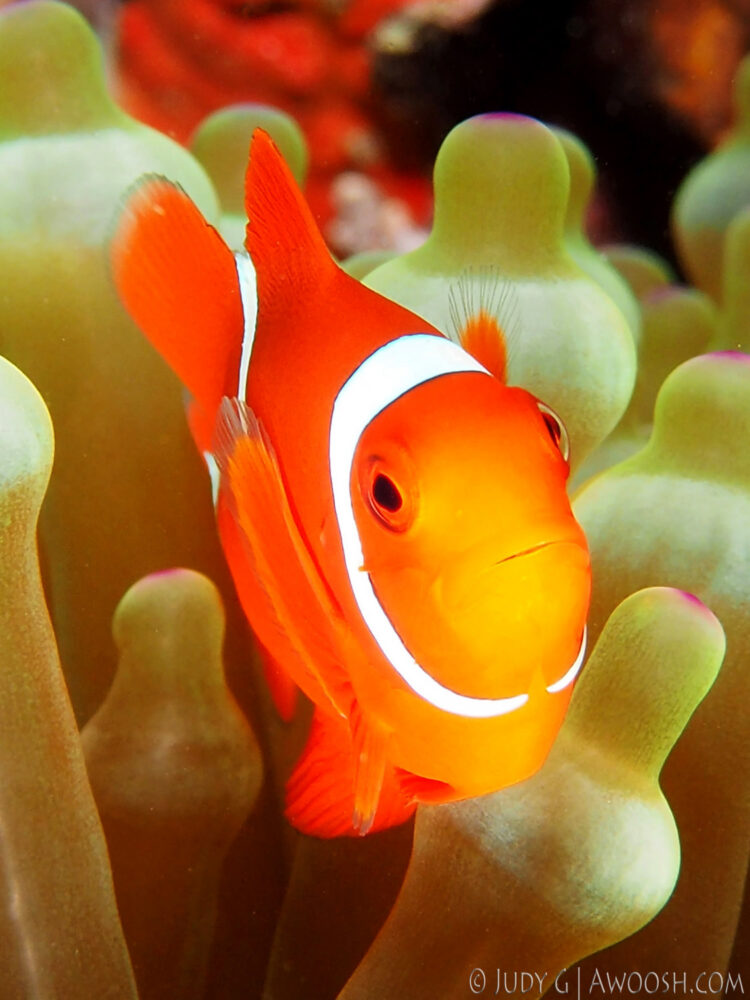
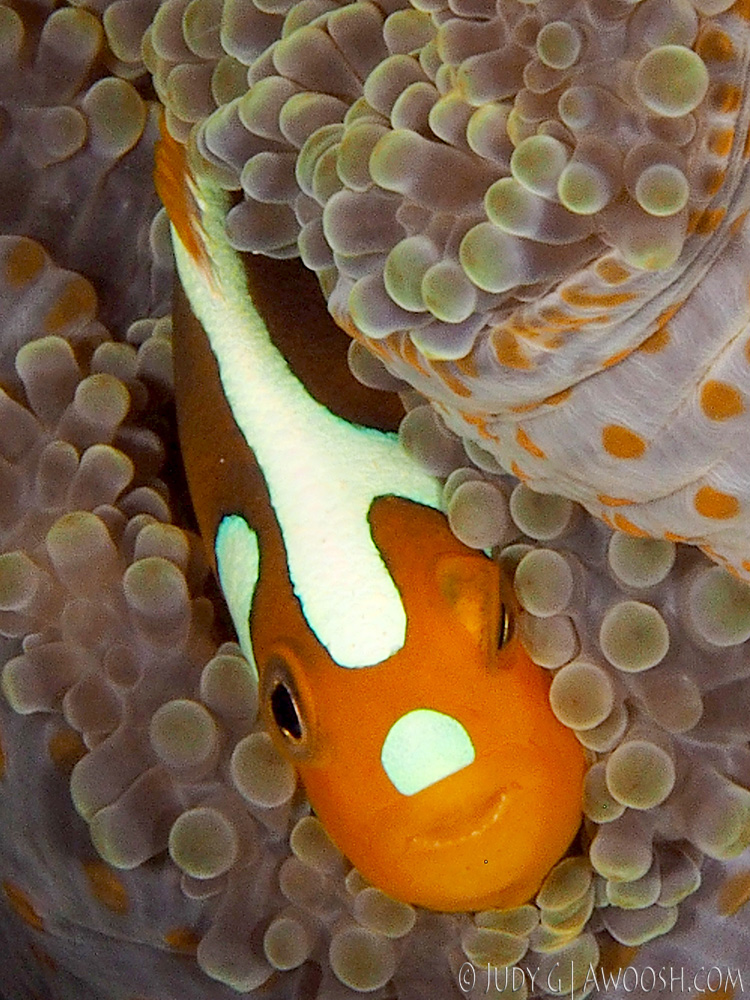
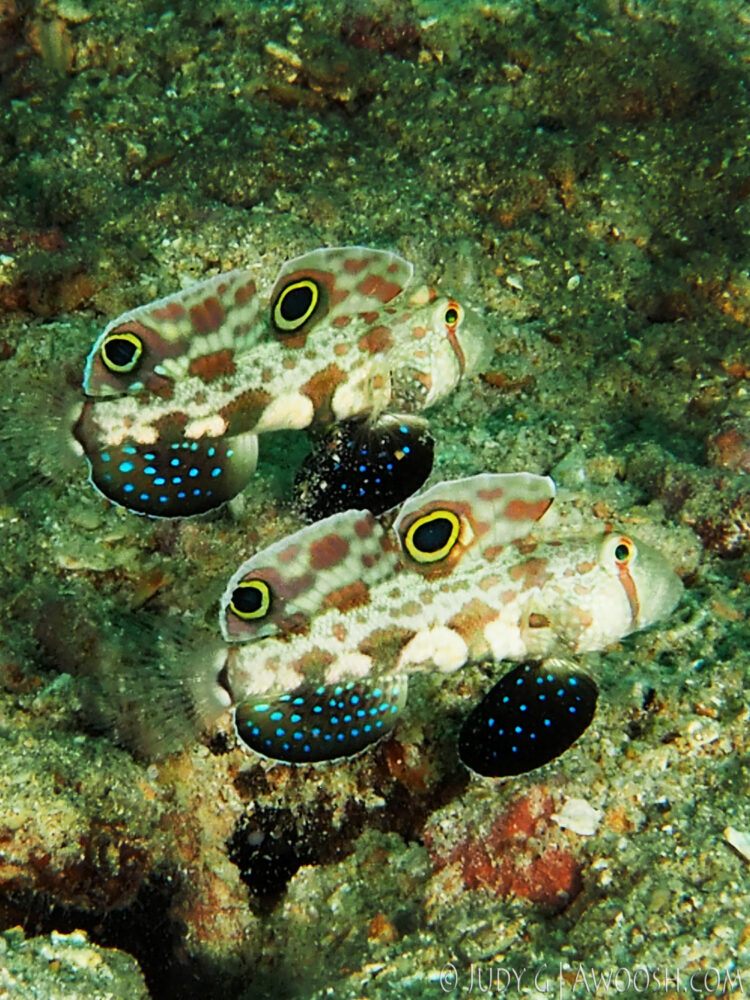
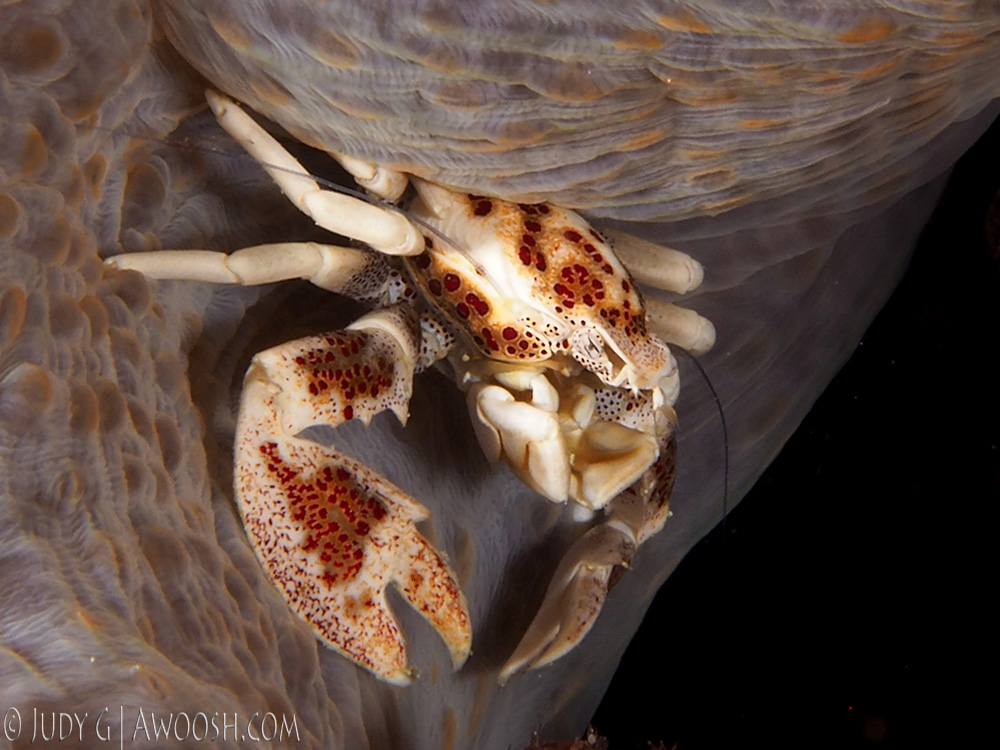
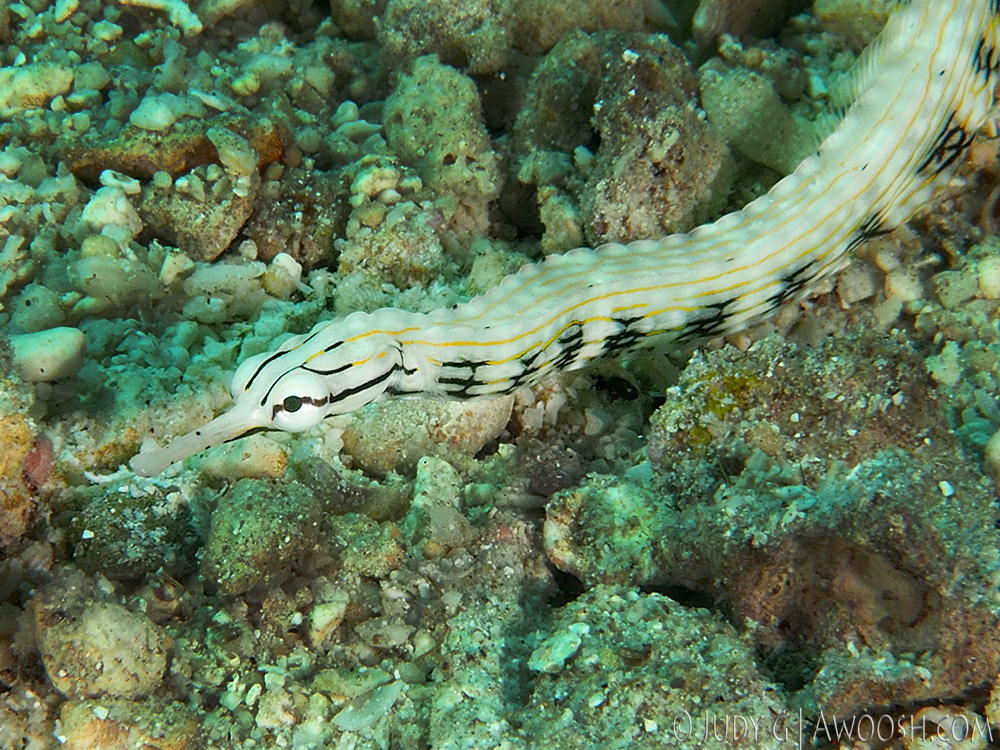
The reefs were generally in good shape, and were inhabited by a wonderful diversity of critters. There is very little diver pressure in the Solomons in the more remote locations (given that the Bilikiki is currently the only boat diving most of them). However, a few of the coral reefs that we dove were looking very battered, and in a couple of areas there was significant coral die off and algae infestation — we were told that this was due to storm damage. We saw only minimal instances of bleaching on this trip (including the white anemone behind the red spinecheek anemonefish, pictured just above).
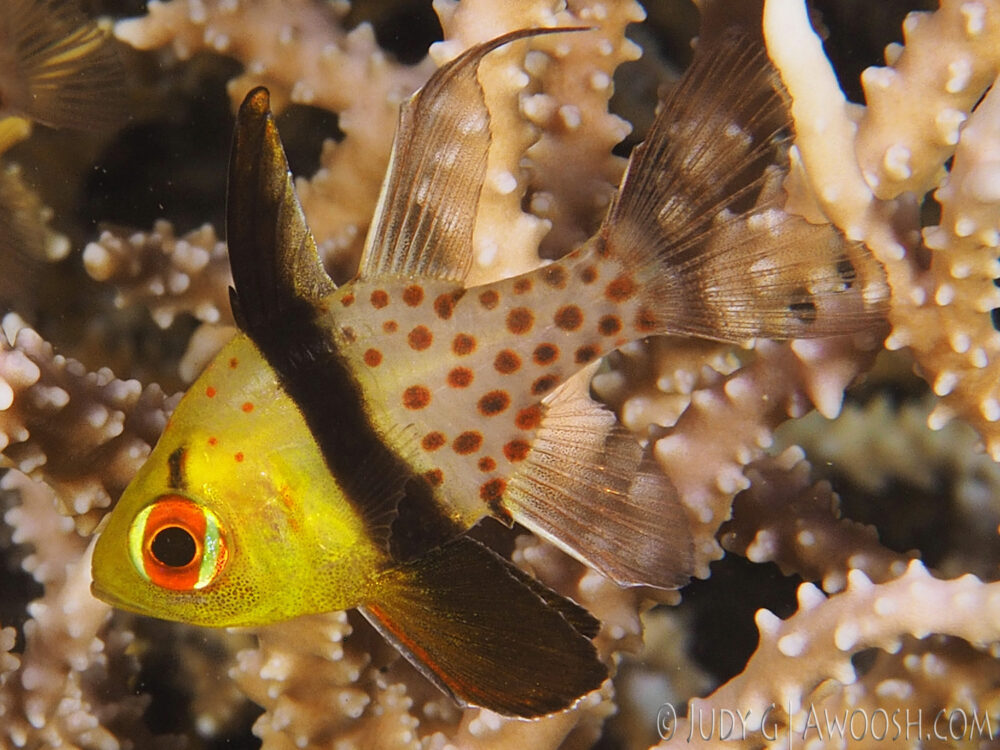
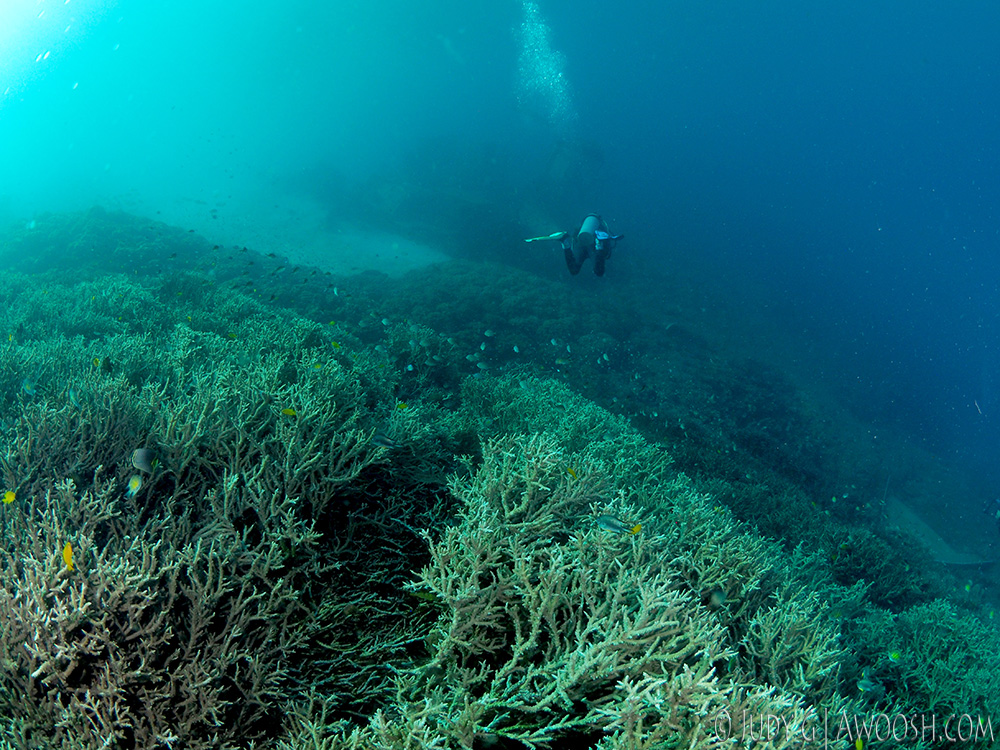
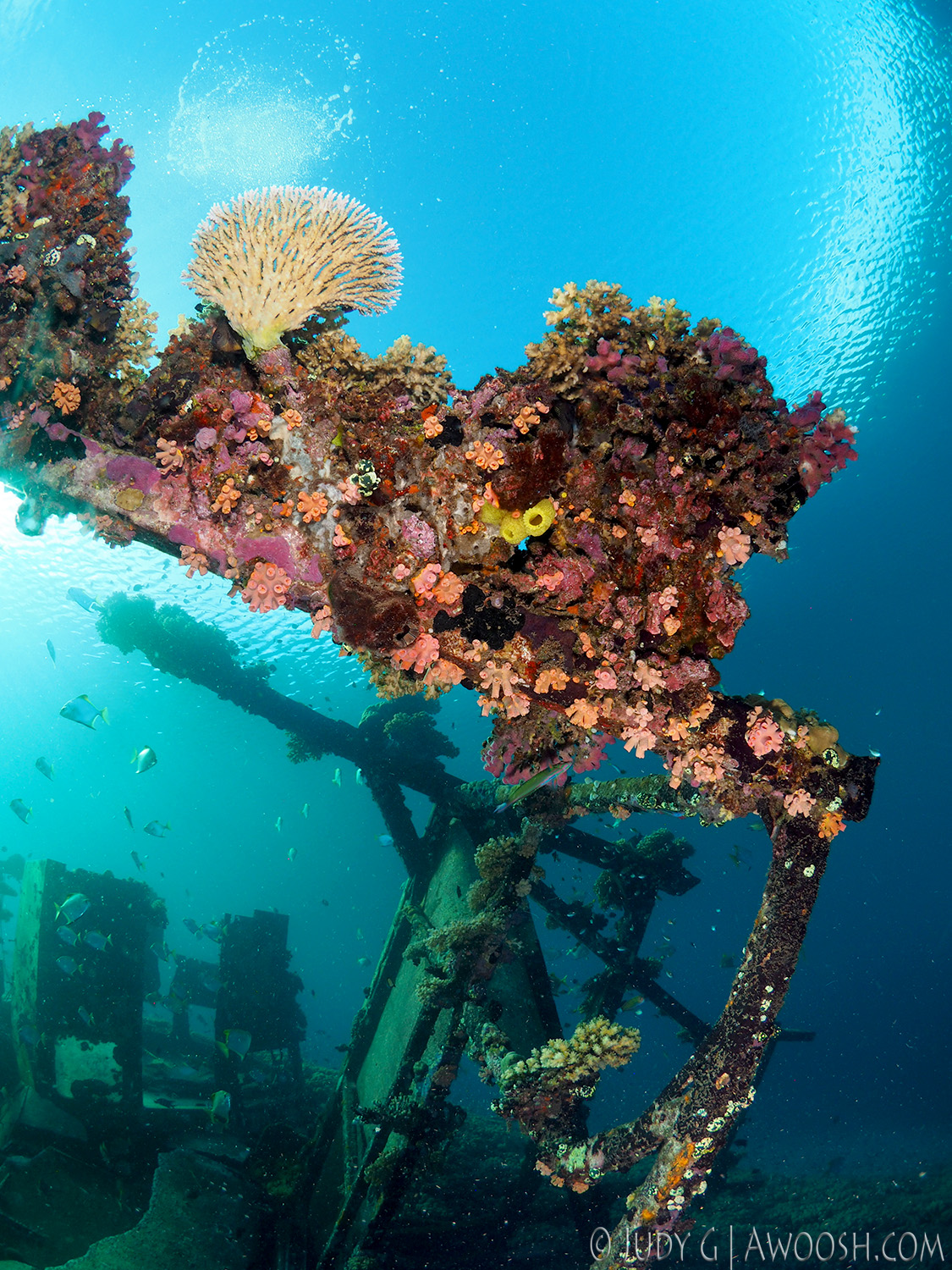
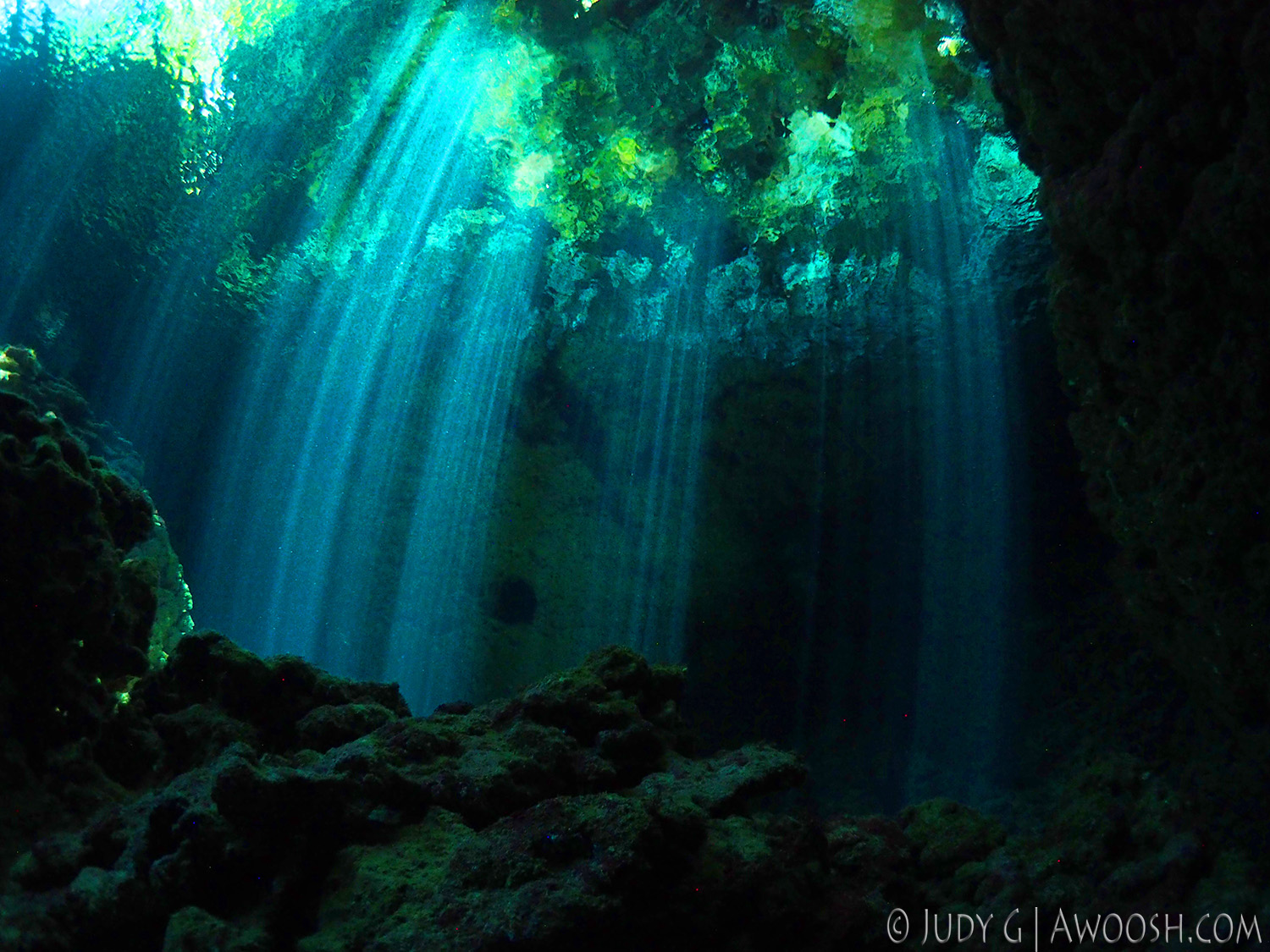
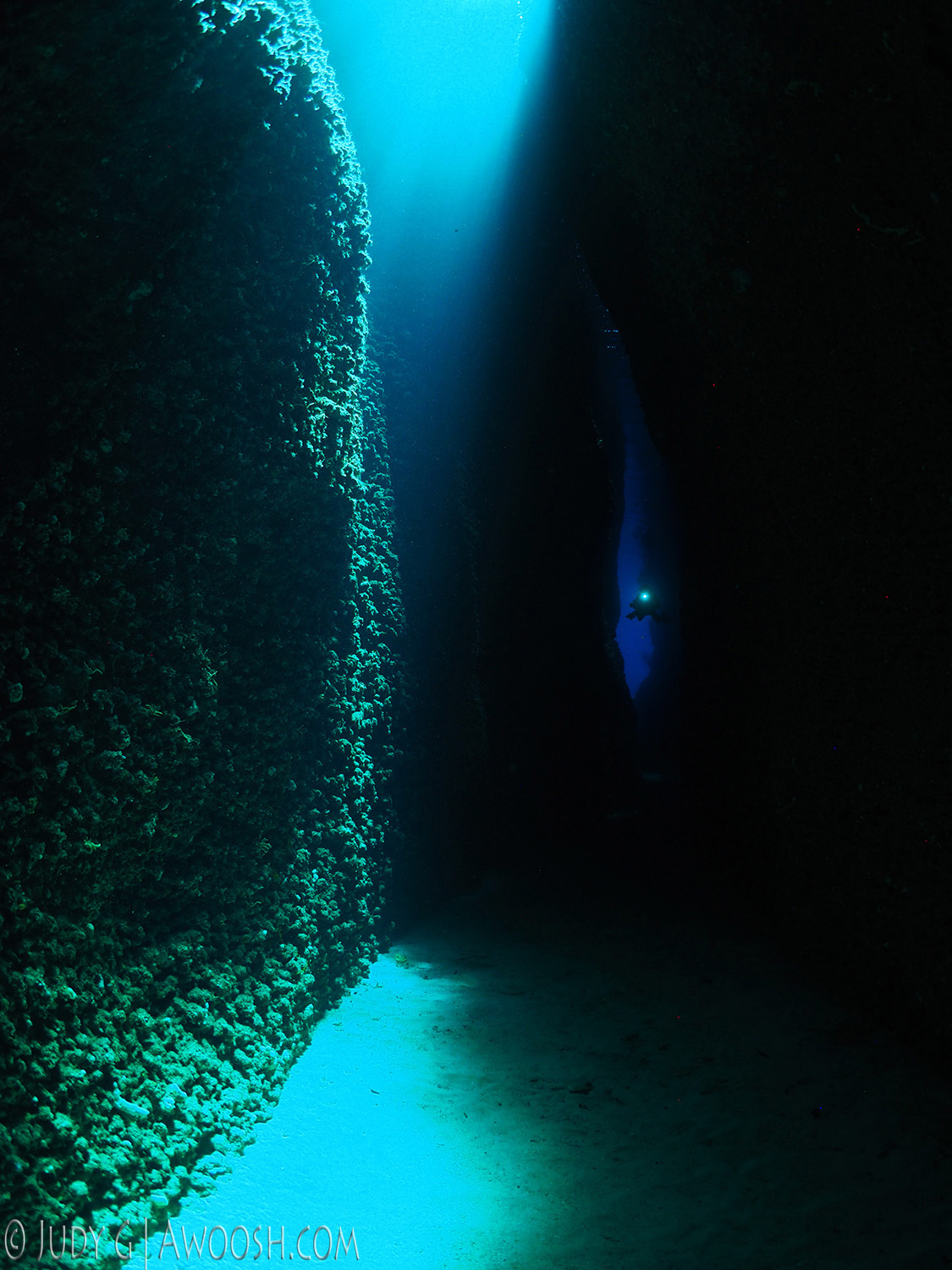
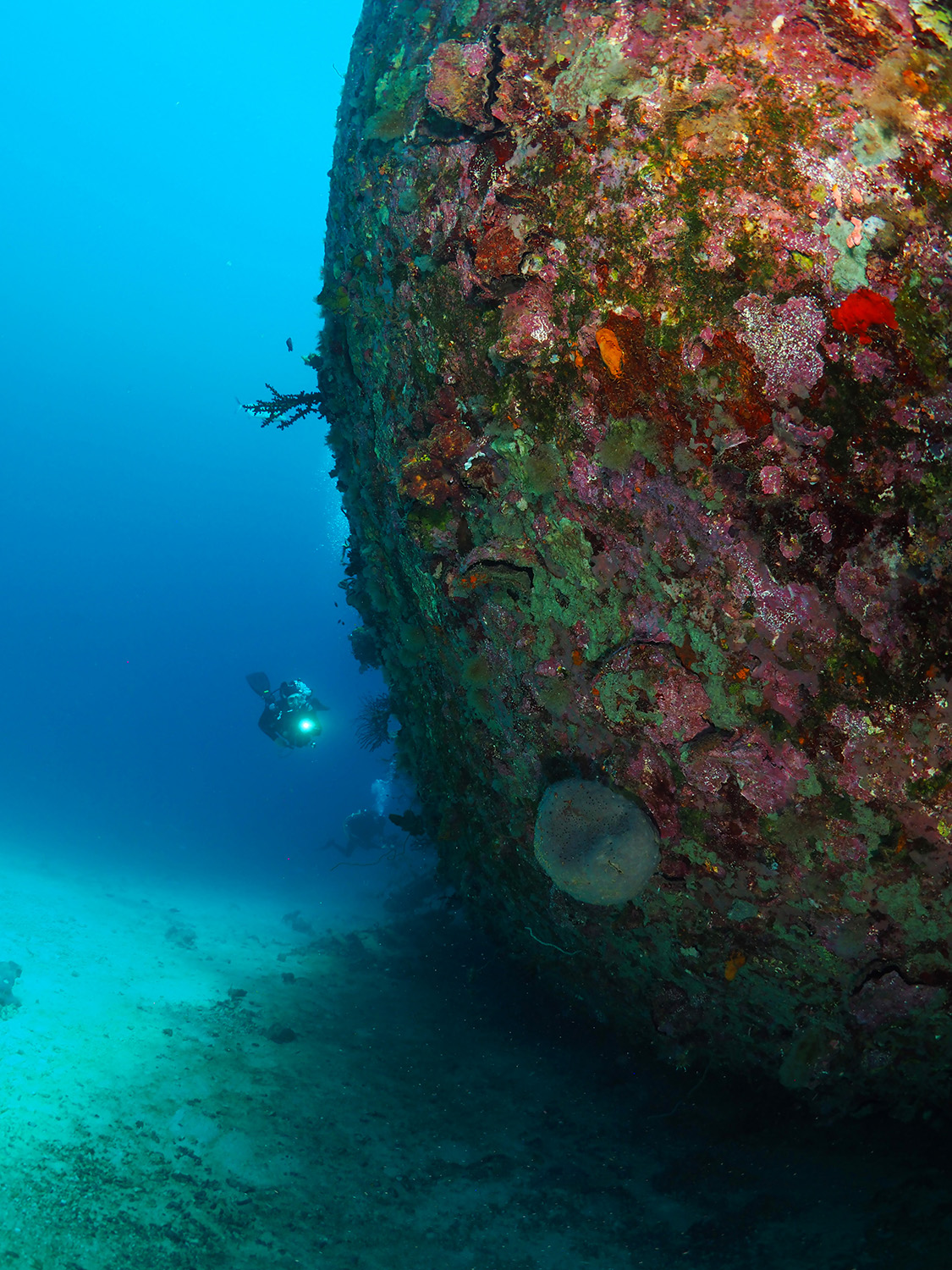
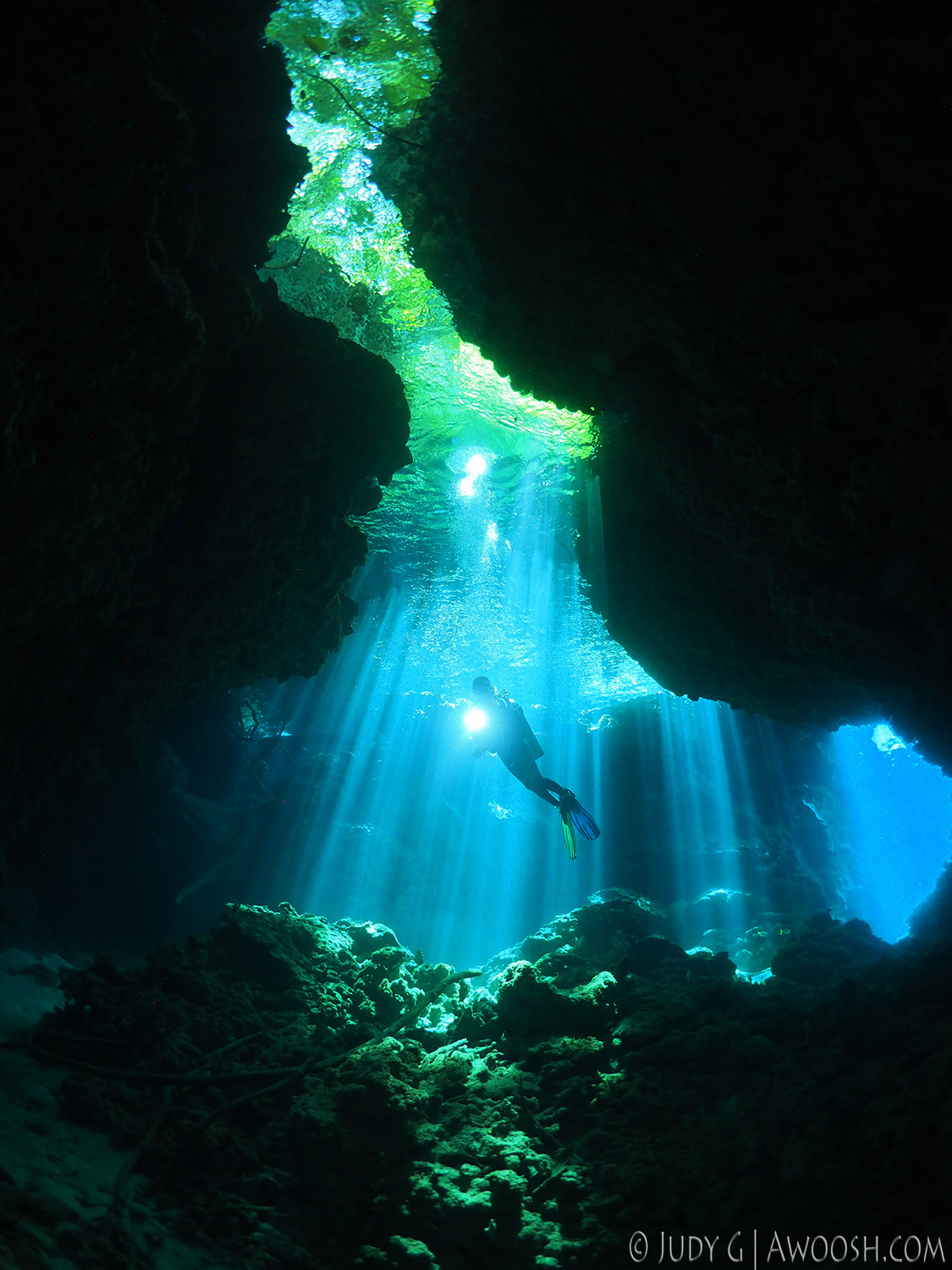
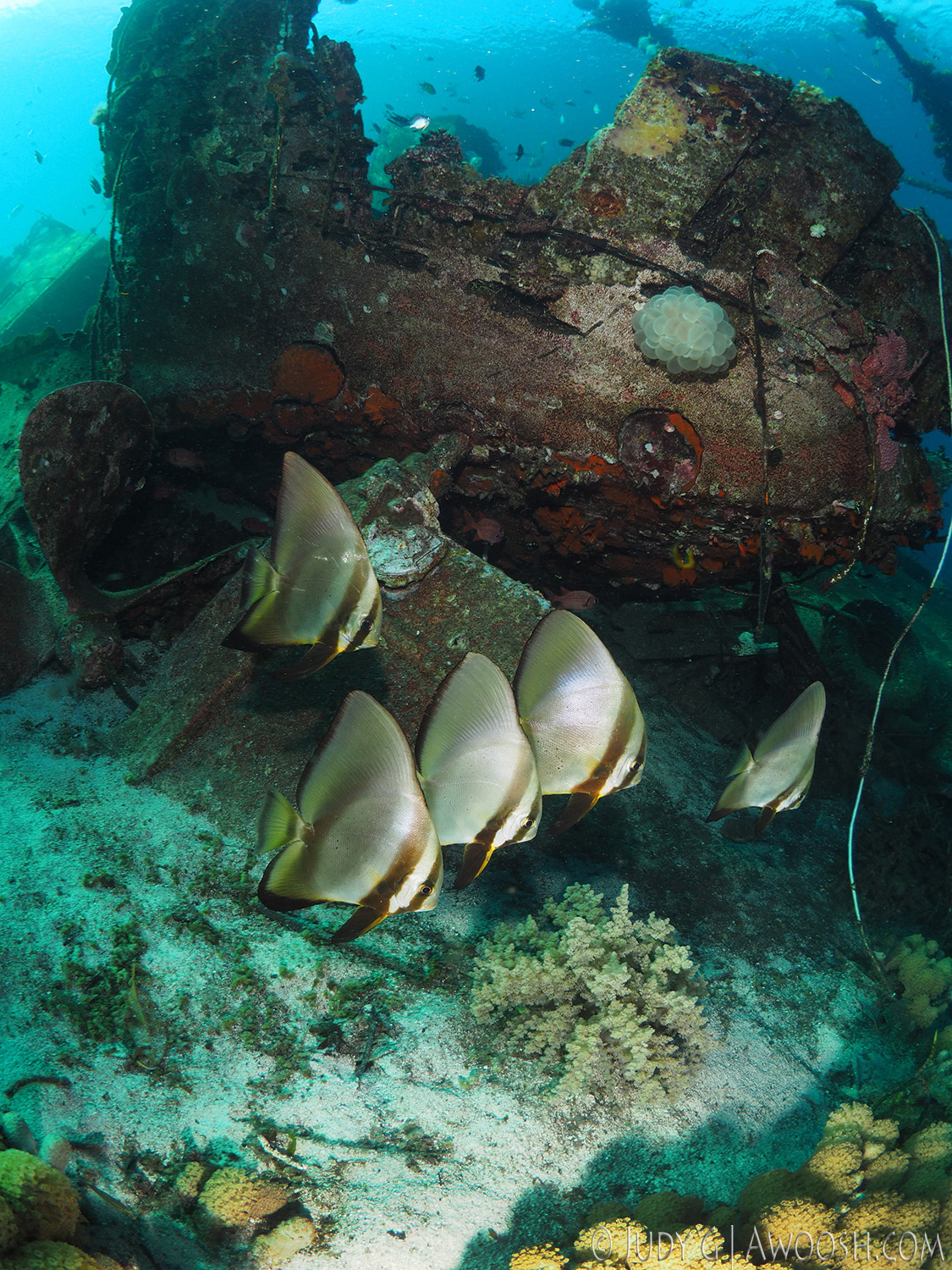
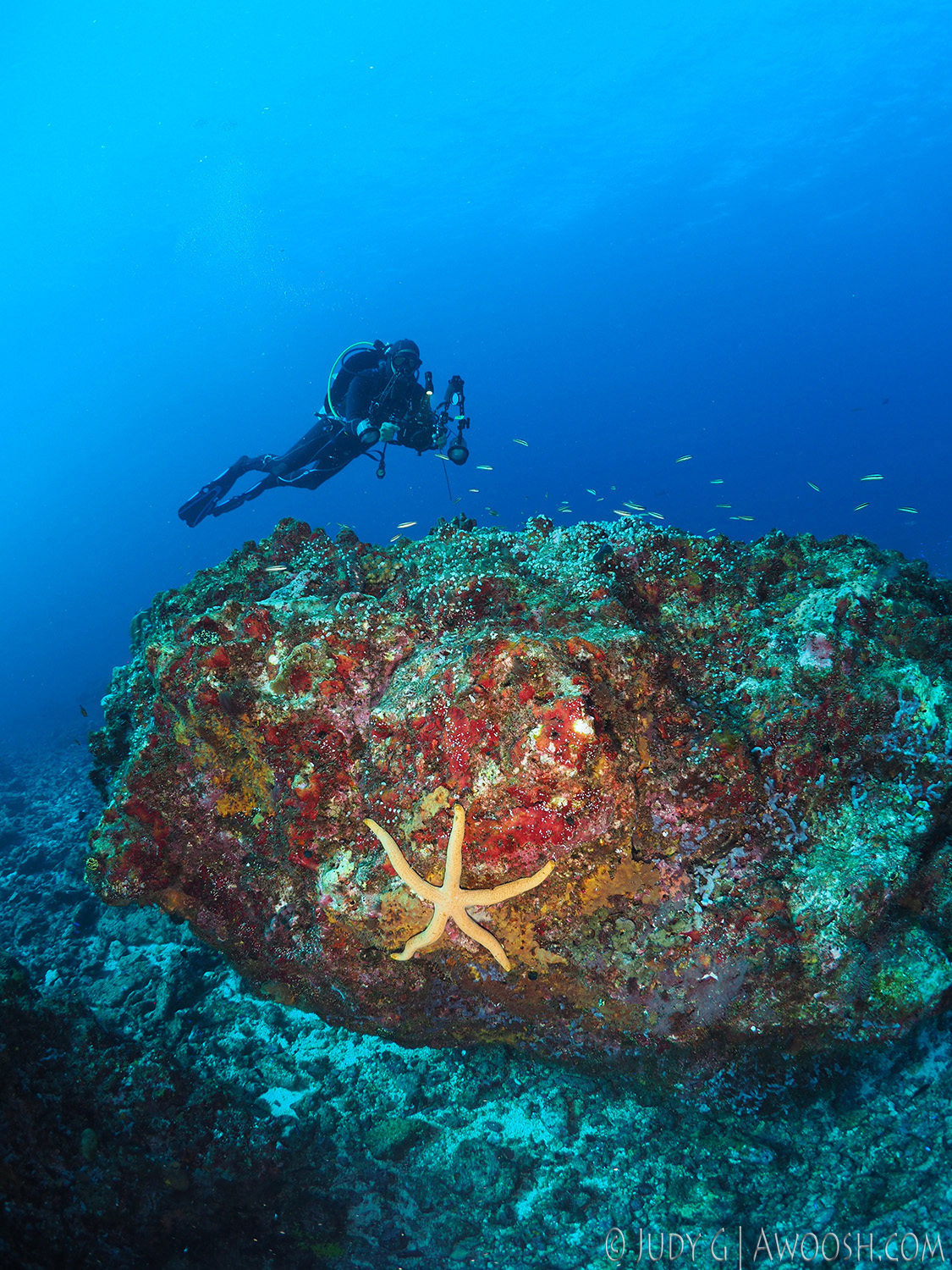
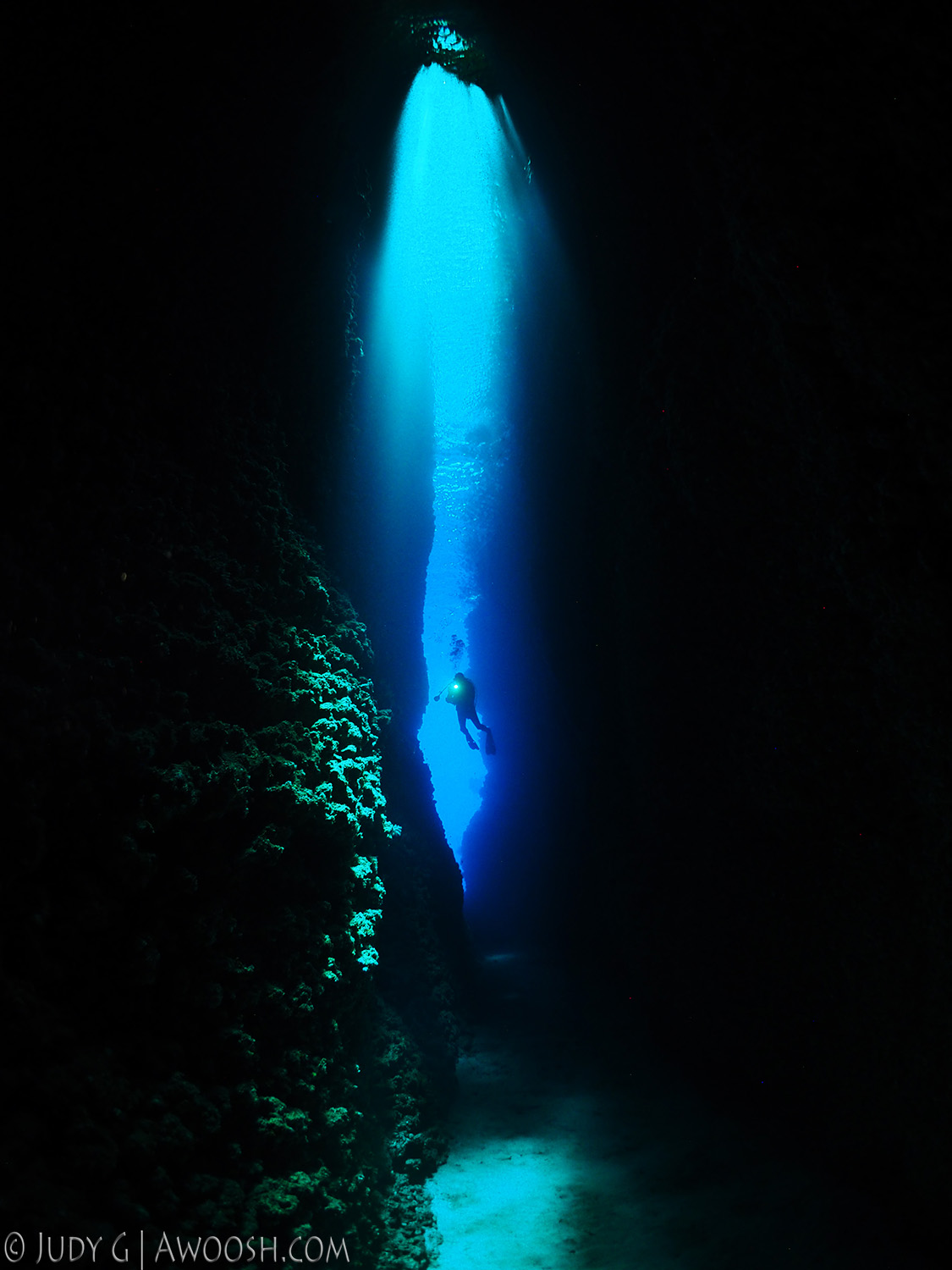
The Solomons have some gorgeous underwater topography for diving: in addition to fringing coral reefs, we dove some walls, seamounts, several World War II wrecks (that over the years have evolved into lush artificial reefs), and we dove two sites that were absolutely spectacular — one was a slot canyon, and the other was a series of caverns and swim throughs — both made even more special when god rays lit the vertiginous walls and danced prettily on the sandy floors.
The Bilikiki offered several village visits on our itinerary. One was to a village well known for intricate wood carving, and several in our group bought beautiful pieces to bring home with them. Having zero extra space in our baggage, Mr G and I gave the shopping excursions a miss, but we enjoyed going ashore to tour a small remote island village and to meet some of the locals there. It is a very modest life that they lead — most either sustenance fish and/or are involved in coconut growing and harvesting. Basic health care (but sadly, not education) is provided for all Solomon Islanders by the government, but for these people living remotely to large population centres, any ailments are likely to be treated by an occasional visiting nurse. Serious medical issues must be evacuated by boat to Honiara, where the central hospital is located. A couple of doctors in our group visited this facility, and said that the conditions were difficult for patients there, offering only rudimentary care (for example, cancer treatment is not available). This one hospital services the entire sprawling population of the Solomon’s, which is about 800,000.
The villages provide free basic education for young children, but anyone above age 12 must leave the island to live at a residential school, and this costs money that most islanders do not have. As a result, many rural Solomon Islanders struggle to afford their lives, and there is not much future hope for them to lift themselves out of poverty.
There are many regional languages/dialects spoken in the Solomon Islands, with the common language being Pidgin English. If you really listen, you can pick up some familiar sounding words.
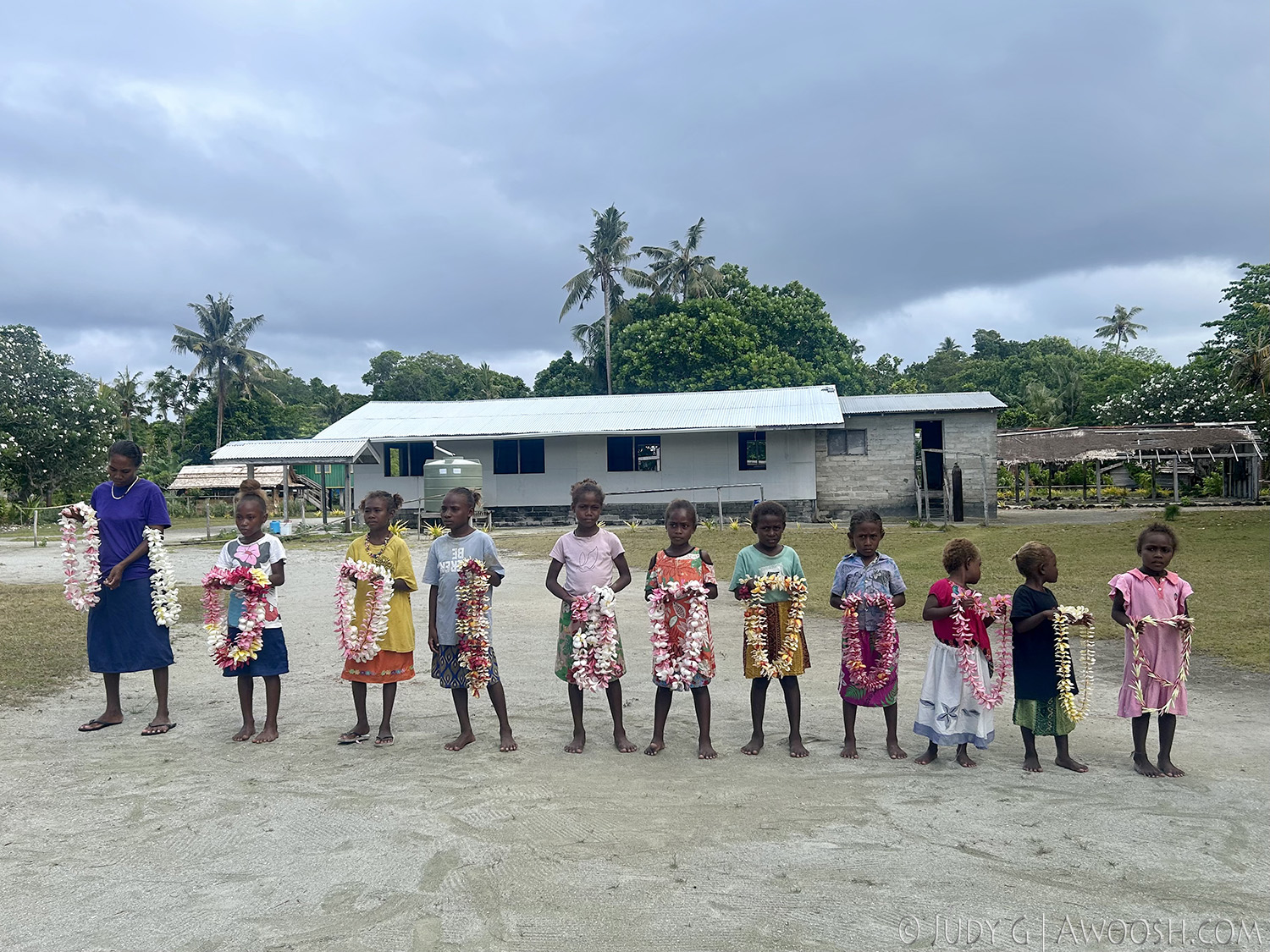
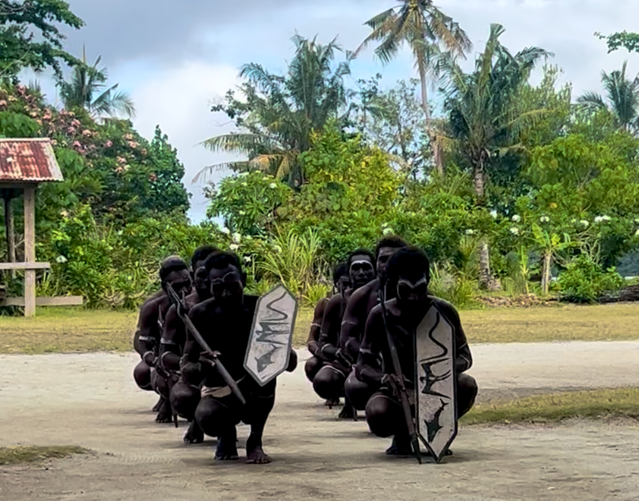
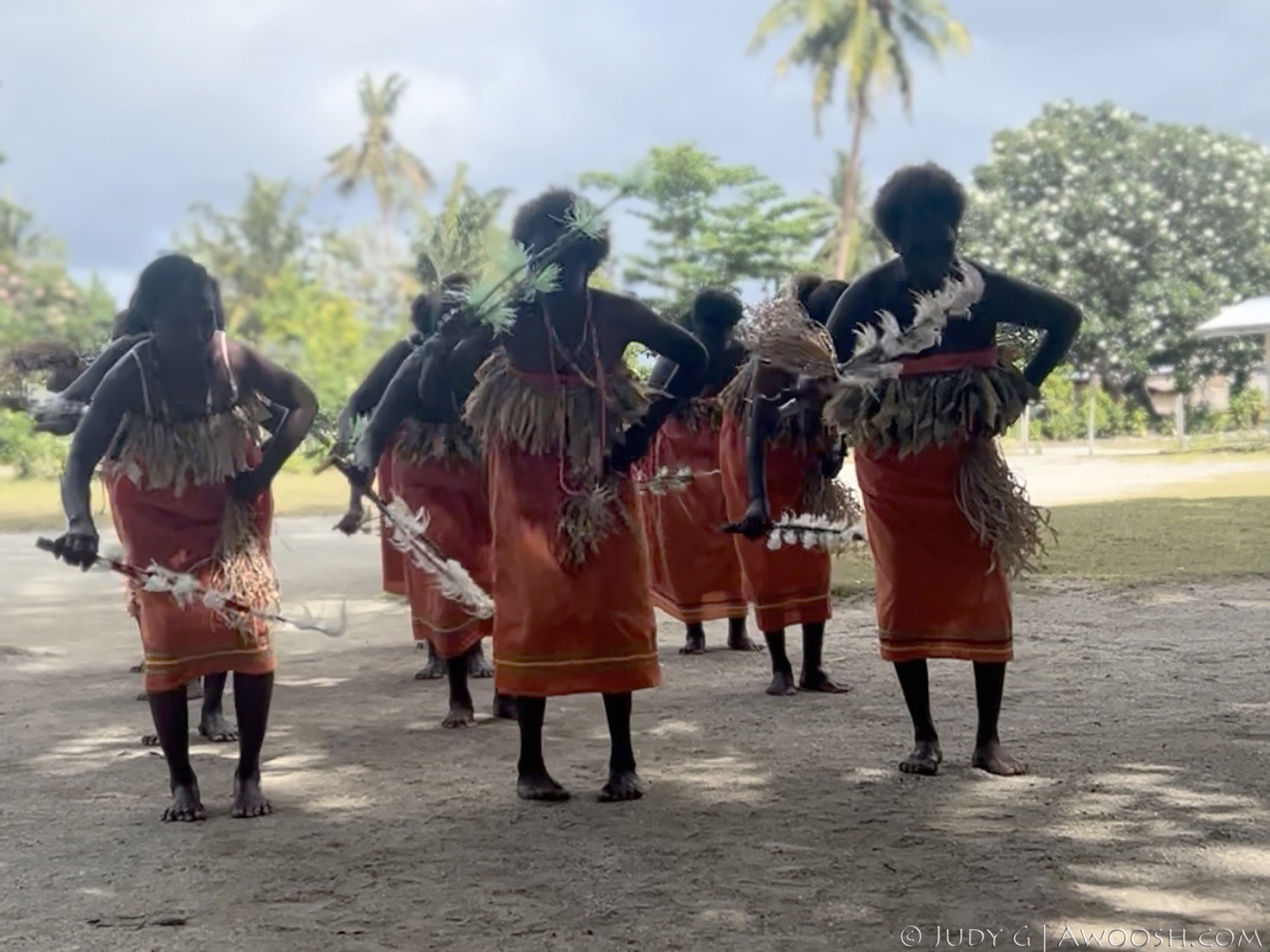
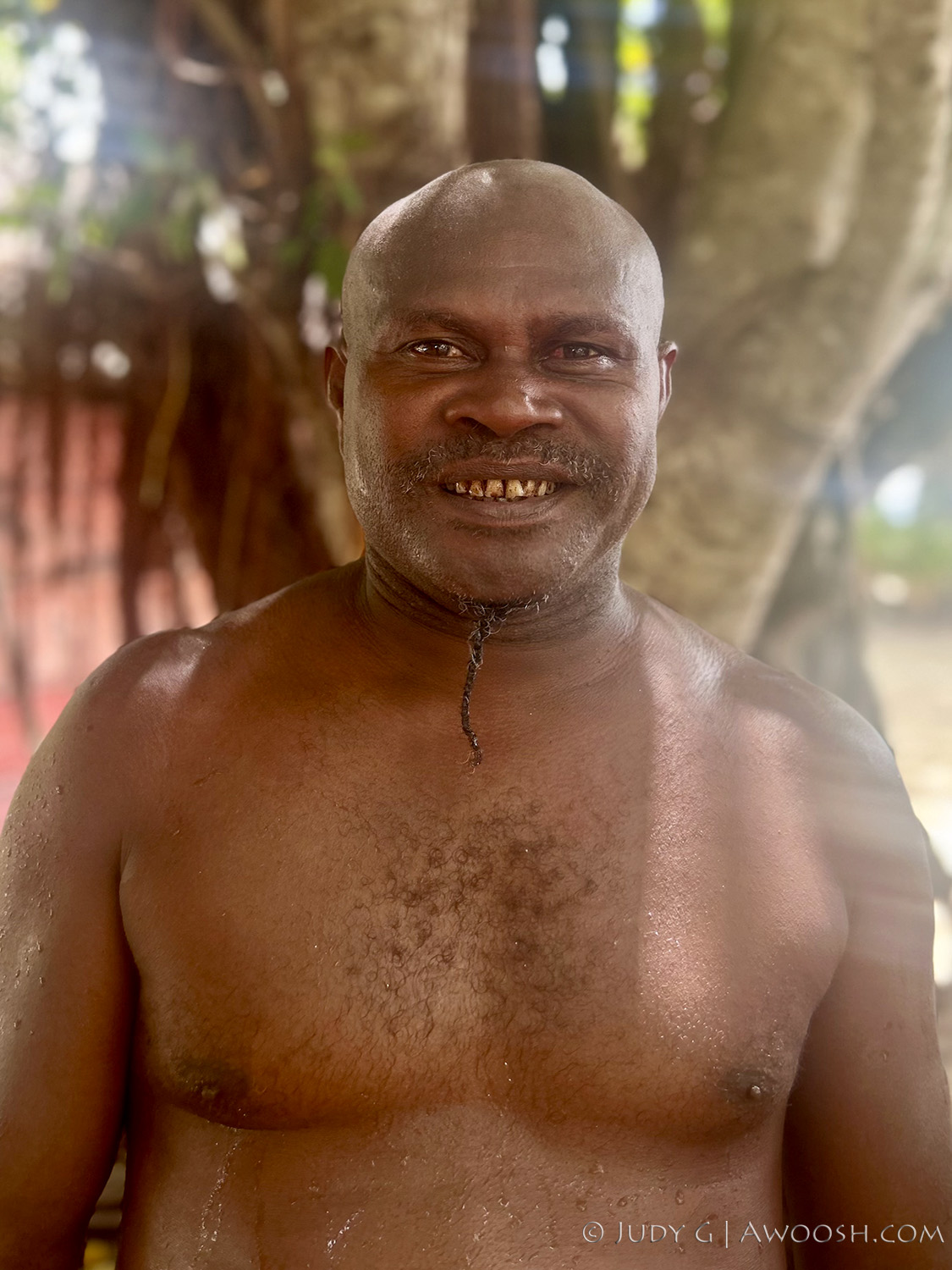
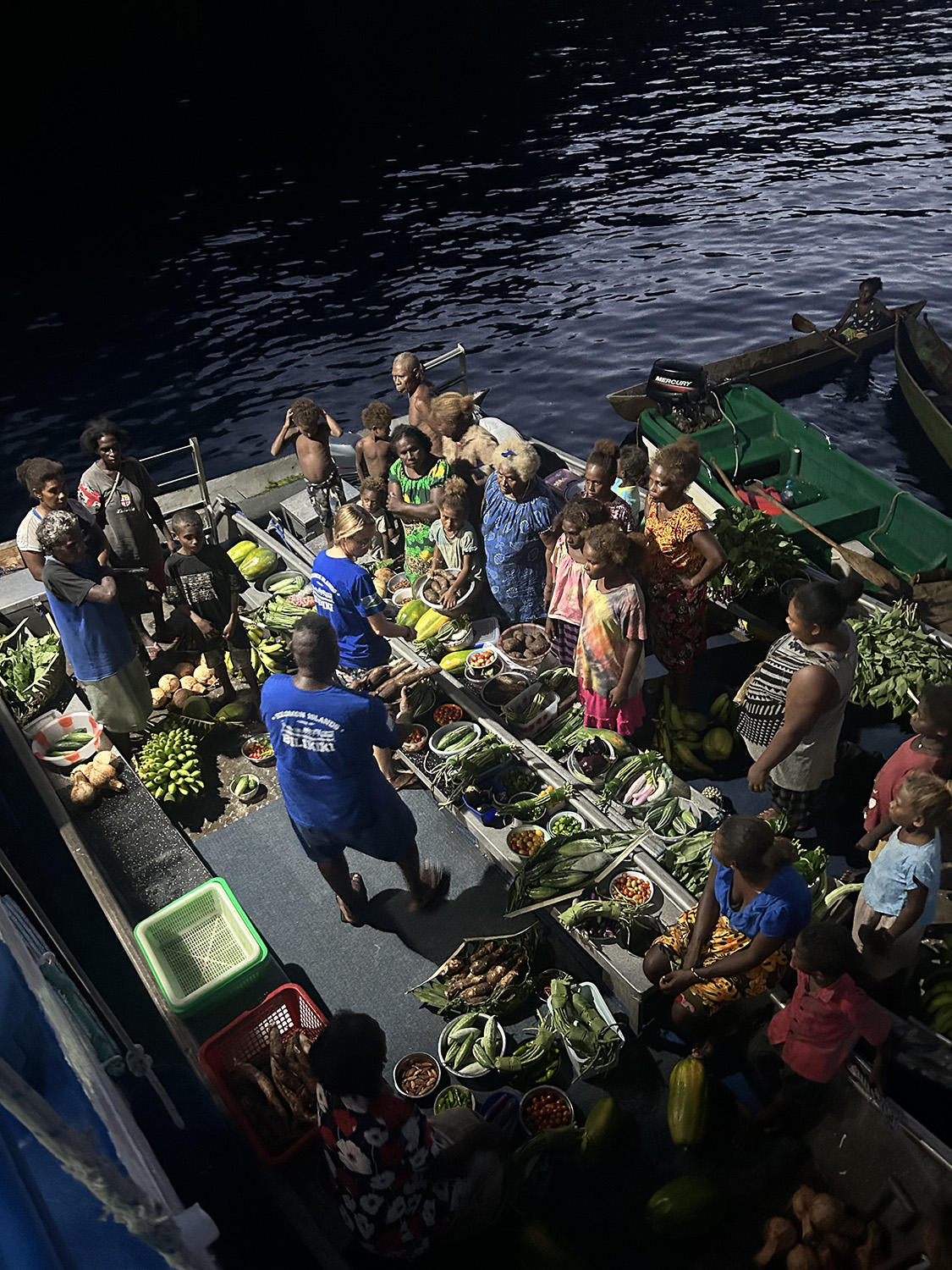
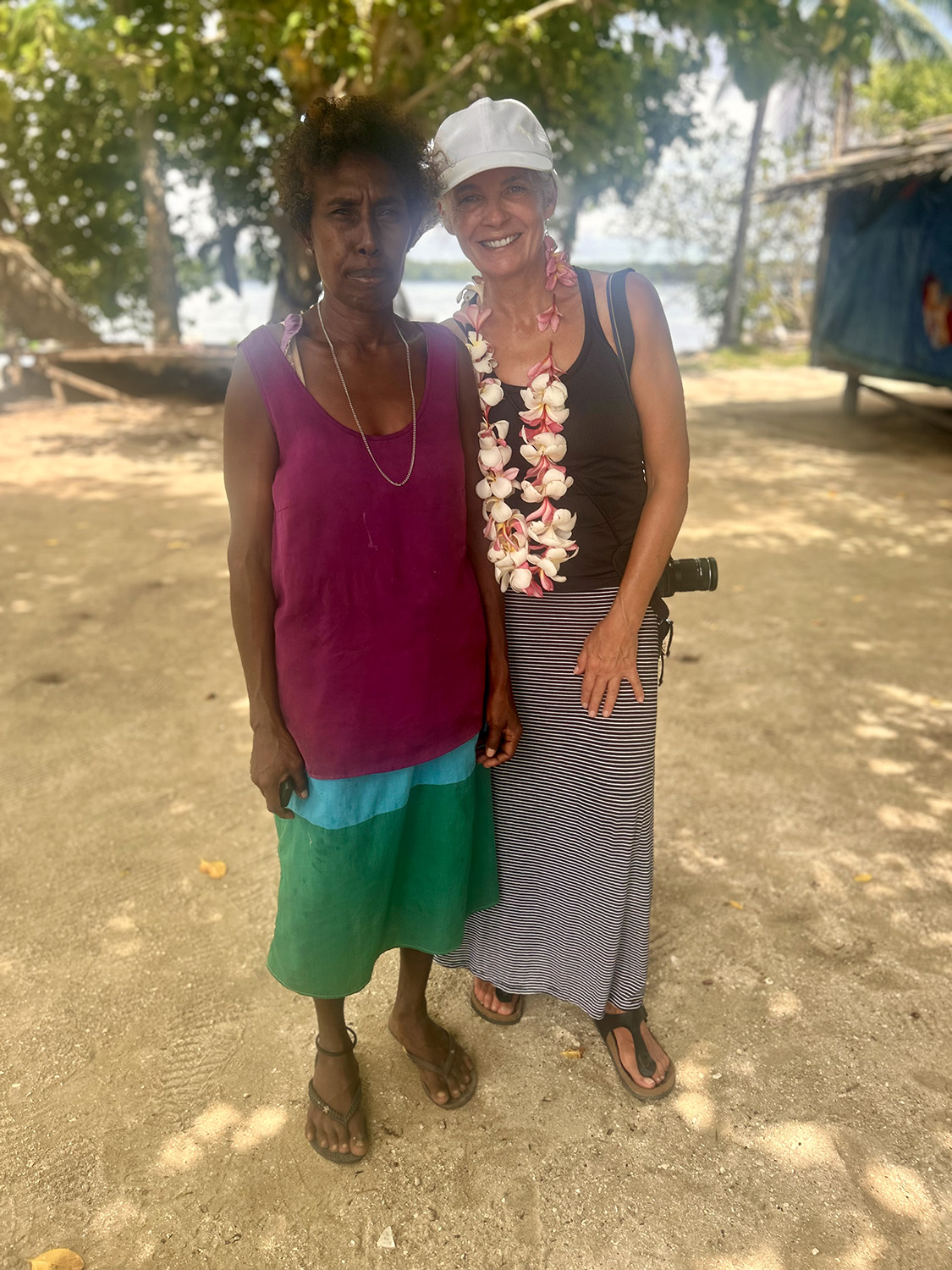
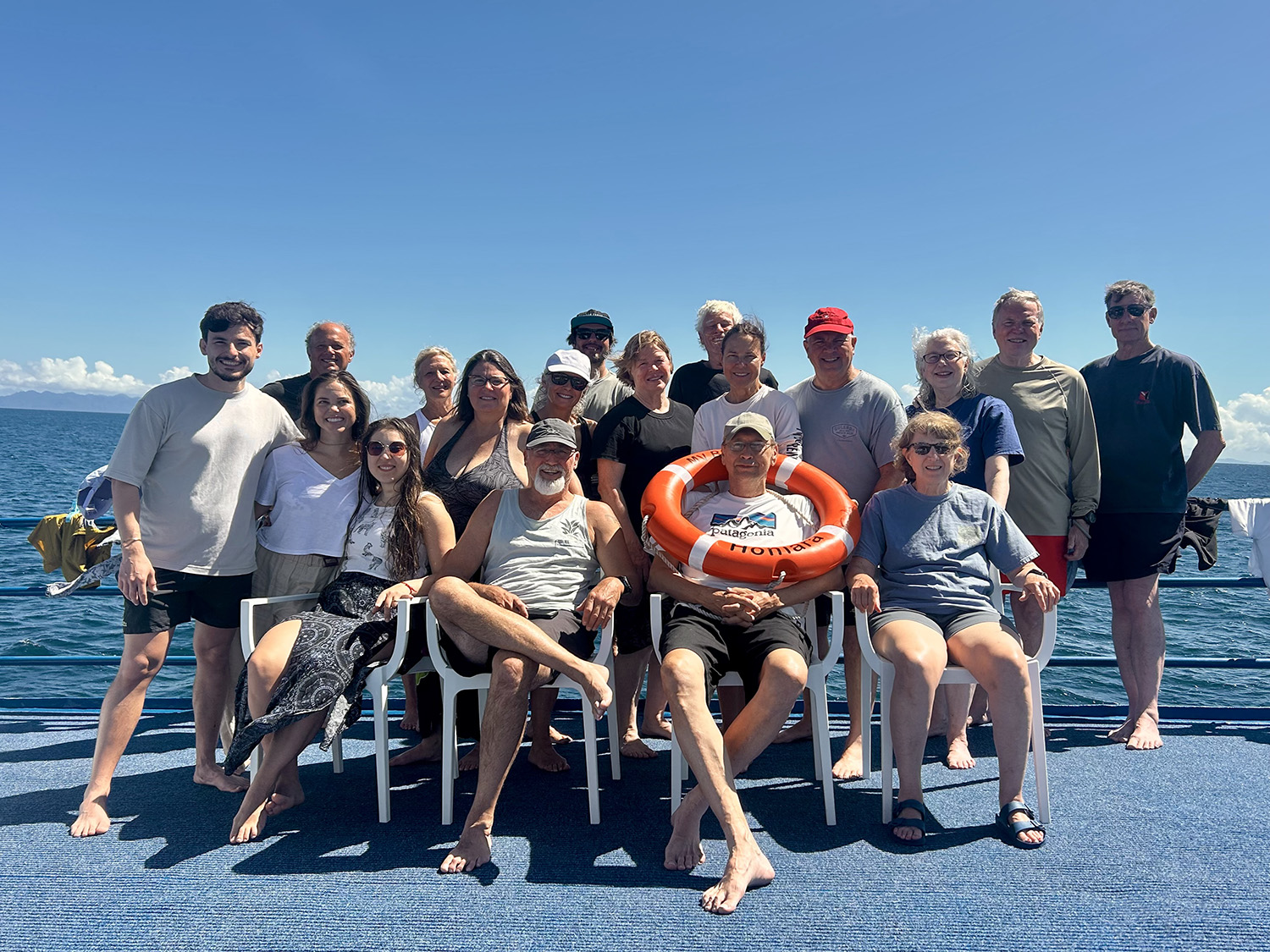
The end of the Bilikiki portion of the trip was quite seamless. We were offered two morning WW II wreck dives, just off the beach at Guadalcanal and not far from Honiara. Then we rinsed and dried the gear, and had the rest of the day to relax and relive the many awesome moments of the trip. That evening the whole crew assembled and thanked us for coming. And we as a group sincerely thanked them for the great adventure that they provided for us.
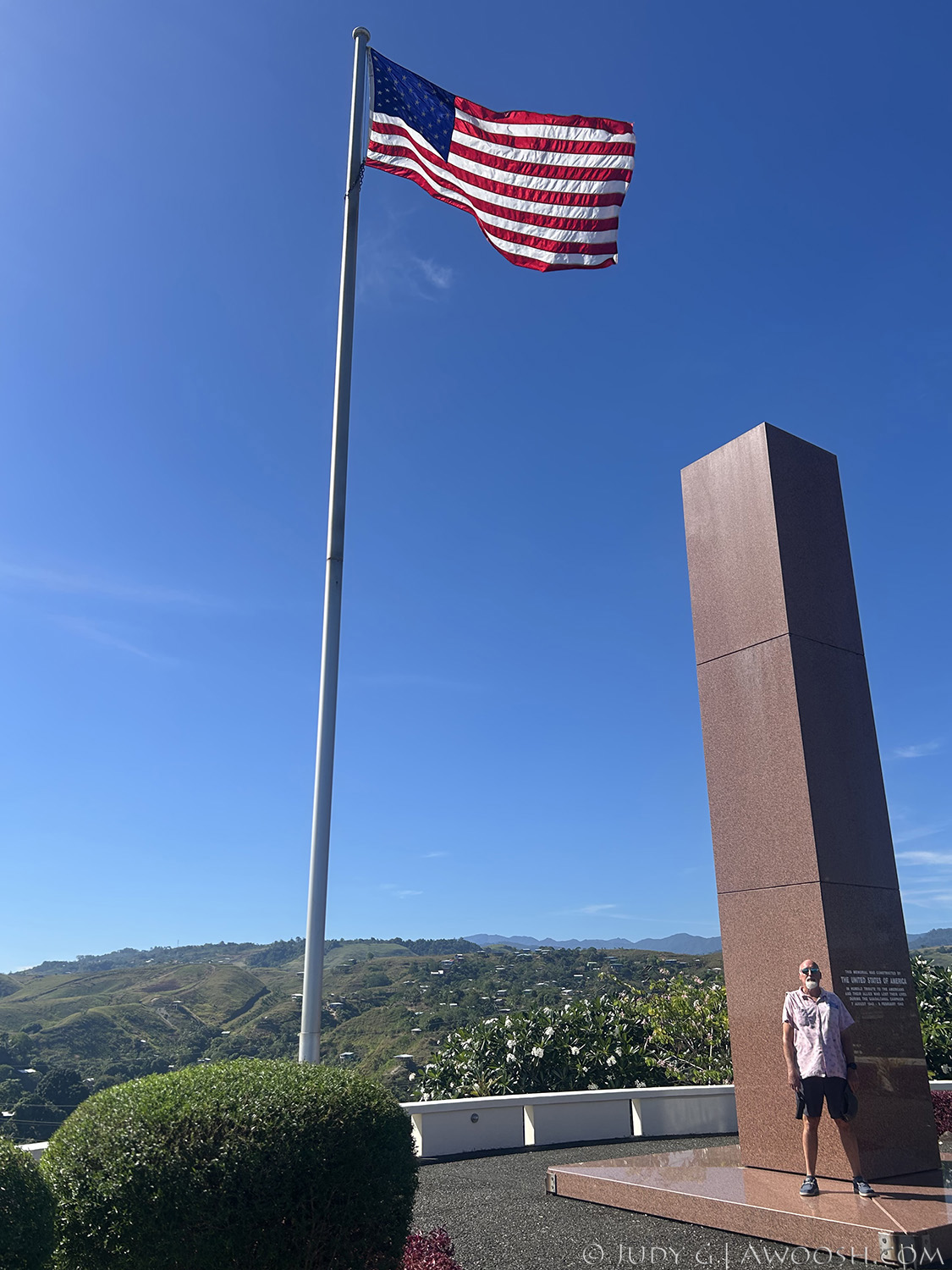
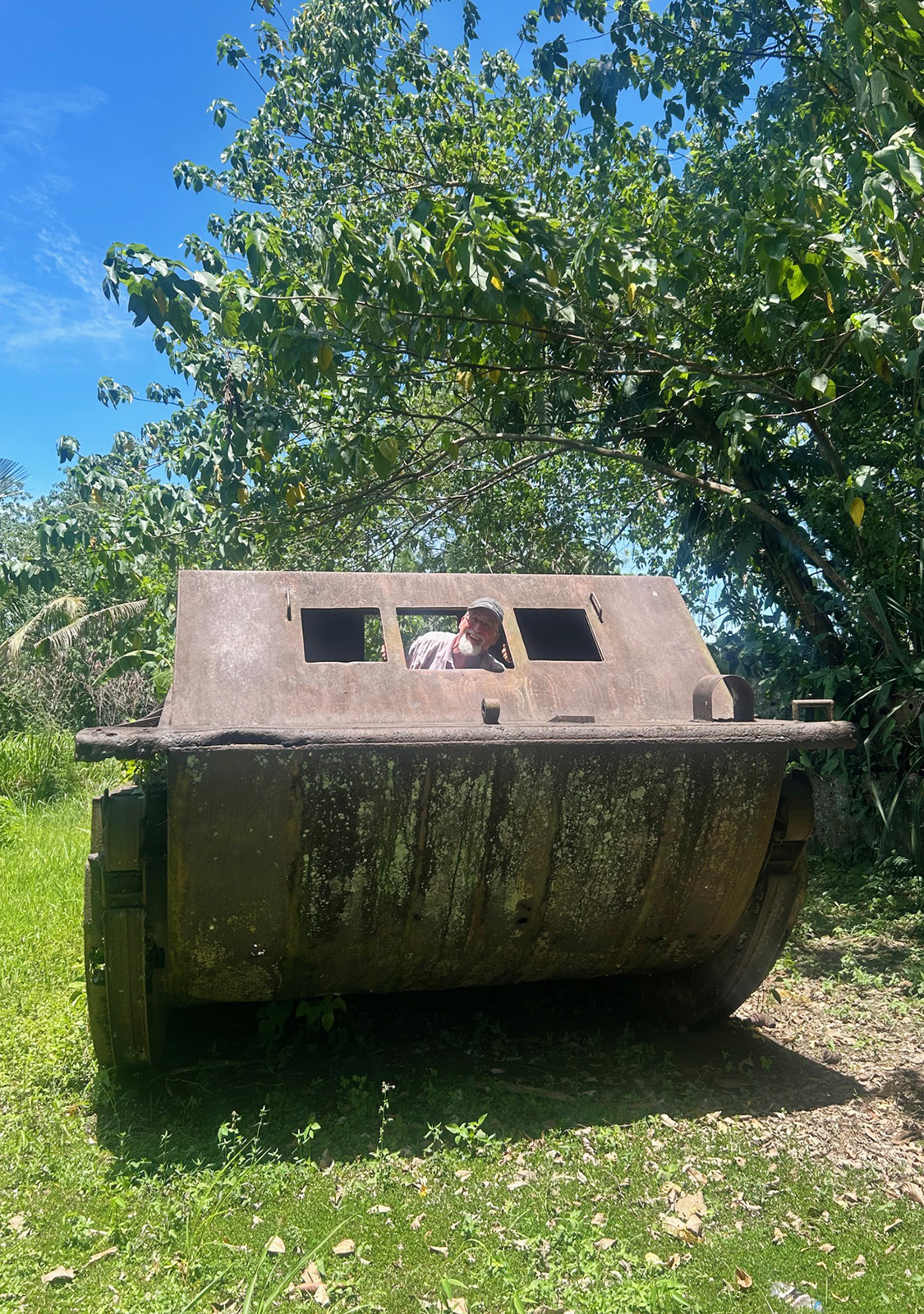
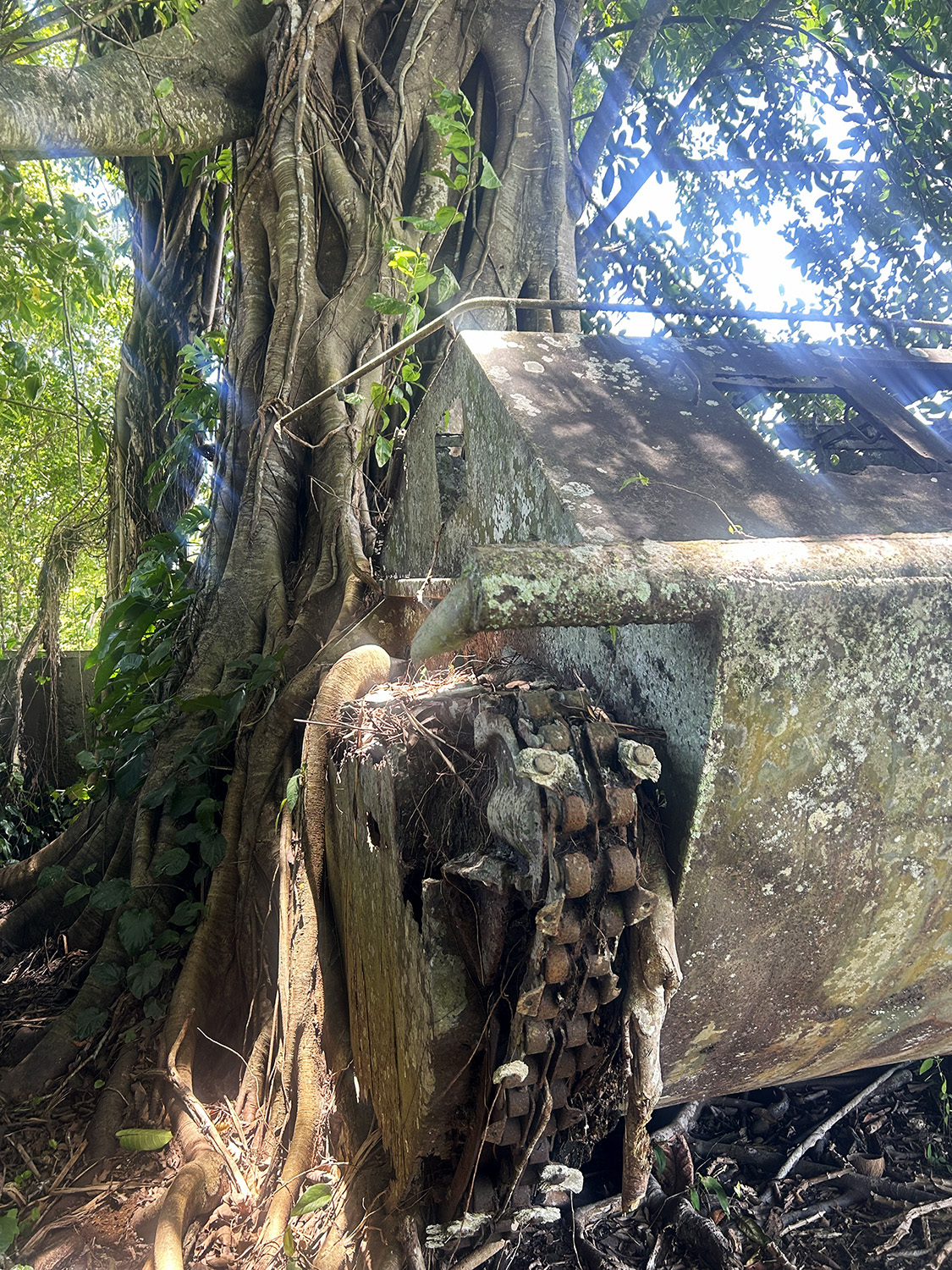
Thanks to a return flight schedule change, some of us had an extra day to hang out in Honiara after getting off the boat. We decided to do a WW II relics & memorial tour (that got good reviews online) — we had done something similar in Palau (Peleliu), and it had been interesting, and sobering, to see some of the infamous battle and hideout locations. This 5 hour tour took us through Honiara, up to an informative and impeccably kept US Memorial on the top of a hill not far from the town, and then to the very minimalist (and sadly unkempt) Japanese memorial not far from it. From there we were driven to visit Bloody Ridge, where a horrific two day battle happened between Allied (mostly American) and Japanese ground forces in September 1942, and which resulted in many casualties. After that we were taken to see some (now deeply decayed) bits of planes, amphibious personnel carriers, and other war detritus that is strewn around various collection sites. We also visited a US memorial garden, with rows of planted trees and dedication plaques below them. It’s a nice, leafy oasis, right next to the airport.
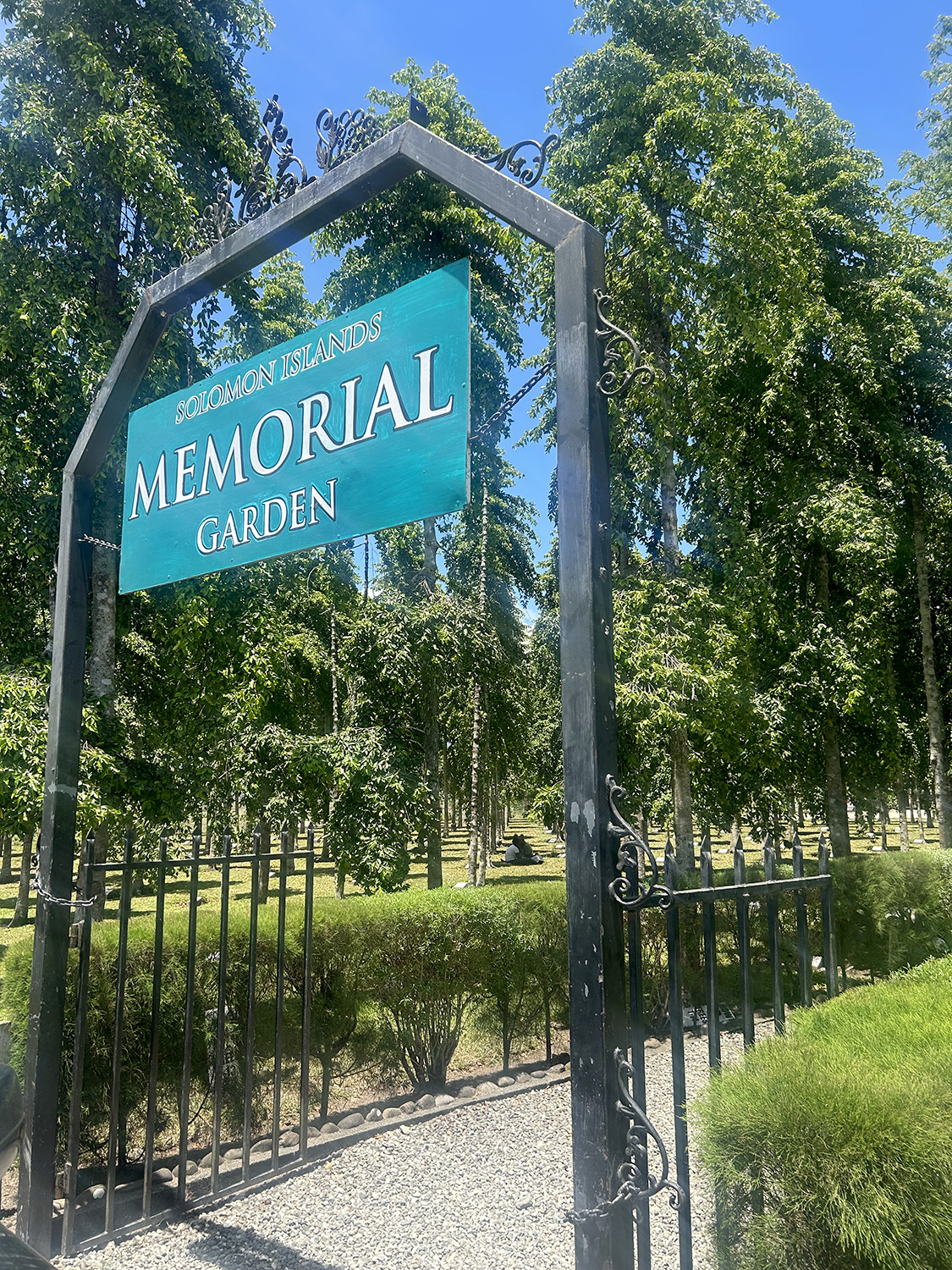
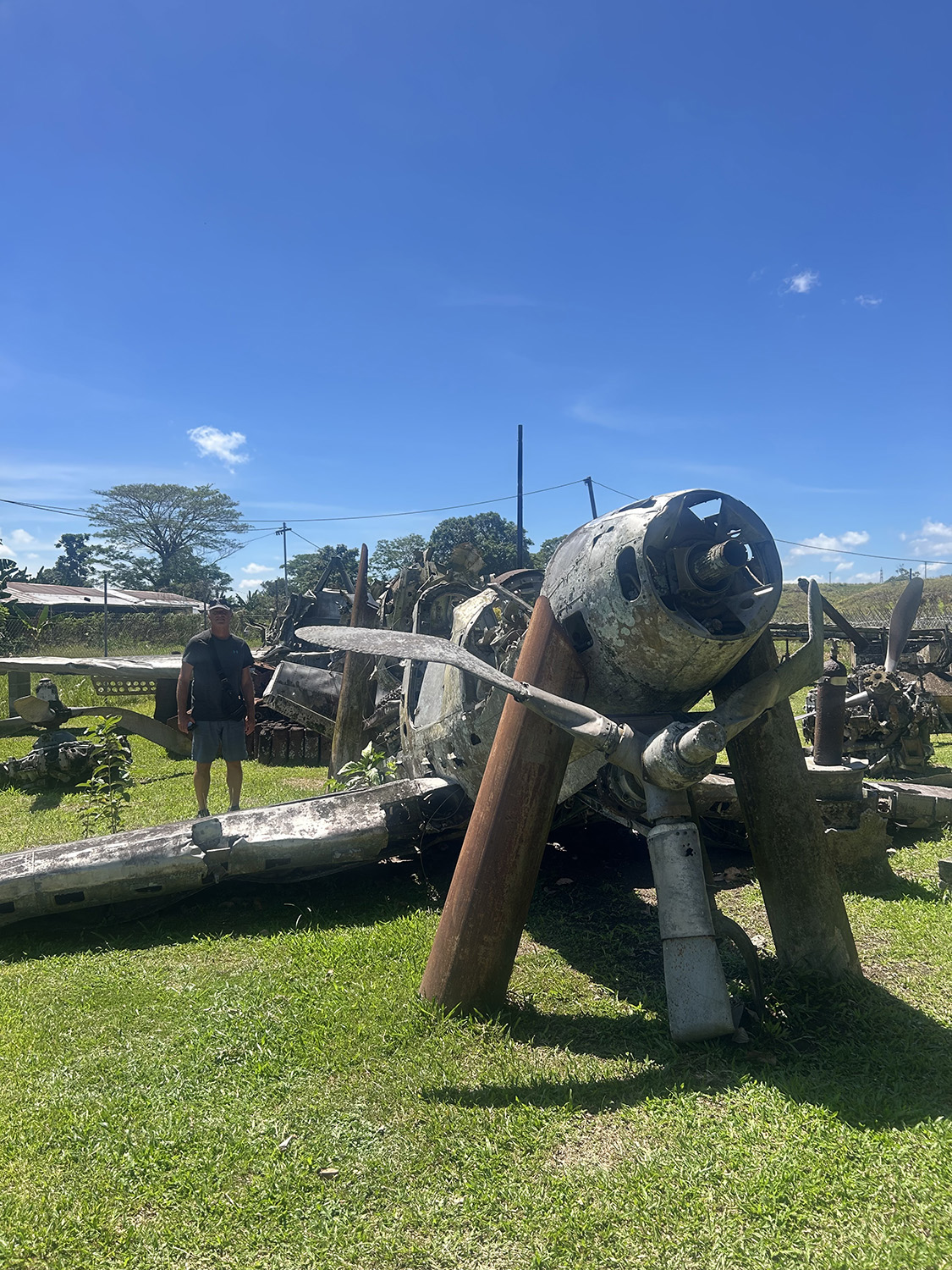
It was a decent historical tour, and a good way to see some of the island, but most interesting to me was when we chatted with the young Solomon Island guides who took us around, and learned more about the islands: politics and governance, and the perception of foreign interests (including China, who recently funded a huge sports stadium, amongst other “gifts”, and who are angling to establish a Chinese military base on the island). We were interested to learn about how and where the guides had grown up — they are from an island that continues with its annual dolphin hunt, despite international pressure to stop. We politely asked questions about the practice, including why. It is a longtime, important cultural tradition for their people, but truly, it made me very sad, as I thought about the pods of dolphins that we had loved watching as they playfully surfed the Bilikiki’s bow wave while it cleaved through the crystal blue ocean, transporting us to far away underwater edens in the Solomon Islands archipelago.